Email Us
 Freight Forwarding Software
 Warehouse Management System
 Transport Management System
 Moving/Removal Software
 Customer Service Portal
 Move Survey Quote Pro
 Digital Logistics Inventory App
Freight forwarders are under continuous pressure to improve visibility, reduce operational costs, and deliver faster, more accurate service. Traditional desktop-based systems and spreadsheets are no longer sufficient for modern global operations. This is where web based freight forwarding software becomes a game-changer. By moving critical logistics functions to the cloud, forwarders can operate with agility, precision, and seamless collaboration.
This blog explores the concept of web based freight forwarding systems and outlines seven key benefits that make them a smart investment for logistics companies of all sizes.
What is Web Based Freight Forwarding Software?
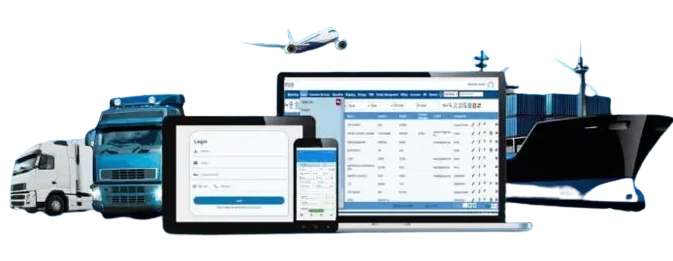
A web based freight forwarding software is a cloud-hosted platform that allows freight forwarders to manage core logistics processes—from quoting, booking, documentation, billing, and customer communication—through any internet-enabled device. Unlike traditional software that requires installation on local computers or servers, web based solutions run fully online.
This means users can access the system anytime, from anywhere, without the need for heavy IT infrastructure. The platform typically includes modules for operations, finance, documentation, CRM, warehousing, and reporting, all integrated into a single, centralized interface.
Because it sits in the cloud, the software receives regular automatic updates, making it more secure, scalable, and adaptable to industry changes, such as customs regulations or carrier requirements.
Why Cloud Technology Matters in Freight Forwarding
Freight forwarding is a fast-moving business where delays, miscommunication, or data errors can quickly impact customers and profits. Cloud technology helps forwarders manage these challenges by keeping all shipment information, documents, and updates in one secure online system.
Instead of relying on local servers or disconnected tools, teams can access the same real-time data from any location. This is especially important when working with overseas agents, carriers, and customers across different time zones.
Cloud platforms also make it easier to handle sudden changes, such as schedule disruptions or last-minute documentation updates, without slowing down operations. As shipment volumes grow, cloud systems can easily scale without the need for new hardware or complex upgrades.
Most importantly, web based freight forwarding software allows freight forwarders to work faster, stay organized, and respond quickly to customer needs.
Benefits of Using Web Based Freight Forwarding Software
Adopting a web based freight forwarding software brings measurable improvements across operations, customer service, and business performance. Web based platforms empower forwarders to work smarter and make faster, data-driven decisions. Below are seven major benefits that illustrate why more logistics companies are transitioning to modern, web powered solutions.
1. Centralized Cloud Access
One of the greatest advantages of a web based freight software is unrestricted, centralized access. Whether your teams work from different branches, home offices, or overseas locations, everyone uses the same platform and the same real-time data.
There is no need for software installations, manual updates, or VPNs. All that’s required is a browser and an internet connection. This flexibility is especially valuable for global freight forwarders, agents, and partners who need to collaborate across time zones and geographical boundaries.
With cloud access, organizations can reduce internal communication delays and ensure that every stakeholder views accurate, up-to-date information.
2. Automated Documentation
Documentation is one of the most time-consuming aspects of freight forwarding. AWBs, Bills of Lading, commercial invoices, packing lists, and customs forms must be generated accurately and quickly to avoid delays.
Web based freight software automates these processes by:
- Pulling information directly from the shipment record
- Auto-populating required fields
- Using standardized, compliant templates
This reduces manual data entry, minimizes the risk of typographical errors, and accelerates document processing. Automation also ensures compliance with carrier, port, and customs regulations—helping prevent costly delays or fines.
3. Faster Quoting & Rate Management
Rate management is critical in the freight forwarding industry, but dealing with multiple carrier tariffs, contracts, and surcharges can be overwhelming. Web based systems streamline the process by centralizing all rate data in one place.
Users can:
- Compare rates across carriers
- Calculate surcharges automatically
- Build accurate quotes within minutes
- Send quotes directly to customers
Faster quoting leads to faster decision-making, improved conversion rates, and enhanced customer experience. When customers receive accurate quotations quickly, they are more likely to choose your services over competitors.
4. Improved Collaboration
In a typical logistics workflow, shippers, consignees, agents, and forwarders exchange countless emails, spreadsheets, and documents. This often leads to communication gaps and version-control issues.
Web based freight software solves this by offering a centralized portal where all stakeholders can:
- Upload and download documents
- Share updates
- Track milestones
- Communicate through built-in messaging tools
A single source of truth eliminates confusion, reduces repeated manual follow-ups, and strengthens overall coordination. Better collaboration ultimately leads to faster turnaround times and enhanced service quality.
5. Lower IT Costs
Traditional on-premise software requires servers, installation, upgrades, and ongoing maintenance—impacting both time and budget. In contrast, web based solutions significantly reduce IT spending by eliminating the need for:
- Hardware purchases
- Local installations
- Dedicated maintenance teams
- Manual backup procedures
Because updates, backups, and security patches are handled by the provider, companies can focus more on operations and less on technical management. A cloud model reduces total cost of ownership (TCO) and offers better long-term value.
6. Enhanced Data Accuracy
Data accuracy is essential in freight forwarding, especially when dealing with customs declarations, carrier documentation, and financial billing. A single error can lead to shipment delays, compliance issues, or invoice disputes.
Web based freight forwarding systems enhance accuracy through:
- Automated data entry
- Predefined validation rules
- Template-driven documentation
- Integration with carriers and customers
These features reduce redundancy and minimize human errors, ensuring compliance with international shipping standards. Accurate data also improves reporting, analytics, and overall decision-making.
7. Scalable for Business Growth
As freight volumes increase, businesses need systems that can scale without major investments. Web based freight forwarding software allows companies to:
- Add new users or branches
- Integrate additional modules
- Expand global operations
- Support new service lines
All without worrying about server capacity or performance constraints. This scalability makes cloud software suitable for both small forwarders and large multinational logistics providers.
Whether you are expanding into new trade lanes or onboarding more customers, a cloud-based system grows effortlessly with your business.
Conclusion
Web based freight software is transforming the logistics industry by offering real-time visibility, streamlined documentation, seamless collaboration, and scalable infrastructure—all while reducing IT costs. As freight forwarders face increasing demands for speed, transparency, and accuracy, adopting a cloud-based platform is no longer optional; it’s a strategic necessity.
If your organization is ready to modernize operations, improve customer experience, and boost productivity, QuickMove Technologies’s web based freight forwarding software offers a reliable, feature-rich web-based freight forwarding solution designed to support businesses at every stage of growth.