Email Us
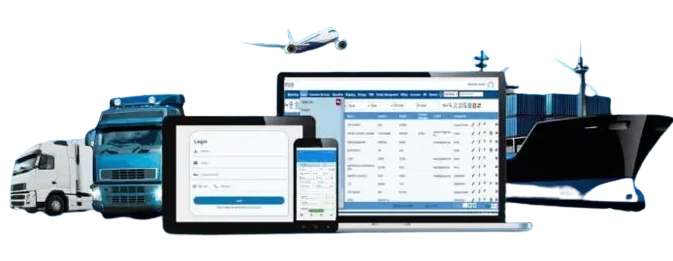
 Freight Forwarding Software
 Warehouse Management System
 Transport Management System
 Moving/Removal Software
 Service Portal
 Move Survey Quote Pro
 Digital Logistics Inventory App
Introduction
Trade across borders between India and the Middle East has been on the rise over the last few years, mainly because of the construction, manufacturing, and e-commerce sectors that have been booming in the region. Nevertheless, the issue of tariff impositions has been repeatedly affecting freight forwarders and logistics companies.
Sudden changes in duties, taxes, and customs regulations can slow the entire shipping process, raise the prices of goods, and lower profit margins. To survive in a challenging market, companies are required to equip themselves with smart freight forwarding software that automates compliance, makes the correct duty calculations, and is capable of giving real-time visibility across supply chains.
This is the reason QuickMove, with one of the fastest-growing freight forwarding software solutions, is a game-changer in the India–Gulf logistics landscape.
Understanding Tariff Impositions in the India–Middle East Route
Trading with the GCC (Saudi Arabia, UAE, Oman, Qatar, Kuwait, and Bahrain) means dealing with tariffs that differ in structure.
- GCC unified customs duty: The amount that is usually around 5% for the most imported goods is the unified customs duty of the GCC.
- India’s export tariffs: These are the duties that can change depending on what category the product falls into (e.g., metals, petrochemicals, agri-goods).
- VAT implementation: All six GCC countries have introduced a VAT (5%–15%) system that applies to freight and logistics invoices.
In fact, a minor error in classification of goods or a late payment of duty can lead to sanctions, container demurrage, and cash-flow problems. It is no longer practical to manually track these updates — automation and proper system integration have become mandatory.
Challenges for Freight Forwarders
- Fluctuating tariff rules: The codes of tariff (HS codes) and the percentages of duty vary frequently that is why there are often different ports of call and countries.
- Lack of visibility: On the other hand, a lot of small and medium-sized forwarders still rely on spreadsheets for their data input which is prone to errors.
- Slow customs documentation: Paperwork based submissions slow down the process of clearance.
- Exchange-rate and multi-currency impact: This affects particularly India–Middle East shipments that are invoiced in AED, SAR, or INR.
These are the factors that make it necessary for web-based freight software to have functionalities such as tariff databases, exchange rates, and documentation workflows integration.
How Freight Forwarding Software Helps?
The work of modern freight logistics software indeed is beyond managing bookings or shipments. It allows companies to effortlessly comply with tariff obligations and generate the required reports. Here is how it works:
- Automated duty & tax calculation: The system is able to do all the calculations that include customs duties, VAT, and surcharges per shipment in no time.
- Multi-country tariff mapping: The system supports both GCC and Indian customs structures and is compatible with country-specific rules.
- Electronic documentation: Forms, invoices, and certificates for the shipment can be generated and uploaded online.
- Real-time visibility: The position of cargo, the stage of clearance, and the amount that has been paid for the tariff can all be seen in one dashboard.
- Integration with accounting: The process of syncing duties, VAT, and invoices with the finance modules happens smoothly without any hiccups.
By using freight management software, logistic teams have the capability of reducing clearance delays by 30–40% and ensuring full conformity with trade regulations.
QuickMove — The Key Player in Tariff-Ready Freight Technology
QuickMove Technologies is one of the closest partners of the freight forwarders, the logistics companies, and the shipping agents that are located all over India and the Middle East. Its Freight forwarding software takes care of practically everything that is done — starting from quotations and job costing all the way through customs clearance, billing, and reporting.
Why does QuickMove stand out?
- Unified platform: It is a software that entails freight forwarding, warehouse management, transport management, and CRM all under one suite.
- Smart tariff handling: The system automatically adjusts to the most recent customs duty, VAT, and surcharge structures.
- Integrated accounting: The financial reports that are the results of the duties and taxes ensure that they flow correctly with.
- Web-based & cloud-ready: It is a software that can be accessed from any location and there is no need for local installations.
- Compliant & scalable: The software can be completely flexible for multi-branch, multi-currency operations in India as well as the GCC.
Through QuickMove’s freight forwarding software, companies become transparent across supply chains and at the same time they check that the consignment is tariff-compliant before it is at the port.
The Bigger Picture — Technology for Trade Resilience
It is certain that tariffs will change from time to time however, inefficiency is not a must. Forwarders who are smart enough to employ freight shipping software can do the following: manage risks, raise their margins, and deliver a seamless customer experience.
Trades between India and the Middle East are to become more deep-rooted hence, digital transformation will be the deciding factor between leaders and laggards — and QuickMove is masterminding the scenario for businesses to be winners.
Conclusion
With the change of economic policies and the dynamics of global trade, tariff impositions are going to evolve further. Freight forwarding software that is robust is what is required to keep operations efficient and compliant is what remains unchanged.
It is not just a tool but a strategic advantage that is the freight and logistics software of QuickMove for logistics companies operating in India and the GCC.
Stay compliant. Stay profitable. Stay ahead — with QuickMove Freight Software.