Email Us
 Freight Forwarding Software
 Warehouse Management System
 Transport Management System
 Moving/Removal Software
 Customer Service Portal
 Move Survey Quote Pro
 Digital Logistics Inventory App
As a freight forwarder, the tools and platforms you use matters. But what matters even more is your people: your operations team, your sales staff, your documentation folks. Tech can only be as good as the team using it. That’s why building a freight forwarding team that embraces technology—rather than fights it—is one of the greatest competitive advantages you can create.
If your team is still struggling with spreadsheets, email chains, manual data entry, or legacy systems that don’t talk to each other, this piece is for you. Let’s walk through how to make your team want to use new tools like freight forwarders software, not dread them.
Why Many Freight Teams Resist Technology
It’s worth starting by understanding why tech adoption is so often stalled—even when the benefits are obvious.
- Fear of change or job loss: Many people see a new system as a threat (“Will I be replaced?”) rather than a tool (“Will this help me?”).
- Poor onboarding: Even the best software fails if nobody shows how to use it properly, in context of your business processes.
- Legacy habits: “We’ve always done it this way” is a powerful mindset. If your people are used to doing things by hand or via Excel, switching systems can feel like stepping into the unknown.
- Disconnected tools: When different systems don’t integrate, the user experience becomes clunky—leading to frustration. According to one survey, many freight forwarders still rely heavily on Excel and email despite having implemented systems.
If the friction is too great, the promise of “digital transformation” remains just a buzz-term.
Building a Freight Forwarding Team Passionate About Technology
Change isn’t easy. Especially in an industry like freight forwarding, where deadlines, regulations, and capacity pressures don’t wait for you to figure out a new system. But that’s exactly why building a team that welcomes technology matters so much.
1. Lead With Empathy — Not Enforcement
The first step in building a tech-friendly team is leadership tone. Technology roll-outs should be with the team, not to the team.
- Ask your team: What are your current pain-points? Where do you spend most of your time?
- Frame the technology as a tool for them, not a replacement of them. (“We’re using this so you can spend less time on data entry and more time on higher value interactions.”)
- Involve key team members early: pick one or two “champions” who test the system, give feedback, and become internal advocates.
By showing that you’re listening and that you care about their experience, you build trust. Trust is a cornerstone of good adoption.
2. Choose Technology that Speaks Their Language
There are countless software systems out there, but not all are built for freight forwarding, and certainly not all are built for the people who work in freight forwarding. So, you need to use a freight forwarding software that is worth it.
Here are some characteristics to look for:
- Freight-specific workflows: Booking, shipment tracking, customs documentation, invoices—all in one place.
- Minimal friction / intuitive UI: If your team has to watch five videos to figure out how to create a quote, adoption will lag.
- Good integration: The system should connect to carriers, clients, internal systems, and ideally reduce the number of systems your team toggles between.
- Constant improvement: Freight is a fast-moving business. Your software vendor should release updates, keep up with regulations, and be responsive to user feedback.
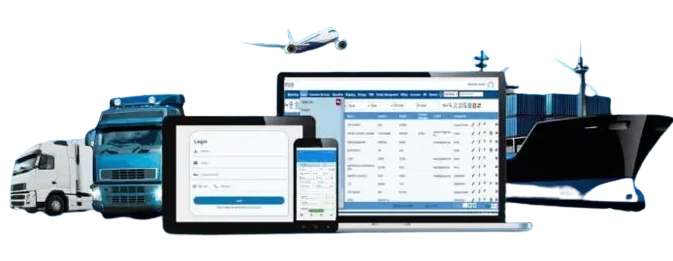
For example, when a forwarder uses a platform that mirrors its workflow—rather than forcing the team to bend to the software—the adoption curve is far smoother. One way of doing this is by using a freight forwarding software like the one offered by QuickMove Technologies. When the tool supports your team’s actual daily tasks, they will view it as helping them, not obstructing them.
3. Make Training a Continuous, Interactive Experience
A one-time training session rarely moves the dial. Build a culture of learning.
- Break the training into bite-sized modules (e.g., “How to create a shipment”, “How to generate a document”, “How to view analytics”).
- Use real cases from your team as training examples—this keeps it relevant.
- Identify internal champions who can answer questions and share tips.
- Celebrate wins: someone who uses a “new feature” or cuts time on a task—recognise it.
- Provide access to vendor support and encourage feedback.
When your team feels supported, and sees that you’re willing to invest time in their success, resistance drops significantly.
4. Celebrate Small Wins & Build Momentum
Changing culture doesn’t happen overnight. It happens through many small wins. And recognising them is important.
- Track metrics: Before the new tool, how long did it take to create a booking? After?
- Encourage the team to suggest improvements: “What part of the system slows you down?” Act on feedback where possible.
- Reinforce that the platform is there to make their lives easier. When they feel the benefit, they’ll become the advocates.
Creating visibility for those wins gradually builds a culture where technology is seen as an enabler—not a burden.
5. Build a Feedback Loop — The Software Isn’t The Finish Line
Even the best software becomes stale if you don’t keep iterating.
- Ask your team regularly: What do you like? What frustrates you?
- Review the analytics: Are there features that are under-used? Are there bottlenecks?
- Adjust your processes and workflows: Sometimes the process needs to change so the software works better.
- Work with your vendor: Share feedback and look for updates or customisations.
By doing this, you avoid the “we installed it and forgot it” scenario. You keep the tool alive, relevant, and aligned with your team’s needs.
6. The Return on a Tech-Positive Culture
You might ask: “Why go through all this effort?” Simply put: when your team loves technology, your business growth follows.
- Efficiency improves: Fewer manual steps, fewer errors, faster turnaround times. According to industry research, implementing digital tools like freight forwarding software in freight forwarding has led to reduced processing times and fewer manual errors.
- Team morale and retention get better: People like working with good tools. They don’t want to feel stuck in old systems while everyone else moves forward.
- Better customer experience: If your team spends less time on manual tasks, they spend more time on proactive communication, problem-solving and value-added service.
- Scalability comes easier: A team comfortable with tech can adapt more quickly to growth, new services, new markets.
Imagine a situation where instead of your operations team being bogged down, they’re monitoring exception alerts, analysing performance metrics, improving processes. That’s the shift you’re aiming for.
7. Bringing It All Together
To build a freight forwarding team that loves technology, think of it as a three-legged stool: people, process, tool.
- People: Engage them, empathise with their pain-points, involve them.
- Process: Don’t just plug in tech—make sure the workflows are clear, streamlined, optimised for the new tool.
- Tool: Choose a freight forwarder software built for your business (and your people) and support it with good training and continuous improvement.
When you get all three aligned, great things happen.
Here’s a simple checklist you can run through:
- Have I asked the team about their main frustrations with current tools/systems?
- Have I identified 1-2 internal champions to support roll-out?
- Does the tool we’re choosing speak the language of freight forwarding and integrate smoothly into current workflows?
- Have we committed to ongoing training and support (not just a one-off session)?
- Are we tracking small wins and recognising them publicly?
- Is there a feedback loop in place for continuous improvement?
Let’s Make Your Freight Team Future‑Ready
When your people are confident, capable, and equipped with tools that make their job easier, they become your greatest asset. They’ll adapt more readily to new business models, they’ll deliver better customer experience, and they’ll help your organisation stay ahead of change.
If you’d like to explore how a software for freight forwarding teams can support this — how it can reduce the friction between people and tech, increase adoption, and ultimately improve results — then you might be interested in how QuickMove Technologies’ software for freight forwarders supports these goals.
Remember: technology isn’t the destination. The destination is a team that uses technology as an enabler. Build that team, optimize the process, pick the right tool—and you’ll be ready for the next phase of your freight forwarding growth.