Email Us
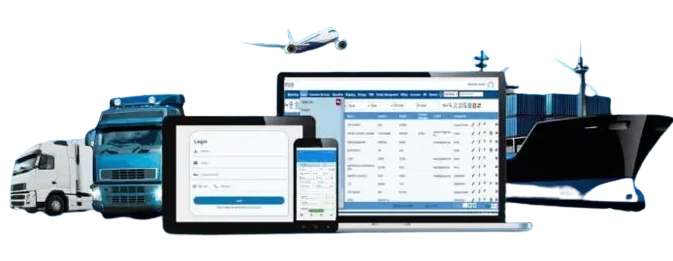
 Freight Forwarding Software
 Warehouse Management System
 Transport Management System
 Moving/Removal Software
 Customer Service Portal
 Move Survey Quote Pro
 Digital Logistics Inventory App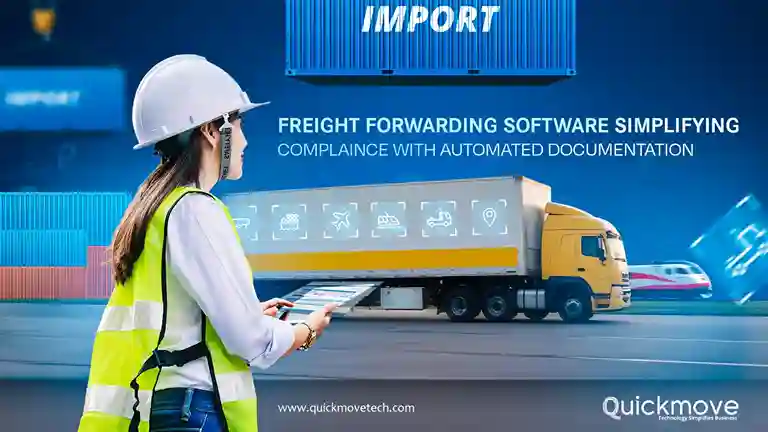
Compliance is not the most exciting part of freight forwarding.
It does not win new clients. It does not make headlines. It does not feel like growth.
But it protects everything.
One wrong HS code.
One missing signature.
One incorrect invoice value.
One late filing.
That is sometimes all it takes for cargo to be delayed, fined, or even seized.
If you have worked in freight forwarding long enough, you already know this. Compliance is not optional. It is daily discipline. And as shipment volumes grow, maintaining that discipline manually becomes harder.
This is where freight forwarding software plays a critical role.
In this detailed guide, we will break down how freight forwarding software simplifies compliance through automated documentation. We will explore real operational challenges, practical solutions, and how structured systems help freight forwarders reduce risk while scaling confidently.
Why Compliance Is So Complex in Freight Forwarding
Freight forwarding is not just about moving cargo from point A to point B.
It involves:
- Export declarations
- Import documentation
- Commercial invoices
- Packing lists
- Bills of lading
- Airway bills
- Certificates of origin
- Dangerous goods declarations
- Customs filings
- Tax documentation
- Regulatory reporting
Every country has different rules. Even within the same country, regulations can change based on:
- Product category
- Trade agreements
- Shipping mode
- Port of entry
- Value thresholds
Manual documentation increases the chances of:
- Data entry errors
- Missing fields
- Incorrect tariff codes
- Duplicate information
- Mismatched invoice values
- Delayed customs clearance
As shipment volumes increase, these risks multiply.
Freight forwarding software reduces this complexity by bringing structure, automation, and consistency into documentation workflows.
The Real Cost of Compliance Errors
Compliance mistakes are expensive.
They lead to:
- Demurrage charges
- Storage costs
- Penalties and fines
- Shipment delays
- Customer dissatisfaction
- Reputational damage
But beyond financial losses, there is another cost: loss of trust.
Shippers rely on freight forwarders to manage international trade correctly. A compliance error can make a customer question your reliability.
Freight forwarding software helps prevent these issues before they happen.
How Automated Documentation Actually Works
When people hear automation, they sometimes imagine complicated systems.
In reality, automated documentation in freight forwarding software means:
- Auto-populated fields
Shipment data entered once is used across all required documents. - Standardized templates
Pre-approved document formats ensure consistency. - Mandatory field validation
The system prevents submission if critical information is missing. - Integrated data flow
Operational, financial, and compliance data stay synchronized. - Audit trails
Every change is recorded.
This structure dramatically reduces human error.
Eliminating Duplicate Data Entry
One of the biggest compliance risks comes from entering the same information multiple times.
For example:
- Shipment details entered in an operations sheet
- The same data typed again into a customs form
- Re-entered into an invoice
- Typed again into a bill of lading
Every repetition increases the chance of inconsistency.
Freight forwarding software centralizes data entry. Once shipment information is entered, it flows automatically into all related documents.
This ensures:
- Matching invoice values
- Correct consignee details
- Consistent product descriptions
- Aligned quantities and weights
Consistency reduces customs queries.
Standardizing Documentation Across Branches
If you operate across multiple branches, documentation practices can vary.
One branch may follow strict procedures. Another may rely on shortcuts.
This inconsistency creates compliance risk.
Freight forwarding software standardizes documentation processes across locations. Everyone follows the same structured workflow.
The freight forwarding software developed by QuickMove Technologies helps enforce uniform documentation standards across branches. This ensures that compliance does not depend on individual habits.
Built-In Validation to Prevent Costly Mistakes
A good compliance system does not just generate documents. It prevents errors.
Freight forwarding software can:
- Flag missing mandatory fields
- Validate HS codes
- Check weight and value mismatches
- Alert users about incomplete forms
- Prevent submission until corrections are made
This built-in validation works like a safety net.
Instead of discovering errors after customs rejection, teams correct them before submission.
Maintaining Accurate Audit Trails
Compliance is not only about creating correct documents. It is also about proving accuracy during audits.
Regulatory bodies may request:
- Shipment history
- Document revisions
- Approval logs
- Financial records
Manual filing systems make retrieval difficult.
Freight forwarding software stores digital records with timestamps and user logs. This creates a clear audit trail.
The freight forwarding software from QuickMove Technologies maintains detailed activity logs, which help businesses respond confidently during audits or compliance checks.
Keeping Up with Regulatory Changes
Trade regulations change frequently.
- New customs rules
- Updated tax structures
- Revised documentation formats
- Changing trade agreements
Relying on outdated templates can create serious compliance risks.
Modern freight forwarder software allows easy updates to documentation formats and compliance rules. This flexibility ensures that businesses adapt quickly to regulatory changes.
Staying updated protects your operations from unnecessary disruptions.
Reducing Dependency on Individual Expertise
Many freight forwarding companies rely heavily on experienced staff for compliance.
While expertise is valuable, over-dependency creates risk:
- What happens if that employee resigns?
- What happens during leave periods?
- What happens if knowledge is undocumented?
Freight forwarding software embeds compliance processes into the system itself.
Structured workflows reduce reliance on individual memory. New employees can follow predefined steps.
The freight forwarding software provided by QuickMove Technologies helps businesses build compliance into their operations rather than depending solely on specific team members.
Improving Customs Clearance Speed
Compliance accuracy directly affects clearance speed.
Customs authorities review:
- Product descriptions
- Valuation
- Classification codes
- Supporting documents
When documentation is incomplete or inconsistent, shipments are flagged.
Automated documentation reduces discrepancies. Clean, standardized paperwork moves faster through customs.
Faster clearance means:
- Reduced storage charges
- Lower demurrage
- Improved delivery timelines
- Happier customers
Integration with Financial Records
Compliance and finance are closely connected.
Incorrect documentation can lead to:
- Incorrect invoicing
- Tax reporting errors
- Revenue leakage
Freight forwarding software integrates documentation with billing systems.
When shipment data flows into invoices automatically:
- Charges are accurate
- Taxes are calculated correctly
- Supporting documents match financial records
This integration strengthens financial compliance.
Supporting Multi-Modal Compliance Requirements
Air, sea, and road shipments each have unique documentation needs.
Freight forwarding software centralizes these requirements under one system.
This allows:
- Mode-specific templates
- Regulatory checks based on shipment type
- Unified compliance tracking
The freight forwarding software from QuickMove Technologies supports multi-modal operations, helping forwarders maintain compliance across different transport methods.
Strengthening Customer Confidence
Customers may not understand every compliance detail, but they notice professionalism.
They notice when:
- Documents are accurate
- Invoices match shipment details
- Customs clearance is smooth
- Updates are timely
Consistent compliance builds trust.
Freight software supports structured communication and accurate documentation, reinforcing credibility.
Reducing Paper-Based Risks
Paper documentation can be:
- Lost
- Damaged
- Misfiled
- Delayed
Digital documentation within freight forwarding software ensures secure storage and easy retrieval.
This not only improves efficiency but also supports environmental sustainability.
Scaling Compliance as Business Grows
As shipment volumes increase, compliance complexity increases.
Manual systems that worked for 50 shipments per month may fail at 500 shipments.
Freight forwarding software scales with volume. Automated workflows handle higher loads without increasing error rates proportionally.
The freight forwarding software built by QuickMove Technologies is designed to support growing freight businesses, helping them maintain compliance even as operations expand.
Real-World Operational Experience Matters
Compliance management is not theoretical. It is practical.
It involves:
- Late-night document corrections
- Urgent customer calls
- Customs queries
- Last-minute amendments
Freight forwarding software does not remove responsibility. But it provides structure.
Systems built by experienced logistics technology providers understand these real-world challenges.
That industry understanding makes the difference between generic software and purpose-built freight forwarding software.
Why Compliance Should Be a Strategic Priority
Many companies treat compliance as a backend function.
But strong compliance management:
- Protects profit margins
- Prevents legal risk
- Supports customer retention
- Enables market expansion
- Builds brand reputation
Freight forwarding software transforms compliance from reactive problem-solving to proactive control.
Final Thoughts
Compliance will always be part of freight forwarding.
Regulations will evolve. Documentation requirements will expand. Trade policies will shift.
The question is not whether compliance matters.
The question is whether your business manages compliance manually or structurally.
Digital freight forwarding software simplifies compliance by:
- Automating documentation
- Reducing manual errors
- Standardizing workflows
- Maintaining audit trails
- Integrating financial records
- Supporting scalable growth
In today’s competitive logistics environment, structured compliance is not just about avoiding penalties. It is about building a reliable, future-ready freight forwarding business.
Investing in the right freight forwarding software helps you move from reactive corrections to confident operations.
And when compliance becomes predictable, growth becomes sustainable.