Email Us
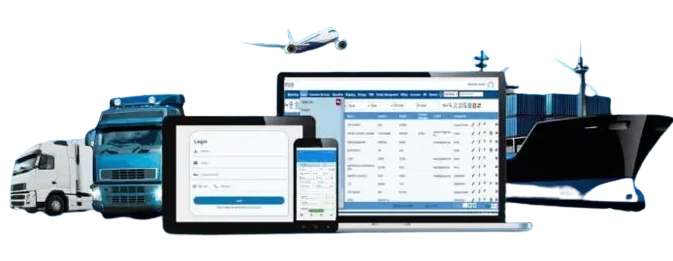
 Freight Forwarding Software
 Warehouse Management System
 Transport Management System
 Moving/Removal Software
 Customer Service Portal
 Move Survey Quote Pro
 Digital Logistics Inventory App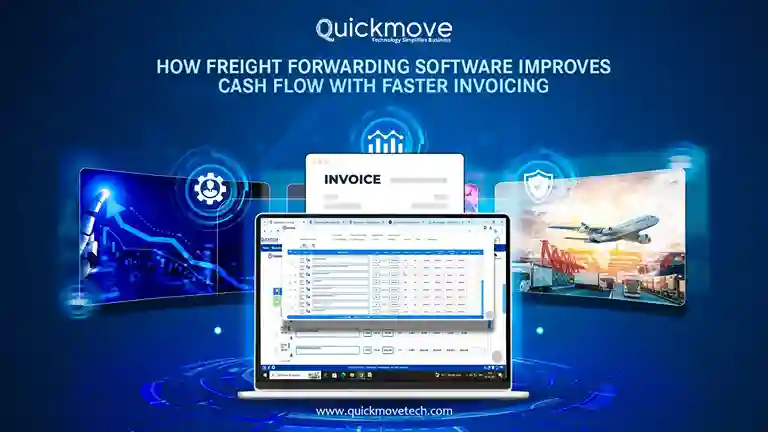
Cash flow is the lifeline of every freight forwarding business.
You can have strong sales. You can have a full shipment pipeline. You can even have happy customers.
But if your invoices are delayed, inaccurate, or disputed, your cash flow suffers. And when cash flow suffers, growth slows down.
In freight forwarding, this problem is more common than many people admit.
Margins are thin. Costs change quickly. Charges come from multiple parties — carriers, agents, transporters, customs brokers, port authorities. A small delay in billing can mean weeks of delay in payment. A small error in an invoice can turn into a long email chain and a blocked receivable.
This is exactly where freight forwarding software makes a measurable difference.
In this detailed guide, we will break down how freight forwarding software improves cash flow with faster invoicing.
Why Cash Flow Is a Constant Challenge in Freight Forwarding
Freight forwarding is not a simple buy-and-sell business.
You:
- Pay shipping lines before receiving payment from customers
- Handle multiple currencies
- Manage credit terms
- Absorb fluctuating freight rates
- Add local and international charges
- Work with partners across time zones
This creates a timing gap between outgoing payments and incoming payments.
If invoicing is slow or inaccurate, that gap becomes dangerous.
Here are the most common invoicing-related cash flow problems in freight forwarding:
- Delayed invoice generation
- Missing charges
- Incorrect rates
- Manual calculations
- Unbilled shipments
- Slow internal approvals
- Customer disputes
- Poor follow-up on receivables
Most of these issues are not caused by bad management. They are caused by manual systems and disconnected tools.
Freight forwarding software fixes these structural problems.
The Direct Link Between Invoicing Speed and Cash Flow
Let’s simplify it.
- Shipment completed on Monday
- Invoice sent on Friday
- Customer pays in 30 days
Now compare:
- Shipment completed on Monday
- Invoice sent after 15 days
- Customer pays in 30 days
In the second case, you receive money 15 days later — even though the shipment was already done.
Multiply that by hundreds of shipments per month.
That is locked working capital.
Freight software reduces this delay by automating the entire invoicing workflow.
1. Automatic Invoice Generation After Job Completion
In manual setups, invoices are created only after:
- Operations confirm costs
- Finance gathers documents
- Charges are calculated
- Emails are checked
This can take days.
Freight forwarding software connects job creation, shipment milestones, and billing triggers.
Once a shipment reaches a defined stage (for example, cargo delivered), the system can:
- Pull all charges linked to that job
- Calculate margins automatically
- Apply agreed rates
- Generate a draft invoice instantly
No chasing paperwork. No re-entering data.
This alone can reduce billing delays by 50–70%.
2. Centralized Rate Management Eliminates Pricing Errors
Rate confusion is one of the biggest causes of invoice disputes.
Freight forwarders manage:
- Contract rates
- Spot rates
- Agent rates
- Fuel surcharges
- Destination charges
- Add-on services
When these are stored in spreadsheets or email threads, mistakes are inevitable.
Freight forwarding software centralizes rate management. Each customer, route, and service has predefined pricing rules.
When an invoice is generated:
- The correct rate is applied automatically
- Markups are calculated consistently
- Currency conversion is handled properly
With fewer mistakes, disputes reduce. With fewer disputes, payments come faster.
3. Real-Time Cost Capture Prevents Revenue Leakage
Many forwarders lose money simply because charges are missed.
Examples:
- Storage fees not billed
- Additional handling charges forgotten
- Documentation fees overlooked
- Re-routing costs not updated
These small leaks affect margins and cash flow.
Freight forwarding software tracks every cost linked to a job in real time.
When generating an invoice, the system:
- Pulls all cost entries
- Flags missing sell rates
- Highlights negative margins
This ensures every billable item is invoiced.
Complete invoicing means stronger cash inflow.
4. Faster Internal Approvals
In many companies, invoices sit in inboxes waiting for approval.
Operations send draft details. Finance checks calculations. Management reviews high-value shipments.
This back-and-forth slows everything down.
Freight forwarding software creates structured workflows:
- Role-based approvals
- Automated notifications
- Audit trails
- Digital sign-offs
Instead of chasing people, the system moves the invoice forward.
Less internal delay means quicker dispatch to customers.
5. Integrated Accounting Reduces Double Work
When operations and accounting systems are separate, data is entered twice.
That means:
- Higher error risk
- More time spent
- Delayed billing
Freight forwarding software with integrated accounting ensures:
- Job data flows directly into financial modules
- No re-entry required
- Tax calculations automated
- Ledgers updated in real time
This speeds up invoice creation significantly.
For example, solutions like QuickMove Technologies’ freight management software are designed with integrated financial workflows, allowing forwarding companies to generate invoices directly from shipment data without manual duplication.
That direct connection between operations and finance protects cash flow.
6. Multi-Currency Invoicing Without Confusion
Freight forwarding is global.
You may:
- Pay a carrier in USD
- Bill a customer in EUR
- Handle local charges in INR
Manual currency handling creates:
- Conversion errors
- Margin distortion
- Reconciliation headaches
Freight forwarding software automatically:
- Applies exchange rates
- Calculates margins in base currency
- Shows gain/loss clearly
Clear numbers mean fewer disputes and quicker payments.
7. Digital Documentation Speeds Invoice Dispatch
Another common delay: waiting for documents.
Invoices often require:
- Bill of Lading copies
- Proof of Delivery
- Customs documents
- Delivery receipts
If these are stored physically or across multiple folders, finance waits.
Freight forwarding software stores all shipment documents in one centralized system.
When generating an invoice:
- Required documents can be attached instantly
- Everything is emailed in one click
- Records remain accessible
Professional documentation builds trust and reduces payment delays.
8. Real-Time Accounts Receivable Tracking
Sending invoices is only half the story.
You must also track:
- Due dates
- Overdue payments
- Credit limits
- Aging reports
Freight forwarding software provides real-time dashboards showing:
- Outstanding amounts
- Days Sales Outstanding (DSO)
- Customer-wise receivables
- Payment trends
This allows proactive follow-up.
Instead of reacting after 60 days, you follow up at 30.
Better monitoring improves cash collection speed.
9. Automated Payment Reminders
Manual follow-ups are uncomfortable and inconsistent.
Freight forwarding software can send:
- Pre-due reminders
- Due-date alerts
- Overdue notifications
These automated reminders reduce awkward calls and improve payment discipline.
Customers are more likely to pay on time when reminders are structured and professional.
10. Clear Profit Visibility per Shipment
Cash flow problems sometimes hide deeper issues: low margins.
If you are barely profitable on shipments, delayed payments hit harder.
Freight forwarding software shows real-time profitability:
- Revenue vs cost
- Gross margin per job
- Customer-wise profitability
- Route-wise performance
With visibility, you can adjust pricing and protect cash flow.
QuickMove Technologies’ software for freight forwarding companies, for instance, gives detailed shipment-level profit tracking that helps forwarders identify weak margins before they impact working capital.
Better margins + faster invoicing = healthier cash flow.
11. Reducing Billing Disputes Through Transparency
Disputes delay payments more than anything else.
Customers question:
- Unexpected charges
- Rate differences
- Calculation errors
- Missing backup documents
Freight forwarding software provides structured invoice breakdowns:
- Clear charge categories
- Linked shipment references
- Supporting documents attached
- Transparent rate calculations
Professional invoices build confidence.
Confidence speeds up payments.
12. Preventing Unbilled Shipments
In manual systems, some shipments are simply never billed.
This happens due to:
- Lost paperwork
- Miscommunication
- Staff turnover
- Process gaps
Freight forwarding software provides job status tracking.
It shows:
- Open shipments
- Completed but unbilled jobs
- Pending approvals
- Invoices not yet dispatched
Nothing slips through.
No missed billing means stronger cash flow.
13. Supporting Credit Control Policies
Cash flow improves when credit policies are enforced.
Freight forwarding software can:
- Block new bookings for overdue customers
- Flag credit limit breaches
- Notify sales teams
- Generate customer aging reports
This prevents bad debt buildup.
Healthy receivables improve working capital stability.
14. Improving Operational-Finance Collaboration
One of the biggest bottlenecks in freight companies is the disconnect between operations and finance.
Operations focus on moving cargo.
Finance focuses on billing and payments.
Freight forwarding software connects both teams through one system.
Everyone sees:
- Shipment status
- Cost entries
- Revenue details
- Invoice status
When data is shared, billing becomes faster and more accurate.
QuickMove Technologies’ freight forwarding software emphasizes this unified workflow, ensuring operations and finance teams work from the same live data instead of separate spreadsheets.
That alignment improves billing speed significantly.
15. Reducing Dependency on Key Individuals
Some companies rely heavily on one experienced billing staff member.
If that person is absent:
- Invoicing stops
- Errors increase
- Cash flow slows
Freight forwarding software standardizes processes.
Billing rules are stored in the system, not in someone’s memory.
This reduces risk and ensures continuity.
16. Audit-Ready Financial Records
Delayed audits can freeze payments or credit facilities.
Freight forwarding software maintains:
- Complete financial logs
- Invoice histories
- Approval trails
- Payment records
Clean records increase credibility with banks and investors.
Stronger financial trust can improve access to working capital funding.
17. Faster Month-End Closures
Month-end delays impact financial clarity.
Freight forwarding software accelerates closing by:
- Tracking accrued costs
- Matching revenue automatically
- Generating financial reports instantly
When you close books faster, you understand cash position earlier and make better decisions.
18. Enabling Digital Payment Integration
Modern freight forwarding software integrates with:
- Online payment gateways
- Bank reconciliation systems
- ERP integrations
Customers can pay faster using digital options.
The easier you make payment, the faster you receive money.
19. Building Customer Confidence Through Professional Systems
Clients notice professionalism.
When invoices are:
- Accurate
- Prompt
- Well-documented
- Clearly structured
They trust your systems.
That trust improves long-term payment behavior.
QuickMove Technologies’ freight software supports branded, professional invoice formats that enhance credibility while keeping billing efficient.
Professional image supports steady cash flow.
20. Scaling Billing Without Increasing Overheads
As shipment volume increases, manual billing becomes a bottleneck.
Freight forwarding software allows you to:
- Process more invoices
- Maintain accuracy
- Avoid hiring large finance teams
This improves operational efficiency while strengthening cash flow.
Growth becomes sustainable.
Choosing the Right Freight Forwarding Software for Cash Flow Improvement
Not all systems are equal.
When evaluating freight forwarding software for invoicing improvement, check:
- Is accounting integrated or separate?
- Can invoices be auto-generated from jobs?
- Is rate management centralized?
- Does it support multi-currency?
- Are approval workflows configurable?
- Does it provide real-time receivables dashboards?
Solutions like QuickMove Technologies’ freight forwarding software are designed specifically for logistics businesses, combining operations, finance, and reporting in one connected platform.
Choosing the right system determines how quickly you see cash flow improvements.
Final Thoughts
Cash flow problems in freight forwarding are rarely about lack of sales.
They are usually about delayed invoicing, errors, disputes, and weak tracking.
Freight forwarding software improves cash flow by:
- Accelerating invoice creation
- Eliminating manual errors
- Capturing all billable charges
- Enabling faster approvals
- Strengthening receivables management
- Improving transparency
- Reducing disputes
When invoicing becomes fast, accurate, and structured, money moves faster.
And when money moves faster, businesses grow with confidence.
If your company is still managing invoices through spreadsheets, disconnected accounting tools, or email chains, it may be time to evaluate whether modern freight forwarding software can unlock the working capital already sitting inside your operations.
Because in freight forwarding, the fastest way to improve cash flow is not selling more.
It is billing smarter.