Email Us
 Freight Forwarding Software
 Warehouse Management System
 Transport Management System
 Moving/Removal Software
 Customer Service Portal
 Move Survey Quote Pro
 Digital Logistics Inventory App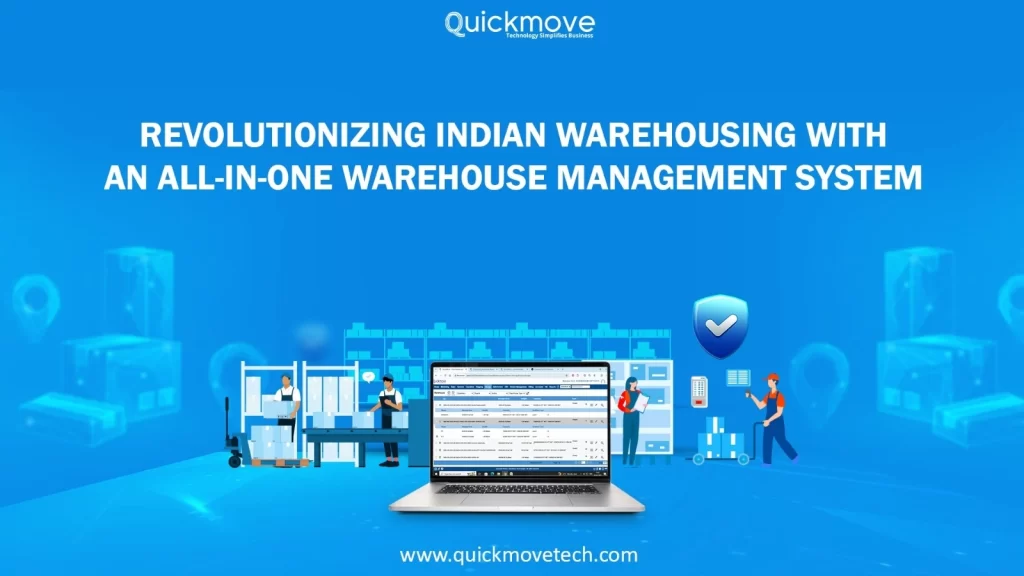
The Indian warehousing sector is undergoing a massive transformation. Driven by the rapid expansion of e-commerce, the rise of organized retail, the growth of third-party logistics (3PL), and the government’s push toward digital infrastructure, warehouses today are no longer just storage spaces. They are operational hubs where speed, accuracy, compliance, and visibility determine business success.
Yet, many warehouse operations across India still rely heavily on manual processes, disconnected systems, and reactive decision-making. This creates challenges such as inventory mismatches, delayed dispatches, compliance risks, and inefficient use of space and manpower.
To stay competitive in this fast-evolving environment, warehouse operators must modernize. One of the most impactful steps toward modernization is adopting a robust Warehouse Management System (WMS). QuickMove’s all-in-one warehouse management system is built specifically to meet the evolving demands of the Indian logistics ecosystem. It combines automation, real-time data visibility, and operational intelligence into a single platform that supports warehouses of all sizes.
This article explores how a modern WMS can transform Indian warehouse operations and why it is becoming an essential investment rather than an optional upgrade.
Understanding the Modern Indian Warehousing Landscape
India’s logistics and warehousing sector has experienced steady growth over the past decade. With increased consumer expectations for faster deliveries, same-day shipping, and transparent tracking, warehouses are now under pressure to operate with higher accuracy and speed than ever before.
Some common challenges faced by Indian warehouse operators include:
- Stock discrepancies due to manual tracking
- Poor inventory visibility across multiple locations
- Inefficient inbound and outbound processes
- Space constraints in metro cities
- Increasing compliance requirements
- Rising labor costs and productivity concerns
These challenges cannot be solved effectively with spreadsheets, paper logs, or disconnected software. Businesses need a centralized, intelligent system that brings all warehouse operations under one roof.
This is where a well-designed warehouse management system becomes a game-changer.
What Makes a Modern WMS Essential Today?
A modern WMS is not just about tracking inventory. It is a comprehensive operational platform that helps warehouses:
- Automate repetitive processes
- Improve accuracy and accountability
- Optimize space utilization
- Enhance decision-making through data
- Maintain regulatory compliance
- Deliver better customer experiences
QuickMove’s warehouse management system software is designed with practical insights from real logistics environments, making it suitable for Indian warehouses dealing with high volumes, multiple clients, and fast-moving inventory.
Real-Time Inventory Tracking: The Foundation of Efficiency
One of the biggest pain points in Indian warehouses is inventory mismatch. Manual entries, delayed updates, and poor visibility often lead to stock discrepancies that affect customer satisfaction and operational planning.
With real-time inventory tracking, warehouse teams can monitor:
- Stock levels
- SKU movement
- Storage locations
- Batch and lot details
QuickMove’s system allows businesses to track inventory as it moves through the warehouse. This reduces the chances of stock errors and enables accurate order fulfillment.
From an operational standpoint, real-time tracking also supports better forecasting. Warehouse managers can quickly identify fast-moving products, slow-moving inventory, and replenishment needs without relying on outdated reports.
Automating Inbound Operations for Faster Processing
Inbound operations are the starting point of warehouse efficiency. Delays or errors during goods receiving can create problems across the entire supply chain.
A strong WMS automates critical inbound processes such as:
- Goods receiving
- GRN generation
- Quality checks
- Put-away allocation
QuickMove’s warehouse management system streamlines the receiving workflow, ensuring that goods are recorded accurately and placed in the right storage locations quickly. This reduces waiting time, improves documentation accuracy, and ensures smoother operations during peak seasons.
For warehouses in metro cities where time pressure is high, automation can significantly reduce turnaround times.
Streamlined Outbound Operations: Picking, Packing, and Dispatch
Outbound processes directly impact delivery timelines and customer satisfaction. Even a small error in picking or dispatch can lead to returns, customer complaints, and financial losses.
With an integrated WMS, warehouses can:
- Optimize picking routes
- Reduce manual errors
- Speed up packing and dispatch
- Maintain accurate shipment records
QuickMove’s system ensures that every step—from picking to final dispatch—is guided by structured workflows. This improves order accuracy and helps teams handle large volumes without chaos.
Barcode and RFID Integration for Accuracy and Speed
Manual data entry remains one of the biggest sources of errors in warehouse operations. Barcode and RFID integration address this problem by enabling fast, reliable scanning of products.
These technologies help warehouses:
- Reduce human errors
- Speed up product identification
- Improve stock accuracy
- Simplify training for staff
For small and mid-sized Indian warehouses, this means fewer resources spent on repetitive tasks and more focus on operational productivity.
Managing Multiple Warehouses from One Platform
As businesses expand, managing multiple warehouses across cities becomes complex. Without a centralized system, it becomes difficult to track stock movement, balance inventory, and maintain consistency.
QuickMove’s warehouse management software supports multi-location operations, allowing companies to:
- Manage inventory across multiple cities
- Monitor performance from a central dashboard
- Maintain standardized processes
This is especially valuable for logistics providers operating in key hubs such as Delhi, Mumbai, Bengaluru, Chennai, and Hyderabad.
Role-Based Access for Better Control and Security
As operations become more digital, data security and access control become critical. Not every team member needs access to sensitive information.
Role-based access ensures that:
- Employees see only relevant data
- Sensitive information remains protected
- Accountability is maintained
This structured approach helps organizations maintain discipline, reduce internal risks, and create a secure working environment.
Slotting Optimization: Solving Space Constraints
Space utilization is a major challenge in Indian warehouses, particularly in urban areas where rental costs are high.
Slotting optimization helps warehouses:
- Allocate storage space intelligently
- Reduce travel time within the warehouse
- Improve picking efficiency
- Maximize storage capacity
QuickMove’s system automatically suggests best-fit storage locations based on product movement patterns. This minimizes manual reorganization and improves overall productivity.
Efficient Returns Management for the E-Commerce Era
With the growth of online shopping, returns management has become an essential part of warehouse operations.
A structured returns process helps:
- Maintain accurate inventory records
- Improve customer satisfaction
- Reduce financial losses
The warehouse management system includes reverse logistics support, ensuring that returned goods are tracked, inspected, and reintegrated into inventory smoothly.
Data-Driven Decision Making with KPI Dashboards
Modern warehouses need more than just operational tools—they need insights.
KPI dashboards provide real-time visibility into:
- Order processing speed
- Team productivity
- Inventory turnover
- Operational bottlenecks
With QuickMove’s reporting tools, warehouse managers can make informed decisions quickly. Instead of reacting to problems, they can identify patterns and improve processes proactively.
Mobile and Hand-Held Device Support
India is a mobile-first market, and warehouse operations are increasingly adopting mobile technology.
With mobile support, teams can:
- Update inventory on the go
- Track tasks in real time
- Improve coordination on the warehouse floor
This flexibility is particularly useful for warehouses in semi-urban and remote locations where desktop access may be limited.
Built-In Billing for 3PL Operations
For third-party logistics providers, accurate billing is critical. Manual billing often leads to disputes and delays.
QuickMove’s platform supports automated billing for:
- Storage charges
- Handling fees
- Value-added services
This ensures transparency, accuracy, and faster payments, helping 3PL providers maintain strong financial operations.
Customer Portal for Greater Transparency
Today’s clients expect visibility into their inventory and orders. An integrated customer portal allows clients to:
- Check stock levels
- View order status
- Access reports
This reduces dependency on support teams and enhances customer trust.
Compliance and Documentation Made Simple
Indian warehouses must comply with various regulatory requirements, including GST, FSSAI, and safety standards.
Managing documentation manually increases the risk of errors and penalties.
A digital WMS helps:
- Store important documents securely
- Maintain compliance records
- Simplify audits
This reduces administrative burden and ensures smoother operations.
Seamless Integration Across the Logistics Ecosystem
Warehousing does not operate in isolation. It connects with multiple systems such as:
- CRM
- Freight management
- Transportation management
- Accounting software
- Procurement platforms
QuickMove’s warehouse management system integrates with these tools, creating a seamless data flow across departments. This enables a truly connected logistics operation.
From Storage Spaces to Smart Warehouses
Indian warehousing is moving toward a more structured, technology-driven future. Businesses that continue relying on manual systems risk falling behind in efficiency, accuracy, and customer satisfaction.
Adopting a modern warehouse management system like QuickMove’s can transform operations by:
- Improving productivity
- Enhancing visibility
- Ensuring compliance
- Strengthening customer relationships
Digital transformation is no longer optional in today’s logistics environment. It is a strategic necessity.
For warehouses aiming to scale, stay competitive, and deliver consistent service in a digital-first world, investing in the right WMS is not just an upgrade—it is a long-term foundation for growth.