 Email Us
 Freight Forwarding Software
 Warehouse Management System
 Transport Management System
 Moving/Removal Software
 Customer Service Portal
 Move Survey Quote Pro
 Digital Logistics Inventory App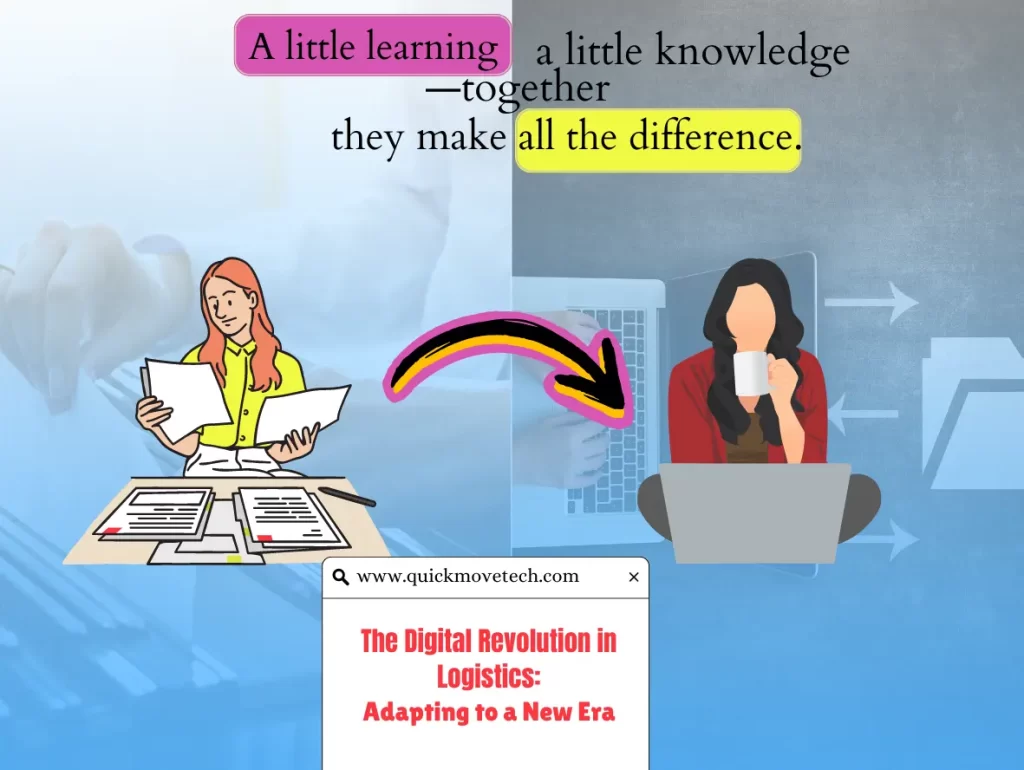
The logistics industry is experiencing one of the biggest transformations in its history. Driven by rapid advances in digital technology, the way goods are planned, moved, stored, and delivered has fundamentally changed. What was once a traditional, manual, and reactive industry is now becoming data-driven, automated, and highly connected.
This digital revolution is no longer optional. Rising customer expectations, global supply chain disruptions, and intense competition mean that logistics companies must adopt modern technologies to survive and grow. Businesses that embrace digital transformation gain better visibility, faster operations, lower costs, and stronger customer trust.
In this blog, we explore how digital technologies are reshaping logistics and what companies can do to successfully adapt to this new era.
Why Digital Transformation Matters in Logistics
Logistics sits at the heart of global trade. Even small inefficiencies can lead to delays, higher costs, and unhappy customers. Digital tools help logistics providers:
- Improve speed and accuracy
- Reduce operational costs
- Increase supply chain transparency
- Respond quickly to disruptions
- Meet sustainability goals
Companies that fail to modernize risk falling behind competitors who can deliver faster, cheaper, and more reliably.
Automation and AI: Redefining Logistics Operations
How Automation Is Changing Daily Operations
Automation has become one of the most powerful drivers of efficiency in logistics. Tasks that once required manual input—such as order processing, inventory updates, and shipment scheduling—can now be handled automatically through advanced software systems.
Warehouse Management Systems (WMS), robotic picking solutions, and automated sorting systems help reduce errors, improve speed, and optimize space utilization. These technologies are especially valuable in high-volume environments where accuracy and consistency are critical.
The Role of Artificial Intelligence in Decision-Making
Artificial Intelligence (AI) goes beyond basic automation. AI analyzes large volumes of data to identify patterns and make intelligent decisions in real time. In logistics, AI is used to:
- Optimize delivery routes based on traffic and weather
- Predict demand and prevent stock shortages
- Forecast equipment maintenance to avoid breakdowns
- Improve last-mile delivery accuracy
By using AI-driven insights, logistics companies can move from reactive problem-solving to proactive planning.
Real-Time Tracking and End-to-End Visibility
Why Visibility Is Now a Customer Expectation
Modern customers expect transparency. Whether it’s a business shipment or an online order, people want to know where their goods are and when they will arrive. Real-time tracking has become a standard requirement rather than a premium feature.
Using GPS, Internet of Things (IoT) sensors, and cloud-based platforms, logistics providers can monitor shipments at every stage of the journey. This visibility improves trust and reduces customer inquiries.
Operational Benefits of Real-Time Tracking
Beyond customer satisfaction, real-time tracking offers major operational advantages:
- Faster response to delays or disruptions
- Improved coordination between warehouses and carriers
- Better inventory planning
- Reduced loss and theft
With logistics software providing accurate, real-time data, logistics managers can make smarter decisions and minimize risks.
Blockchain Technology: Building Trust and Transparency
What Blockchain Brings to Logistics
Blockchain is gaining attention in logistics because it creates a secure and transparent way to record transactions. Every shipment event—such as dispatch, customs clearance, or delivery—is recorded on a shared, tamper-proof ledger.
This technology reduces paperwork, prevents data manipulation, and improves accountability across the supply chain.
Industries Benefiting Most from Blockchain
Blockchain is especially valuable in industries where traceability and compliance are critical, including:
- Pharmaceuticals (drug safety and authenticity)
- Food and agriculture (origin tracking and recalls)
- Luxury goods (anti-counterfeiting)
By improving trust between stakeholders, blockchain helps create more reliable and efficient supply chains.
Big Data and Predictive Analytics in Logistics
Turning Data into Actionable Insights
Logistics companies generate massive amounts of data every day—from shipment records to customer orders and vehicle performance. Big data analytics helps turn this information into meaningful insights.
By analyzing historical and real-time data, businesses can identify inefficiencies and improve planning across the supply chain.
How Predictive Analytics Improves Performance
Predictive analytics allows companies to anticipate future events rather than reacting after problems occur. Common use cases include:
- Forecasting demand more accurately
- Identifying potential delivery delays
- Optimizing warehouse staffing levels
- Planning inventory based on seasonal trends
Using logistics software that offers predictive analytics features leads to better resource utilization, lower costs, and improved service levels.
Sustainability Through Digital Technology
Reducing Environmental Impact with Smart Solutions
Sustainability is no longer just a corporate responsibility—it’s a business priority. Customers, regulators, and partners increasingly expect logistics companies to reduce their environmental footprint.
Digital tools support sustainability by:
- Optimizing routes to reduce fuel consumption
- Supporting electric and autonomous vehicle fleets
- Improving warehouse energy efficiency
- Minimizing waste through better inventory planning
Technology as a Long-Term Sustainability Enabler
AI-powered forecasting and digital inventory systems help prevent overproduction and excess storage, reducing waste across the supply chain. These improvements not only benefit the environment but also lower operating costs.
How Logistics Companies Can Adapt to the New Digital Era
Embracing a Digital-First Mindset
Successful digital transformation requires more than adopting new tools. Companies must rethink how they operate and make technology a core part of their strategy.
Key steps include:
- Assessing current processes and identifying gaps
- Investing in scalable digital solutions
- Integrating systems for seamless data flow
Upskilling Teams and Strengthening Cybersecurity
Technology is only effective when people know how to use it. Training employees to work with digital platforms is essential for long-term success.
At the same time, as logistics becomes more digital, cybersecurity must be a top priority. Protecting sensitive customer and shipment data builds trust and prevents costly disruptions.
Preparing for the Future of Logistics
The digital revolution in logistics is not a passing trend—it represents a permanent shift in how the industry operates. Automation, AI, real-time tracking, blockchain, and data analytics are redefining efficiency, transparency, and sustainability. Logistics companies that embrace digital transformation today will be better prepared to handle future challenges, meet evolving customer expectations, and build resilient supply chains. By investing in the right technologies and people, businesses can turn disruption into opportunity and position themselves for long-term success.


We are offer seamless Luxury airport transfers in Dubai for both personal and professional trips.