Email Us
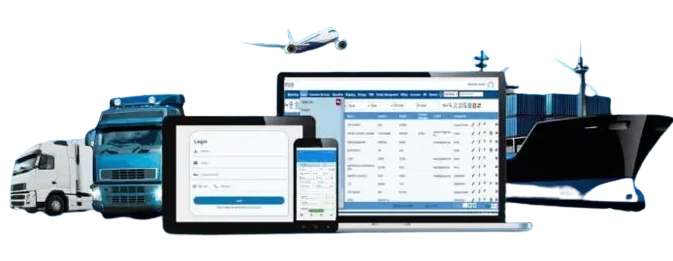
 Freight Forwarding Software
 Warehouse Management System
 Transport Management System
 Moving/Removal Software
 Customer Service Portal
 Move Survey Quote Pro
 Digital Logistics Inventory App
Choose the right shipping method to streamline your logistics and grow your business.
When it comes to moving goods across borders or even within the same country, freight forwardingis the invisible engine that keeps global trade running. But here’s something many businesses overlook — choosing the right mode of transportation can make a huge difference in your delivery speed, cost, and overall efficiency.
So, let’s break down the most commonly used modes of freight transport, and help you figure out which one works best for your business.
Let’s walk through the five primary freight transport options, their pros and cons — and how QuickMove Freight Forwarding Software makes managing them easier than ever.
1. Road Freight – Flexible and Ideal for Short-Distance Delivery
Road freight services are the most widely used mode, especially for domestic logistics and last-mile delivery. For businesses managing trucking logistics, especially small businesses, this mode is practical and budget-friendly.
Why Choose Road Freight?
- Perfect for Less Than Truckload (LTL) or Full Truckload (FTL) shipping
- Easy door-to-door transport
- More scheduling flexibility
That said, road transport can face delays due to weather, traffic, or road conditions. This is where QuickMove helps. With real-time route optimization, driver tracking, and automated scheduling, QuickMove makes road freight management smarter and faster.
2. Air Freight – Speed Wins for Time-Critical Shipments
When every minute counts, air cargo services offer unbeatable speed. Businesses dealing in electronics, pharmaceuticals, or high-value goods often turn to air freight forwarding companies for express international shipping.
Advantages of Air Freight:
- Fastest international shipping method
- High reliability and security
- Ideal for perishable and urgent cargo
However, air freight is expensive and not ideal for bulky shipments. With QuickMove Freight Management Software, you can automate air shipment bookings, get real-time tracking, and handle air waybill (AWB) documentation—all in one place.
3. Ocean Freight – Cost-Effective for Large and Heavy Shipments
Ocean freight forwarding is perfect for transporting large volumes of goods across continents. Whether it’s FCL or LCL, container shipping services offered by sea freight companies make it the most cost-effective freight forwarding method for non-urgent shipments.
Why Ocean Freight Works:
- Low cost per unit for large or heavy cargo
- Ideal for global import/export businesses
- Multiple container options to suit your load
QuickMove simplifies ocean freight logistics by letting you manage container bookings, generate Bill of Lading (B/L), and handle port-wise shipment planning with full visibility.
4. Rail Freight – Reliable for Long-Haul Inland Transport
Rail cargo transport is a powerful alternative for moving goods across large land masses. For bulk goods, especially in industrial sectors, freight trains logistics offer consistent schedules and a low carbon footprint.
Why Rail Freight is Effective:
- Efficient for long-distance inland shipments
- Lower emissions compared to road or air
- Great for heavy or large-volume loads
5. Multimodal & Intermodal Transport – Smart, Integrated Logistics
Sometimes, one transport mode isn’t enough. Businesses often rely on multimodal freight solutions or intermodal transportation logistics to move goods across multiple regions efficiently.
Why Multimodal is a Game-Changer:
- Combines the strengths of different modes
- Reduces overall transit time and cost
- Ensures better risk management and flexibility
QuickMove Freight Forwarding Software excels at managing integrated shipping services, letting you switch between road, rail, sea, and air—while keeping documentation, tracking, and billing centralized in one dashboard.
Choosing the Right Mode: Factors to Consider
When deciding which freight transport mode to use, ask yourself:
- How fast does the shipment need to arrive?
- What’s your logistics budget?
- Are you shipping domestically or internationally?
- What’s the size, weight, and sensitivity of your cargo?
- Are you managing your own shipments or using a freight forwarder?
No matter the answer, QuickMove can help. Our logistics software is designed to handle complex shipments across all modes—giving you the visibility, automation, and control you need.
Why Choose QuickMove Freight Software?
QuickMove is not just a tool — it’s your logistics partner. Here’s how we help streamline your operations across all modes of transport:
- Mode-wise shipment planning (Air, Ocean, Rail, Road, Multimodal)
- Automated documentation (AWB, B/L, Shipping instructions)
- Real-time shipment tracking
- Integrated invoicing and profitability analysis
- CRM and follow-ups for freight clients
Whether you’re a small freight forwarder or a large logistics company, QuickMove helps you deliver better, faster, and smarter.
Final Thoughts
Mastering freight forwarding starts with understanding the transportation options available. By picking the right mode—and managing it with the right tools—you’ll reduce delays, control costs, and scale your logistics like a pro.
With QuickMove Freight Forwarding Software, you don’t have to guess or juggle between spreadsheets and phone calls. Everything you need is at your fingertips.