Email Us

 Freight Forwarding Software
 Warehouse Management System
 Transport Management System
 Moving/Removal Software
 Customer Service Portal
 Move Survey Quote Pro
 Digital Logistics Inventory App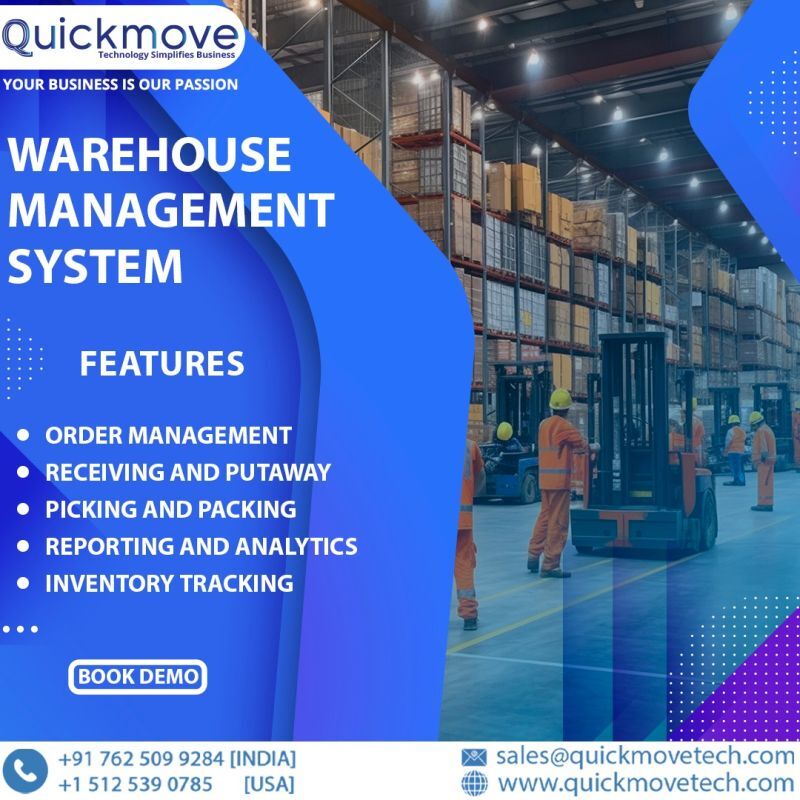
Warehouses today are the beating heart of supply chains. They’re no longer simple storage spaces — they’re fast-moving hubs where timing, accuracy, and visibility make all the difference. In a world driven by online orders, same-day deliveries, and global operations, efficiency inside the warehouse can make or break a business.
That’s why more companies are turning to warehouse management software (WMS) — digital tools designed to streamline every part of warehouse operations. From inventory tracking to order fulfilment, modern WMS platforms are helping businesses work smarter, faster, and more profitably.
Why Warehouse Efficiency Is So Important
Every delay, misplaced product, or stock error in a warehouse costs time and money. When orders pile up and staff can’t locate items quickly, it impacts customer satisfaction and your bottom line. Efficient warehouse management ensures that goods move smoothly from receiving to dispatch, reducing waste and increasing throughput.
Here are some common challenges that modern warehouses face:
- Inventory errors: Manual tracking often leads to discrepancies and misplaced stock.
- Inefficient layout: Poor organisation means workers spend too much time walking or searching for items.
- Limited visibility: Without real-time data, managers can’t make informed decisions.
- Labour inefficiencies: Assigning tasks manually can lead to uneven workloads and delays.
Addressing these challenges isn’t just about working harder — it’s about working smarter. That’s where innovative software comes in.
What a Warehouse Management System Actually Does
A WMS is like the brain of your warehouse. It connects all moving parts — inventory, staff, and workflows — and ensures everything runs in sync. The main functions include:
- Inventory Control: Real-time tracking of stock levels, locations, and movements.
- Order Management: Automating picking, packing, and shipping to ensure accuracy.
- Space Optimisation: Suggesting the best storage locations based on item demand.
- Labour Management: Allocating tasks based on staff availability and skill levels.
- Analytics & Reporting: Offering dashboards that show performance metrics and bottlenecks.
When implemented well, a WMS transforms your warehouse into a data-driven, efficient operation.
Key Benefits of Using Warehouse Management Software
There are several benefits of using warehouse management system software. Let us discuss some of the key benefits of using warehouse management software:
1. Improved Inventory Accuracy
With a good WMS, you always know what’s in stock and where it is. No more manual counting or guesswork — the system provides real-time visibility, reducing errors and stockouts.
2. Faster Order Fulfilment
By automating picking and packing, WMS speeds up order processing while maintaining accuracy. This helps reduce return rates and keeps customers happy.
3. Better Space Utilisation
A smart system analyses item velocity and recommends the most efficient layout, helping you make the most of every square metre.
4. Reduced Operational Costs
Automation minimises manual tasks, reduces labour costs, and cuts down on rework caused by errors.
5. Scalable Growth
As your business grows, your WMS scales with you — whether you open new warehouses or add product lines.
6. Enhanced Customer Satisfaction
Accurate, on-time deliveries lead to better reviews, repeat orders, and loyal customers.
Introducing QuickMove Technologies’ Warehouse Management Software
One standout solution in this space is QuickMove Technologies’ warehouse management software. Designed for businesses of all sizes, it simplifies complex warehouse operations with user-friendly automation and analytics.
QuickMove’s platform gives you real-time visibility, intelligent task allocation, and easy integration with other systems like ERP or e-commerce platforms. Whether you manage a single warehouse or multiple facilities, the system ensures your team can handle inventory and orders with precision.
Companies using QuickMove Technologies’ software warehouse management have reported faster fulfilment times, better stock accuracy, and smoother daily operations — all key drivers of warehouse efficiency.
How to Implement a WMS Successfully
Investing in software is just the beginning — successful adoption requires planning. Here’s a roadmap for smooth implementation:
- Analyse your current workflow. Identify pain points such as bottlenecks, inaccurate data, or poor layout design.
- Define your goals. Do you want to reduce fulfilment times? Improve visibility? Lower costs?
- Choose the right solution. Look for software that matches your warehouse size, complexity, and integration needs.
- Train your team. A WMS is most effective when users understand how to make the most of it.
- Start small and scale up. Roll out the system in one section of the warehouse before expanding across all operations.
- Monitor and improve. Use the analytics dashboards to track KPIs and continually refine your processes.
With support from QuickMove Technologies, businesses often find the transition smooth — thanks to dedicated onboarding, flexible modules, and responsive customer support.
Why QuickMove Technologies Stands Out
While there are several WMS options on the market, QuickMove Technologies focuses on flexibility, scalability, and simplicity. The software is built to adapt to the needs of both small businesses and large enterprises. Its strengths include:
- Customisable workflows that match your unique warehouse setup.
- Cloud-based access so managers can track performance from anywhere.
- Powerful reporting tools to help identify inefficiencies in real time.
- Affordable pricing compared to legacy systems with expensive hardware requirements.
By implementing QuickMove Technologies’ WMS, you can turn everyday operations into a competitive advantage — with smoother processes, lower costs, and happier customers.
The Future of Warehouse Management
Technology continues to shape the warehouse landscape. Artificial intelligence, IoT sensors, and predictive analytics are becoming standard tools for efficiency. Future WMS platforms will not only track what’s happening now but also predict what will happen next — from demand spikes to maintenance needs.
QuickMove Technologies is already embracing these innovations, building intelligent features that prepare warehouses for the future of logistics.
Final Thoughts
Warehouse management is evolving rapidly, and staying ahead means embracing smart, data-driven tools. A robust WMS can transform your operations by increasing accuracy, improving speed, and lowering costs — all while empowering your team to perform better.
If your goal is to create a warehouse that runs like a well-oiled machine, it’s time to explore the possibilities of QuickMove Technologies’ warehouse management software. It’s not just a tool — it’s a long-term partner in your journey toward efficiency and growth.