Email Us
 Freight Forwarding Software
 Warehouse Management System
 Transport Management System
 Moving/Removal Software
 Customer Service Portal
 Move Survey Quote Pro
 Digital Logistics Inventory App
If you ask anyone working in supply chain where most problems happen, the answer is almost always the same: transportation.
Not procurement.
Not warehousing.
Not even inventory planning.
Transportation is where plans meet reality. And reality is messy.
Orders look perfect on paper, but trucks arrive late. Routes planned in the morning break by noon. Drivers don’t answer calls. Fuel costs jump overnight. Customers want faster deliveries but don’t want to pay more. One delay causes five follow-up calls and ten emails.
This is why transportation is widely considered the most difficult, unpredictable, and expensive part of the supply chain.
In this article, we’ll break down:
- Why transportation is so hard to manage compared to other supply chain functions
- What challenges companies face daily
- Why traditional methods no longer work
- And how a Transport Management System (TMS) helps bring structure, visibility, and control back into transportation operations
Understanding Transportation’s Role in the Supply Chain
At a basic level, the supply chain moves products from:
- suppliers → manufacturers
- manufacturers → warehouses
- warehouses → distributors
- distributors → customers
Transportation connects every single one of these steps.
You can have:
- great suppliers
- efficient factories
- perfectly organized warehouses
But if transportation fails, nothing else matters.
A delayed truck can:
- stop a production line
- delay store replenishment
- cause missed delivery windows
- lead to customer penalties
- damage brand trust
Transportation is the only part of the supply chain that operates outside your four walls, which makes it harder to control.
Why Transportation Is So Hard to Manage
Let’s break this down clearly.
1. Too Many Moving Parts (Literally)
Transportation involves:
- vehicles
- drivers
- routes
- fuel
- traffic
- weather
- loading/unloading points
- multiple vendors
- customer delivery windows
Every shipment is affected by dozens of variables, many of which change in real time.
A warehouse process is mostly fixed. Transportation is never fixed.
2. Heavy Dependence on External Partners
Most companies don’t own all their vehicles. They rely on:
- transporters
- fleet owners
- brokers
- last-mile partners
Each partner:
- uses different processes
- has different service levels
- communicates differently
- tracks shipments differently
This creates gaps in coordination and visibility.
3. Limited Real-Time Visibility
One of the biggest pain points in transportation is not knowing:
- Where is my shipment right now?
- Why is it delayed?
- When will it actually arrive?
Without real-time visibility:
- teams keep calling drivers
- customers keep asking for updates
- decisions are based on guesses
This reactive mode creates stress and inefficiency.
4. High Cost, Low Margins
Transportation is expensive:
- fuel
- tolls
- maintenance
- driver wages
- detention charges
- penalties
At the same time, logistics margins are thin.
Even small inefficiencies like:
- empty miles
- poor route planning
- underutilized vehicles
can result in large cost losses over time.
5. Manual Processes Still Dominate
Despite being critical, transportation is still managed using:
- spreadsheets
- phone calls
- WhatsApp messages
- emails
These tools were never designed for complex logistics.
Manual processes lead to:
- data errors
- missed updates
- no audit trail
- slow decision-making
6. Constant Firefighting
Transportation teams rarely get time to plan.
Most days are spent:
- fixing delays
- finding alternate vehicles
- responding to customer escalations
- adjusting routes
This firefighting culture makes improvement almost impossible.
Why Traditional Transportation Management No Longer Works
For years, transportation was managed using experience and intuition. That worked when:
- shipment volumes were low
- customer expectations were flexible
- delivery timelines were forgiving
That world no longer exists.
Today:
- customers expect real-time updates
- same-day and next-day deliveries are common
- e-commerce volumes are unpredictable
- disruptions are frequent
Experience alone is no longer enough. Transportation needs systems, not just people.
What Is a Transport Management System (TMS)?
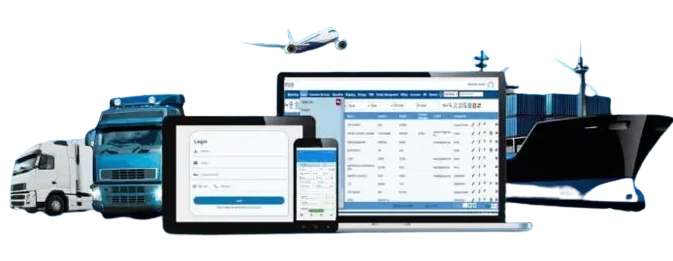
A Transport Management System (TMS) is software designed to plan, execute, track, and optimize transportation operations from one place.
Instead of juggling spreadsheets, calls, and messages, a TMS brings everything together into a single platform.
At a high level, a TMS helps with:
- shipment planning
- route optimization
- carrier allocation
- real-time tracking
- cost control
- performance analysis
But the real value is how it simplifies complexity.
How TMS Helps Fix Transportation Challenges
Let’s connect the problems we discussed earlier with real solutions.
1. Centralized Planning Instead of Scattered Information
Without a TMS:
- shipment details sit in emails
- routes are planned manually
- vehicle availability is unclear
With a TMS:
- all shipments are visible in one dashboard
- routes can be planned logically
- vehicle assignment is structured
This reduces confusion and saves time at the planning stage.
2. Smarter Route Optimization
Manual routing often ignores:
- traffic patterns
- delivery time windows
- vehicle capacity
A TMS uses data to:
- reduce travel distance
- minimize empty miles
- improve vehicle utilization
Even small improvements here lead to major cost savings over time.
3. Real-Time Tracking and Visibility
This is one of the biggest benefits.
A TMS allows teams to:
- track shipments live
- receive delay alerts
- monitor delivery status
Instead of calling drivers repeatedly, teams can see updates directly.
Customers benefit too, as they receive accurate delivery information, not vague promises.
4. Better Coordination With Transporters
A TMS standardizes communication between:
- shippers
- transporters
- drivers
Instructions, documents, and updates are shared through one system.
This reduces:
- misunderstandings
- missed instructions
- follow-up calls
5. Faster Exception Handling
Delays will still happen. The difference is how quickly you respond.
With a TMS:
- issues are flagged early
- alternate routes or vehicles can be planned
- customers can be informed proactively
This turns reactive firefighting into controlled problem-solving.
6. Cost Control and Transparency
A TMS captures:
- freight costs
- fuel usage
- detention charges
- route efficiency
This data helps businesses:
- identify cost leaks
- negotiate better rates
- track transporter performance
Decisions become data-backed, not emotional.
The Human Side of TMS Adoption
One common fear is that a TMS will:
- replace people
- make roles redundant
In reality, it does the opposite.
A good TMS:
- reduces manual work
- removes guesswork
- frees teams to focus on improvement
Transportation teams stop chasing information and start managing operations strategically.
Why Companies Delay TMS Adoption (and Why They Shouldn’t)
Many businesses delay implementing a TMS because:
- “Our process is working fine”
- “It’s too complex”
- “We’re not big enough yet”
But transportation problems grow silently.
By the time issues become visible:
- costs have already increased
- customers are already unhappy
- teams are already stretched
A TMS is not just for large enterprises. It’s for any company that wants control over transportation.
Where QuickMove’s Transport Management System Fits In
At this point, it’s worth talking about how QuickMove’s Transport Management System approaches these challenges.
QuickMove’s TMS is built specifically for real-world transportation complexity, not ideal scenarios.
It focuses on:
- simplifying daily operations
- improving visibility across shipments
- helping teams make faster, clearer decisions
Rather than overwhelming users with features, it prioritizes ease of use and practical impact.
Many logistics and operations teams choose QuickMove’s Transport Management System because it fits into existing workflows instead of forcing drastic process changes.
Real Operational Benefits Businesses See With TMS
Companies that adopt a TMS typically experience:
- fewer delivery delays
- lower transportation costs
- improved customer satisfaction
- better transporter accountability
- calmer operations teams
Transportation doesn’t become “easy,” but it becomes manageable.
Transportation as a Strategic Advantage
When transportation is well-managed:
- deliveries are predictable
- costs are controlled
- customers trust timelines
This turns logistics into a competitive advantage, not just a support function.
A TMS enables this shift by giving leadership:
- visibility into performance
- confidence in decision-making
- data for long-term planning
QuickMove’s Transport Management System supports this transition by helping businesses move from reactive operations to structured, scalable transportation management.
Common Mistakes to Avoid When Implementing a TMS
Even the best system needs the right approach.
Avoid:
- poor data setup
- lack of team training
- expecting instant results
- not involving transport partners
A TMS is most effective when treated as a process improvement tool, not just software.
The Future of Transportation Management
Transportation is only getting more complex:
- demand volatility
- sustainability pressures
- rising fuel costs
- customer expectations
Manual systems won’t survive this future.
Digital transportation management will become:
- standard, not optional
- predictive, not reactive
- collaborative, not fragmented
Platforms like QuickMove’s Transport Management System are already aligning with this future by focusing on visibility, flexibility, and real operational needs.
Final Thoughts
Transportation is the hardest part of the supply chain because it deals with:
- uncertainty
- external dependencies
- real-world constraints
But it’s also where the biggest improvements can be made.
A Transport Management System doesn’t remove challenges—but it gives businesses the tools to face them with clarity and control.
For companies struggling with delays, rising costs, and operational stress, adopting a TMS is not just a technology upgrade—it’s a mindset shift.
And when implemented thoughtfully, with the right platform, transportation stops being a daily headache and starts becoming a strength.