Email Us
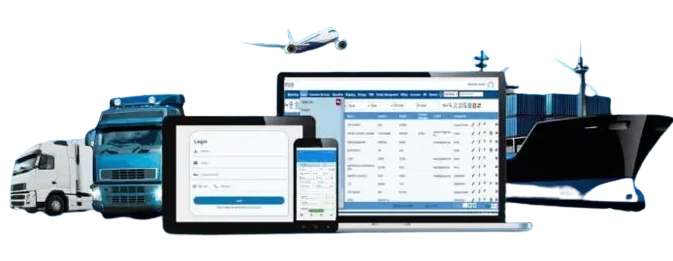
 Freight Forwarding Software
 Warehouse Management System
 Transport Management System
 Moving/Removal Software
 Customer Service Portal
 Move Survey Quote Pro
 Digital Logistics Inventory App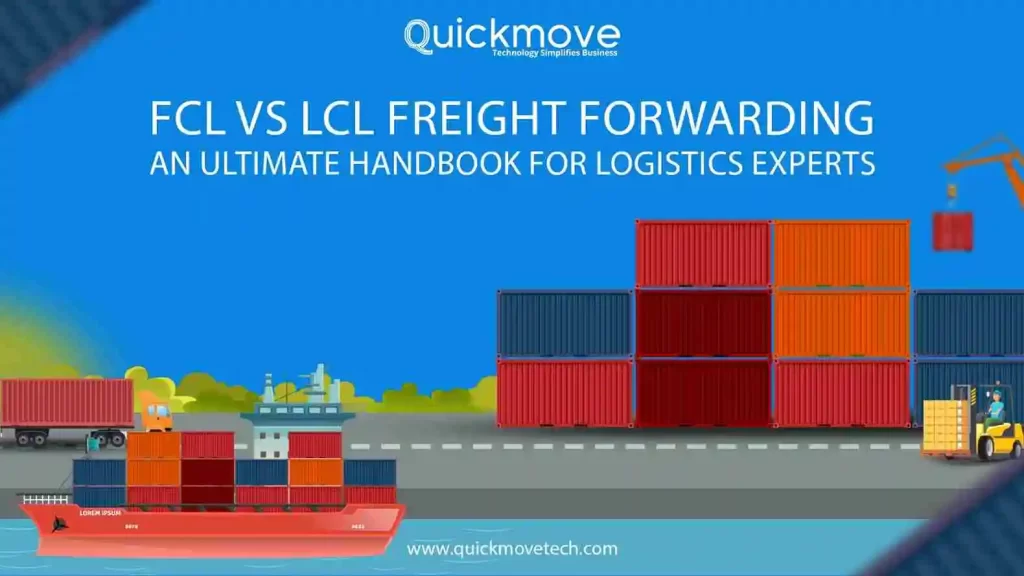
In global trade, shipping decisions directly impact cost, delivery timelines, and customer satisfaction. One of the most important choices logistics professionals make is between FCL (Full Container Load) and LCL (Less than Container Load).
While both methods are widely used in international freight, choosing the wrong one can lead to unnecessary costs, delays, or cargo risks.
This guide provides a complete, expert-level breakdown of FCL vs. LCL, including definitions, use cases, industry insights, real-world scenarios, and how digital freight forwarding software simplifies the entire process.
What is Full Container Load (FCL)?
Full Container Load (FCL) refers to a shipping method where one shipper exclusively uses an entire container, regardless of whether it is fully packed or not.
This means:
- The container is not shared
- Cargo is sealed at origin
- Delivered directly to the consignee
Key Characteristics of FCL
- Single shipper ownership
- Minimal handling during transit
- Direct shipment from origin to destination
- Reduced risk of damage or contamination
When Should You Use FCL?
FCL is ideal when:
- You have large shipment volumes
- Cargo is high-value or fragile
- You need faster transit times
- Security is a top priority
What is Less than Container Load (LCL)?
Less than Container Load (LCL) is a shipping method where multiple shippers share space in a single container. Each shipper pays only for the space their cargo occupies.
This makes LCL a flexible and cost-effective option for smaller shipments.
Key Characteristics of LCL
- Shared container among multiple shippers
- Cost based on cargo volume (CBM)
- Multiple handling points
- Requires consolidation and deconsolidation
When Should You Use LCL?
LCL is suitable when:
- Shipment volume is small
- Budget is limited
- You don’t want to wait to fill a container
- Frequent small shipments are needed
Types of Containers Used in FCL and LCL
Both FCL and LCL shipments use standardized containers depending on cargo type and requirements.
Common Container Types
- 20-ft Container (TEU)
Ideal for general cargo and widely used in both FCL and LCL - 40-ft Container (FEU)
Suitable for large-volume shipments (mostly FCL) - 40-ft High Cube Container
Extra height for bulky cargo - Reefer Container
Temperature-controlled goods like food, pharmaceuticals - Flat Rack / Open Top Container
Heavy, oversized, or irregular cargo
FCL vs. LCL: Detailed Comparison
| Feature | FCL (Full Container Load) | LCL (Less than Container Load) |
| Cargo Ownership | Single shipper | Multiple shippers |
| Cost Efficiency | Best for large volumes | Best for small shipments |
| Transit Time | Faster | Slightly slower |
| Risk of Damage | Low | Higher due to shared space |
| Handling | Minimal | Multiple touchpoints |
| Customs Clearance | Easier | More complex |
Advantages of FCL Shipping
1. Faster Transit Times
FCL shipments move directly without waiting for consolidation, reducing delays.
2. Higher Security
Since the container is sealed and not shared, risks of theft or damage are significantly lower.
3. Simplified Documentation
Single shipper means easier customs clearance and fewer complications.
4. Cost Efficiency at Scale
For large volumes, the cost per unit becomes much lower.
Advantages of LCL Shipping
1. Cost-Effective for Small Shipments
You only pay for the space you use, making it ideal for SMEs.
2. Greater Flexibility
No need to wait for a full container—ship goods as needed.
3. Ideal for Growing Businesses
Perfect for startups and e-commerce companies testing new markets.
4. Supports Just-in-Time Inventory
Helps maintain lean inventory and reduces warehousing costs.
Industry Use Cases: Where FCL and LCL Fit Best
Industries That Prefer LCL
- E-commerce & Retail
Frequent restocking of smaller quantities - Fashion & Apparel
Seasonal or sample shipments - Startups & SMEs
Limited shipment volume - Food & Beverage
Small batches of perishable goods
Industries That Prefer FCL
- Manufacturing & Automotive
Bulk raw materials or finished goods - Electronics
High-value shipments requiring safety - Pharmaceuticals
Controlled, secure transportation - FMCG
High-volume distribution
Real-World Decision Example
Imagine a business importing goods from China to India:
- If they ship 15–18 CBM regularly, LCL makes sense
- If shipments exceed 25–28 CBM, FCL becomes more economical
This decision is not just about volume—it also depends on:
- Urgency
- Cargo type
- Budget
- Supply chain strategy
Challenges in Managing FCL and LCL Shipments
Managing shipments manually can be complex and error-prone due to:
- Multiple documentation requirements
- Coordination with carriers and vendors
- Rate negotiations
- Cargo tracking
- Customer communication
These challenges often lead to:
- Delays
- Increased operational costs
- Reduced customer satisfaction
How Freight Forwarding Software Improves FCL and LCL Operations
Modern logistics businesses rely on digital platforms to streamline operations.
For FCL Shipments
- Automated Booking
Instantly reserve full containers - Real-Time Tracking
Monitor container movement from origin to destination - Document Automation
Generate Bill of Lading, invoices, and customs documents - Customer Visibility
Share live updates with clients
For LCL Shipments
- Cargo Consolidation Tools
Efficiently group shipments from multiple clients - Cost Allocation & Billing
Automatically split costs and calculate margins - Shipment Visibility
Provide updates to all stakeholders - Space Optimization
Maximize container utilization
With platforms like QuickMove freight forwarding software, businesses can manage both FCL and LCL operations from a single dashboard—reducing errors, saving time, and improving efficiency.
Expert Insights: Choosing Between FCL and LCL
From an operational perspective:
- Choose FCL when control, speed, and security matter most
- Choose LCL when flexibility and cost savings are priorities
From a strategic perspective:
- Growing businesses often start with LCL and transition to FCL
- Mature supply chains use a hybrid model for optimization
Common Mistakes to Avoid
- Choosing LCL for fragile goods without proper packaging
- Using FCL for small shipments, increasing costs unnecessarily
- Ignoring hidden costs like handling and consolidation fees
- Not using software tools for tracking and documentation
Conclusion
Understanding the difference between FCL and LCL is essential for efficient logistics planning. Each method has its own advantages, and the right choice depends on your shipment size, budget, urgency, and cargo type.
Businesses that combine the right shipping strategy with modern freight software gain a competitive edge by:
- Reducing operational complexity
- Improving delivery timelines
- Enhancing customer satisfaction
As global trade continues to grow, adopting smarter logistics practices is no longer optional—it’s essential.