Email Us
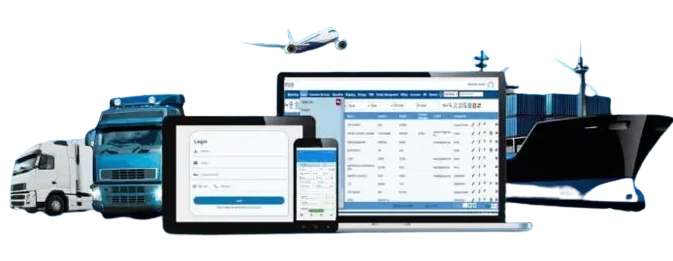
 Freight Forwarding Software
 Warehouse Management System
 Transport Management System
 Moving/Removal Software
 Customer Service Portal
 Move Survey Quote Pro
 Digital Logistics Inventory App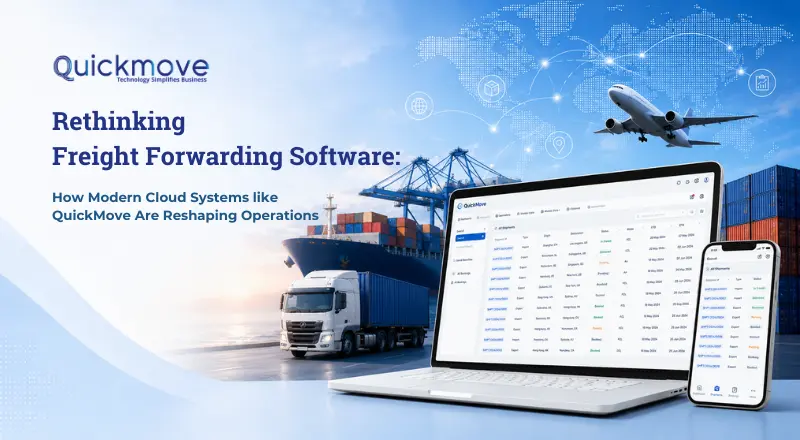
Freight forwarding has never been a simple business. Every shipment brings together quotes, bookings, documents, customs requirements, customer updates, billing, exception handling, and coordination across multiple teams and partners. When those pieces are managed through spreadsheets, email chains, and disconnected tools, the result is predictable: delays, duplicate work, missed updates, and lower margins.
That is why freight forwarding software has become so important. Modern systems are no longer just digital filing cabinets for shipment records. They are becoming the operational backbone of freight businesses, helping teams connect communication, documentation, finance, automation, and visibility in one place.
For freight forwarders that want to grow without adding unnecessary manual work, the shift to cloud-based software is no longer a future trend. It is already happening.
Why Freight Forwarding Software Matters More Than Ever
Freight forwarding is built on coordination. A single shipment may require communication with shippers, carriers, agents, warehouses, customs brokers, and customers. If information is stored in different systems, every handoff creates room for error.
Traditional workflows often look like this: a quote is created in one place, shipment details are tracked in another, documents are saved separately, and billing happens later through manual re-entry. Each step may seem manageable on its own, but together they create friction across the business.
Freight forwarding software solves that problem by connecting the full shipment lifecycle. Instead of treating each task as separate, a connected system lets teams move smoothly from quote to shipment to document handling to invoice and reporting. The benefit is not just convenience. It is better control.
What Modern Freight Forwarding Software Should Deliver
Today’s freight forwarding software should do more than store data. It should help teams act on that data.
A strong system should connect the main parts of daily operations:
- Shipment records should be linked to documents.
- Documents should support billing and compliance.
- Billing should connect to costs, collections, and profit.
- Customer updates should be tied to shipment events.
Managers should be able to see operational status without waiting for manual reports.
This is the real difference between older software and modern cloud systems. The goal is not only digitization. The goal is operational intelligence.
The Cost of Working in Silos
Many freight businesses still rely on a mix of software, spreadsheets, inboxes, and shared folders. Even when each tool works well on its own, the workflow can still break down if information is not connected.
A team might use one tool for bookings, another for accounting, email for customer communication, and manual spreadsheets for reporting. That creates hidden costs:
- Duplicate data entry,
- Slower response times,
- Billing mistakes,
- Missing documents,
- Limited visibility into shipment status, and more time spent chasing updates than moving cargo.
A modern freight forwarding platform reduces those problems by bringing work into one connected environment.
Automation Is Changing the Daily Work of Freight Teams
A large part of freight forwarding involves repetitive tasks. Teams often spend hours matching documents, checking details, updating status, and following up on exceptions. That makes automation especially valuable.
Modern freight forwarding software can automate reminders, event notifications, document processing, task assignment, and status updates. This does not replace people. It gives people more time to focus on exceptions, customer relationships, and operational decisions.
AI is making this even more powerful. In freight operations, AI can help extract data from invoices, bills of lading, air waybills, and related documents. It can also reduce manual matching work and highlight inconsistencies faster than a person could working line by line.
The result is better speed, fewer errors, and less time lost on repetitive admin tasks.
Visibility Is Now a Customer Expectation
Customers do not want to keep asking where their shipment is. They want timely updates, clearer communication, and easy access to information.
That is why customer visibility has become a key part of freight forwarding software. A good platform should make it easier to share shipment progress, document status, and exception updates without forcing staff to send manual replies all day.
Customer portals, automated notifications, and live shipment visibility are no longer advanced extras. They are part of what customers now expect from a professional freight business.
When customers can see more on their own, your team spends less time answering the same questions and more time managing the shipment itself.
Cloud-Based Freight Software Creates Real Operational Control
Cloud systems bring a major advantage: everyone works from the same source of truth.
Cloud systems bring a major advantage: everyone works from the same source of truth.
Sales teams, operations teams, finance, and management can all see the same shipment data. That means fewer version issues, better collaboration, and faster decision-making. It also makes it easier to support remote teams and multi-branch operations.
Cloud-based freight forwarding software is especially useful for businesses that handle air, ocean, and land shipments across different markets. A connected platform can unify workflows while still giving teams the flexibility to manage different shipment types and operational needs.
For growing freight companies, cloud software is not only about efficiency. It is about control, consistency, and scalability.
What Freight Forwarders Should Look for in a System
Choosing freight forwarding software should start with one question: does this system reduce manual work across the full shipment process?
Look at the full workflow, not just a list of features. Can the software manage quotes, shipments, documents, billing, customer communication, and reporting without forcing users to repeat the same information in multiple places?
Then review the day-to-day exceptions. What happens when a document is missing, a charge changes, a customer wants a status update, or finance needs to review costs before invoicing? A good system should make those situations easier to handle, not harder.
Finally, consider adoption. Even the most advanced platform will fail if it is too complicated for daily users. Freight software should be practical, clear, and built for real operational work.
How QuickMoveTech Fits This Direction
QuickMoveTech is built for logistics businesses that want one connected platform instead of disconnected tools. Its positioning as an all-in-one solution for freight, transport, warehouse, and moving companies reflects exactly where the industry is headed: toward systems that combine CRM, ERP, HR, accounting, payroll, and customer visibility in a single environment.
For freight forwarders, that matters because the business is not just about moving cargo. It is about managing the full workflow around every shipment. A platform like QuickMoveTech can help teams bring more structure to operations, reduce repetitive admin, and create clearer visibility across departments.
That is the value modern freight forwarding software should deliver. Not just storage. Not just tracking. Real operational coordination.
The Bigger Shift in Freight Forwarding
The future of freight forwarding software is not about adding more disconnected tools. It is about building a smarter operating system for the business.
- A shipment record should tell the team what needs attention next.
- A document should move the workflow forward.
- A dashboard should show what is delayed, incomplete, invoiced, or at risk.
- Automation should reduce repetitive follow-up.
- AI should help teams work faster and with fewer errors.
That is the direction freight forwarding is moving in, and the companies that adapt early will have a real advantage.
Conclusion
Freight forwarding is becoming more complex, not less. Customer expectations are rising, documentation demands are increasing, and margins are under pressure. In that environment, software is no longer optional support. It is part of the core business strategy.
Modern freight forwarding software helps teams move from manual coordination to connected operations. It improves visibility, reduces errors, supports faster decisions, and gives customers a better experience.
For freight businesses ready to work smarter, cloud-based systems like QuickMoveTech represent the next step forward.