 Email Us
 Freight Forwarding Software
 Warehouse Management System
 Transport Management System
 Moving/Removal Software
 Customer Service Portal
 Move Survey Quote Pro
 Digital Logistics Inventory App
Consolidated Shipment Software
Build Profitable Consolidated Shipments with Complete
House-to-Master Control.
Build, document, track and financially close ocean LCL, air consolidation and road groupage shipments from one governed master shipment.
Ocean LCL
Air Consolidation
Road Groupage
Grow Your Logistics Business
Master-to-house Visibility
Connected operational control GP
Master and house profitability
Operational and financial visibility
Capacity Optimisation Plan
Weight, Voluome & allocated space
Document Consistency
Reuse validated data across house, master, manifest and pre-alert documents.
Replace Fragmented Workflows
A consolidated shipment is profitable only when operations and
cost allocation remain linked.
QuickMove replaces separate house files, master spreadsheets and manual cost sharing with one controlled consolidation record. Operations can build and adjust the consolidation while finance retains a clear audit trail of capacity, documents, charges, accruals and profitability.

House jobs managed independently
Create one master consolidation and link every eligible house shipment without losing customer-level ownership.
Capacity decisions made blindly
Compare pieces, gross weight, volume and chargeable weight before finalising the master booking.

Repeated document entry
Carry validated shipper, consignee, cargo, routing and package data into house and master documentation.

Unclear profit per house
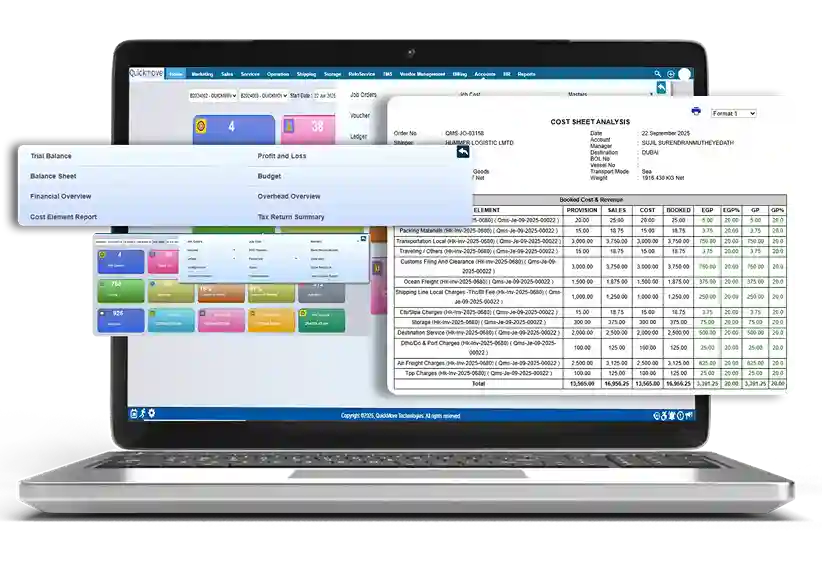
Allocate carrier and common costs using governed methods and compare buy, sell, accrued and actual values.
End-to-End Workflow
One process. One source of truth.
QuickMove treats consolidation as a governed master-house workflow rather than a loose collection of unrelated jobs.

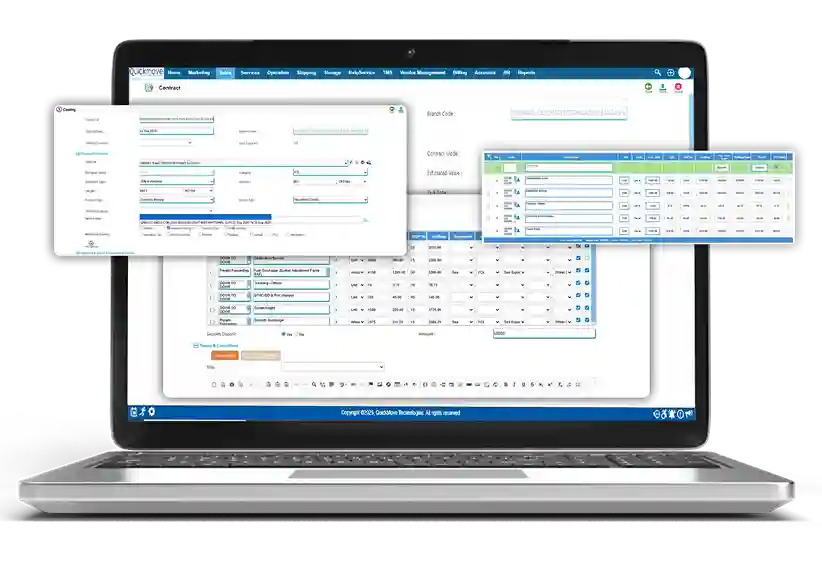
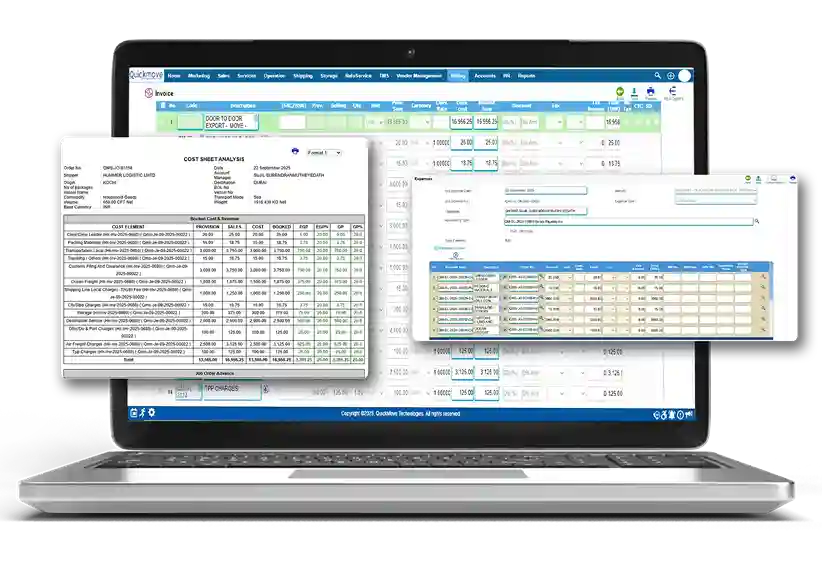
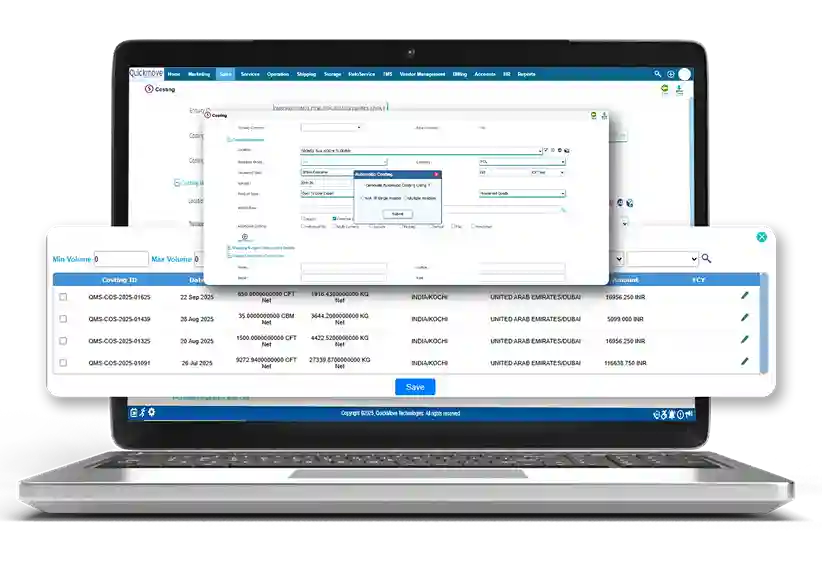
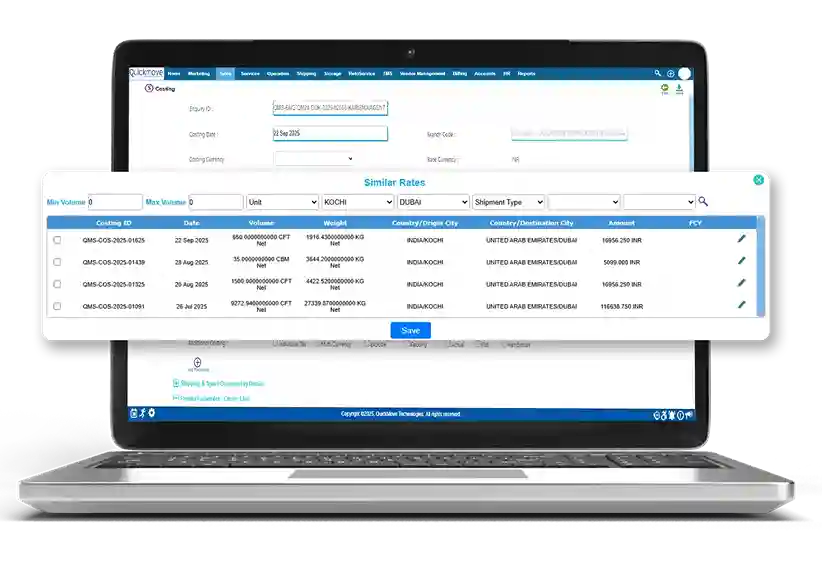
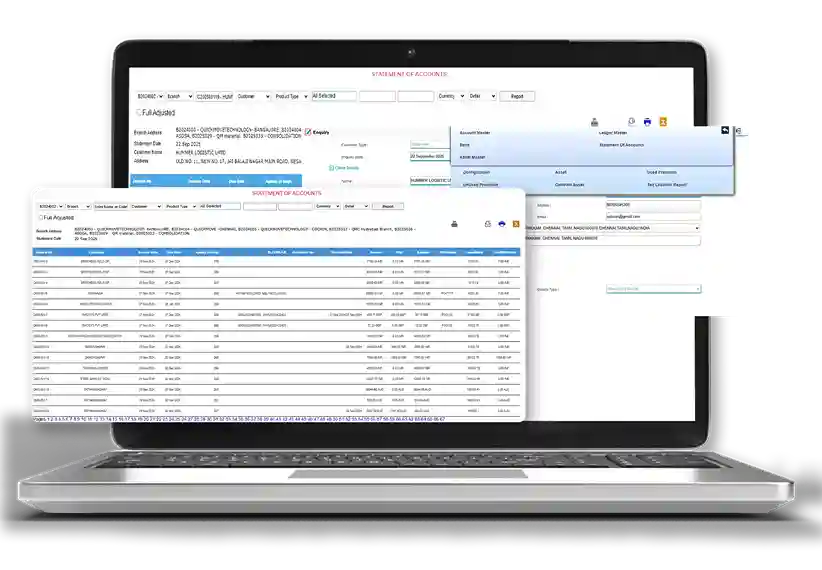
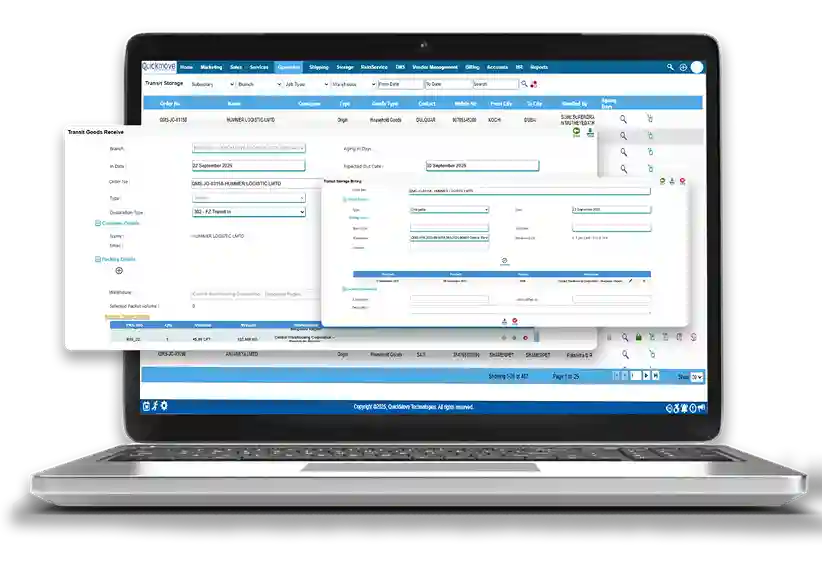

Create House Shipments
Capture each shipper/consignee, cargo, package, routing, service, rates and customer commitments.
Select Eligible Houses
Filter by mode, origin, destination, schedule, cut-off, cargo compatibility and operational status.
Build the Consolidation
Create the master shipment and add, remove, split or reassign house jobs with permission and audit control.
Plan Capacity
Review pieces, weight, volume, chargeable weight, container/ULD/truck capacity and utilisation.
Confirm Master Booking
Assign carrier/agent, schedule, routing, master reference, cut-offs and commercial terms.
Generate Documents
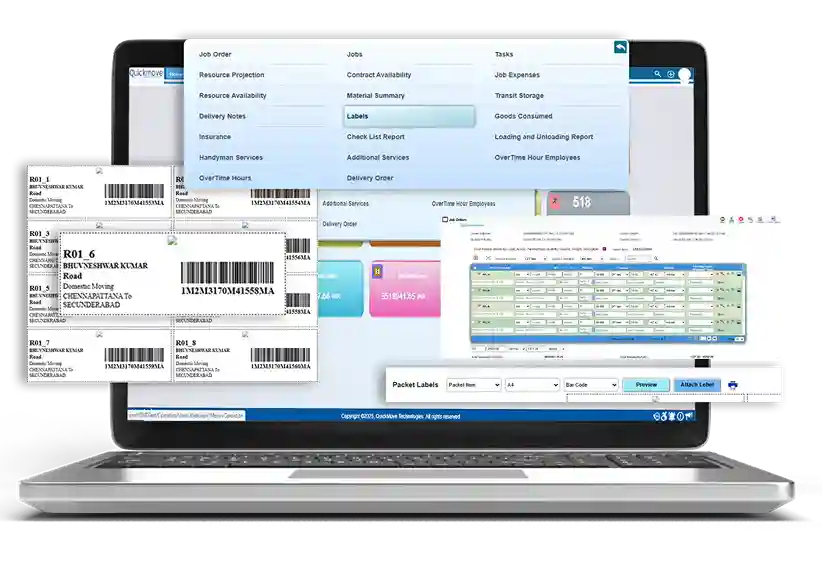
Prepare HBL/MBL, HAWB/MAWB, manifests, labels, pre-alerts and supporting documents from common data.
Execute & Track
Manage cargo receipt, CFS/transit storage, loading, departure, transshipment, arrival and exceptions.
Deconsolidate & Deliver
Coordinate destination agent, deconsolidation, customs hand-off, delivery orders and final delivery.
Allocate Cost & Close
Distribute master/common cost, invoice houses, settle agents and analyse profit by house and master.
Core Capabilities
Purpose-built operational control, connected to the enterprise suite.
Every capability connects through QuickMove’s common masters, workflows, documents, billing, accounting, security and reporting architecture.
Master-to-House Relationship
Link one master shipment to multiple house jobs while retaining customer, cargo, document, billing and status visibility for each house.
Ocean LCL & Groupage
Manage container or groupage consolidation with HBL/MBL, CFS events, manifests, routing and destination deconsolidation.
Air Consolidation
Control HAWB/MAWB relationships, pieces, gross/chargeable weight, airline routing and master-house documentation.
Road Groupage
Combine compatible road freight jobs into one master movement while maintaining shipper/consignee and delivery-level control.
House, Master & Manifest Documents
Generate documents from common validated data and control versions, approvals, issue dates and document status.
Pre-Alert & Agent Collaboration
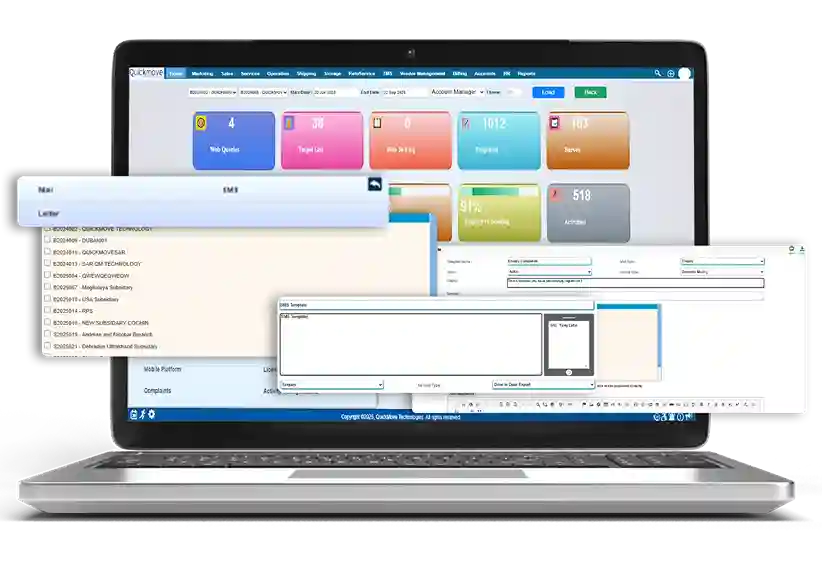
Share governed pre-alert packages, documents, milestones and instructions with origin/destination agents.
Buy/Sell Rate & Margin Control
Maintain carrier/agent buy cost, customer sell charges, minimum-margin rules and consol-level commercial visibility.
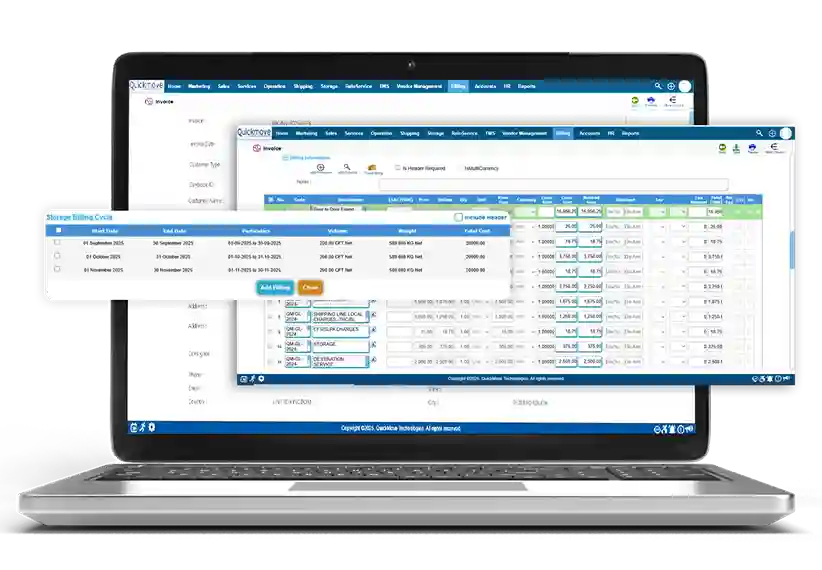
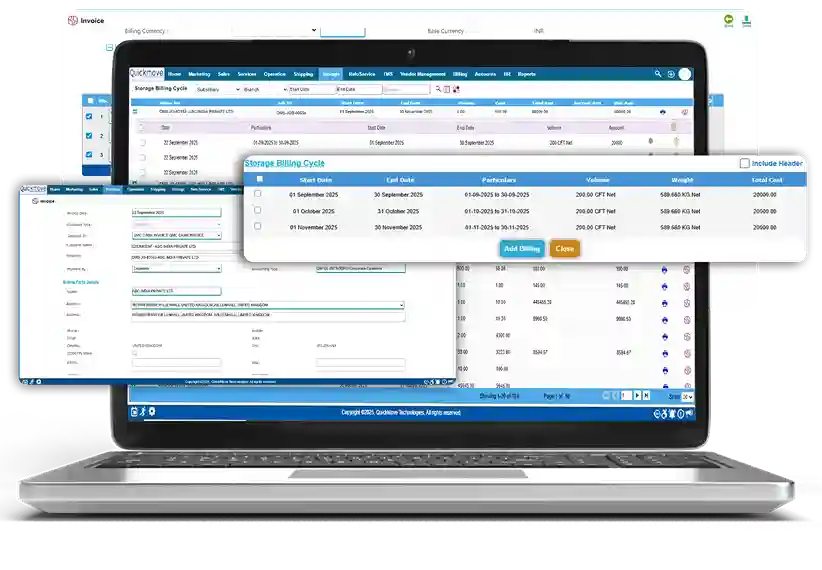
Billing, Accruals & Settlement
Create house invoices, master/vendor accruals, agent settlements, credit/debit notes and accounting entries.
Tracking, Portal & Exceptions
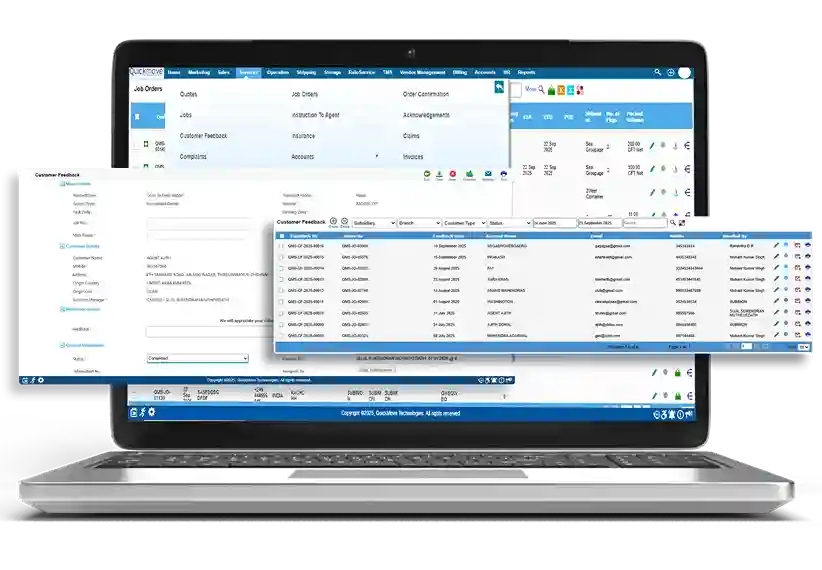
Provide house and master status visibility, customer documents, milestone alerts and exception follow-up.
Capacity & Utilisation
Summarise pieces, weight, volume, chargeable weight and space utilisation before and after consolidation.
CFS & Transit Storage
Track cargo receipt, warehouse/CFS location, temporary storage, loading readiness and release events.
Master Cost Allocation
Allocate freight and common charges across house jobs by weight, volume, chargeable weight, value, quantity or configured rule.
Enterprise Architecture
Use the same consolidation model across branches, agents, countries and modes while keeping customer data, operational responsibility and financial ownership correctly separated.

See operational risk and profitability before month-end.
Role-based reports connect operational status with commercial exposure and financial impact.
Consol Utilisation
Pieces, weight, volume, chargeable weight and used capacity by master.
House Contribution
House Contribution Revenue, allocated cost, direct cost and gross profit for every house job.
Master Profitability
Carrier/agent cost, total sell revenue, accrual variance and final margin.
Unallocated Houses
Eligible or confirmed shipments not yet assigned to a master consol.
Cut-Off Exceptions
Documents, cargo or approvals at risk against carrier and warehouse deadlines.
Pre-Alert Status
Pending documents, agent acknowledgement and destination readiness.
Cost Allocation Audit
Allocation basis, weightage, adjustments, approvals and posting history.
Consol Performance
Volume, fill rate, margin and service reliability by lane, agent and carrier.
Frequently Asked Question’s
Is a consol shipment the same as a consolidated shipment?
Yes. “Consol shipment” is the common logistics abbreviation for a consolidated shipment. “Console shipment” is a spelling error and should not be used as the product name.
What is a consolidated shipment?
A consolidated shipment combines multiple smaller house shipments into one master movement for a common route or service. Each customer shipment remains identifiable at house level, while the carrier or master booking represents the combined cargo.
Does QuickMove support both sea and air consolidation?
Yes. QuickMove supports ocean LCL or groupage with HBL/MBL and air consolidation with HAWB/MAWB. Road groupage can use the same governed master-house model where configured.
How are master costs allocated to house shipments?
Costs can be allocated using an approved basis such as gross weight, volume, chargeable weight, quantity, value, equal share or a configured hybrid rule. Manual adjustments remain permission-controlled and auditable
Can a house shipment be moved to another consol?
A controlled workflow can permit adding, removing, splitting or reassigning a house shipment before operational cut-off. QuickMove validates status, documentation, capacity, billing and audit impact before the change is completed.
Can customers track their own house shipment?
Yes. Customers can receive house-level milestones and documents through the customer portal, while authorised operations users retain master-level visibility.