Email Us
 Freight Forwarding Software
 Warehouse Management System
 Transport Management System
 Moving/Removal Software
 Customer Service Portal
 Move Survey Quote Pro
 Digital Logistics Inventory App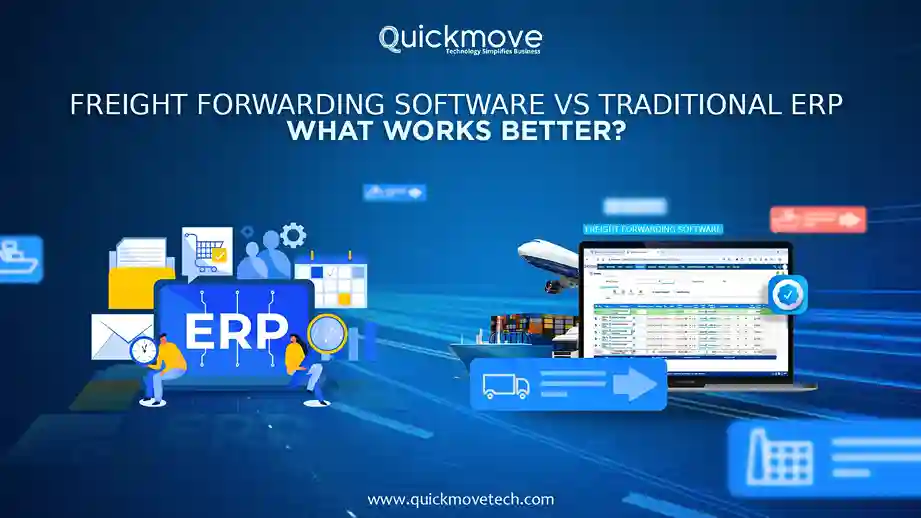
In the modern environment, organizations require not only basic management solutions but intelligent, scalable, and industry-specific solutions.
Logistics firms frequently debate whether to opt for freight forwarding solutions or a classic ERP system. While the decision may depend on individual organizational requirements, there appears to be a clear trend for freight companies.
Here we can understand two types of systems
Freight Forwarding Software
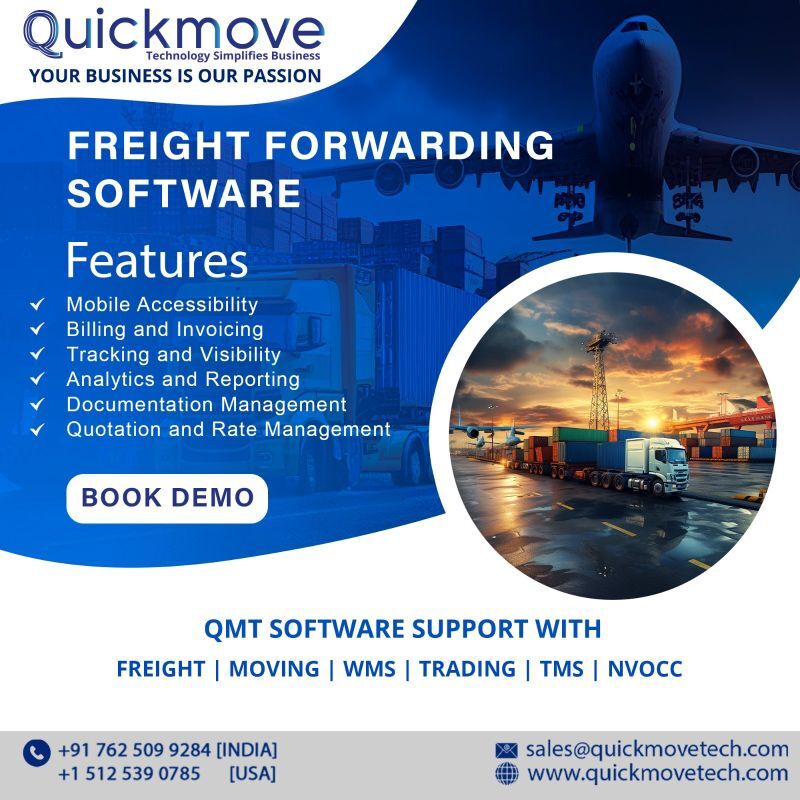
Freight forwarding software is tailored for logistics activities. Some of its benefits include:
- Real-time tracking of shipments
- Document management
- Management of freight charges
- Customer management
- Billing and invoicing
The software will help in making work easier by automating some tasks.
Traditional ERP System
A traditional ERP system is a business tool meant for managing:
- Financial functions
- Human resource functions
- Inventory management
- Purchasing
ERP systems are useful but are generic solutions, unlike freight forwarding software.
Freight Forwarding Software v/s ERP: Key Comparison
Industry-specific design
- Freight forwarding software is designed specifically for the logistics sector
- ERP software is not industry specific and will need customization
Ease of implementation
- The ERP system may take many months to implement
- Freight forwarding software can be implemented within a much shorter period
Efficiency
- Automation of paperwork
- Synchronization of shipment data
- Low error rates
An ERP system will require more modules in order to provide similar functions.
Affordability and scalability
- The ERP system will be costly and expensive
- The cloud-based freight forwarding software is less costly and easier to scale
Features specific to logistics
Freight forwarding software comes with features such as:
- Automating bill of lading
- Multi-mode shipments
- Customs paperwork handling
- Dashboard reporting
When ERP Might Still Be Useful
A traditional ERP system may be suitable if:
- Your business operates across multiple industries
- You need deep financial and HR integration
- Logistics is not your core function
Benefits of Modern Freight Forwarding Software
A reliable freight forwarding management system can help businesses:
- Improve operational efficiency
- Gain real-time visibility into shipments
- Reduce documentation errors
- Enhance customer communication
- Scale operations with ease
Cloud-based solutions further add flexibility by enabling access from anywhere, supporting remote teams, and reducing infrastructure costs.
Future of Cloud-Based Freight Software
The logistics industry is increasingly moving towards using cloud-based freight software. The advantages of such software include:
- Faster operations
- Better customer satisfaction
- Better control of logistics operations from start to finish
Conclusion
Deciding whether to use freight forwarding software or an ERP software depends on your business requirements. However, if you operate in the logistics sector, freight software gives you an edge with its advanced capabilities, quicker implementation, and cost savings.
If your objective is to increase efficiency and scalability, investing in cloud-based freight software is a wise decision.