Email Us


 Freight Forwarding Software
 Warehouse Management System
 Transport Management System
 Moving/Removal Software
 Service Portal
 Move Survey Quote Pro
 Digital Logistics Inventory App
A purchasing mistake can affect an entire trading order. Buying before checking stock ties up cash. Choosing a supplier only on price can delay delivery. Paying an invoice without checking the receipt can leave a shortage unresolved.
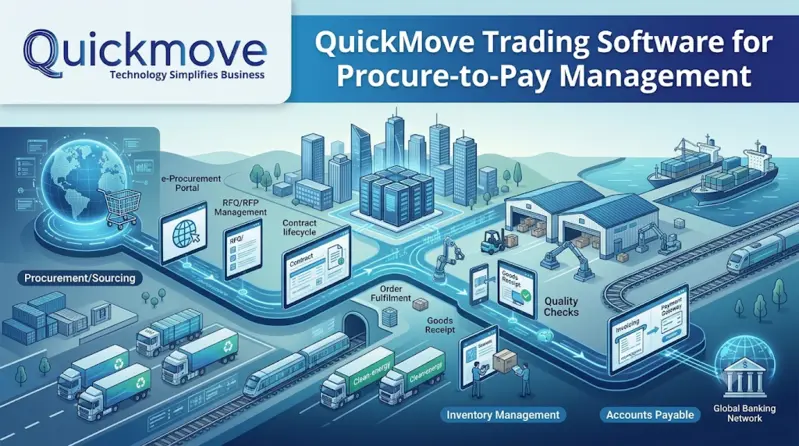
QuickMove logistics trading software supports procure-to-pay management across demand, requests for quotation, vendor comparison, purchase orders, receipt, and payment. For trading companies, the purpose is clear: connect what the business needs with what it buys, receives, and pays for.
What Is Procure-to-Pay in a Trading Business
Procure-to-pay is the process of identifying a purchasing requirement, selecting a supplier, placing an order, receiving goods, and settling the supplier’s invoice.
For importers, wholesalers, and distributors, each stage answers a different question. What quantity is needed? Which offer meets the requirement? What did the supplier commit to deliver? What actually arrived? What amount is due?
A controlled process keeps these answers connected. Purchasing, warehouse, and accounts teams can then work from agreed records rather than reconstructing decisions through emails and spreadsheets.
Procure-to-Pay Management with QuickMove Trading Software
Demand Planning Before Raising a Purchase Request
Procurement should begin with a confirmed requirement. A customer order, stock shortage, or planned replenishment may trigger a purchase, but the requested quantity needs checking before sourcing begins.
For example, a distributor needs 500 units for a customer. If 200 units are available and another 100 will arrive before the delivery deadline, the remaining requirement may be 200 units. Buying all 500 again would create unnecessary stock.
Before raising a purchase request, check:
- Required item, specification, and unit of measurement.
- Quantity available after existing commitments.
- Incoming supplies and expected arrival dates.
- Required delivery date and receiving location.
- Business reason for the purchase.
QuickMove supports supply planning using available, reserved, and incoming stock. This provides purchasing teams with a basis for deciding whether to fulfil from stock, transfer goods, or procure additional quantities.
RFQ Management for Clear Supplier Quotations
A request for quotation, or RFQ, sets out what the buyer wants suppliers to price. Its quality directly affects how easily the offers can be compared.
If one supplier quotes a different specification or excludes delivery charges, the lowest figure may not represent the best purchase. A clear RFQ reduces this uncertainty before negotiation starts.
Include product specifications, quantities, delivery requirements, and the requested quotation validity. Ask suppliers to identify exclusions and state their payment terms.
QuickMove supports purchase requests and RFQs, with vendor offers captured for comparison. The operational discipline remains essential: suppliers should respond to the same requirement so buyers can assess the differences fairly.
Vendor Comparison Beyond the Lowest Purchase Price
Vendor comparison should consider the full commercial offer. Unit price matters, but delivery timing, freight charges, payment terms, and product suitability can change the outcome.
Consider two hypothetical offers. Supplier A quotes ₹100 per unit with delivery in 30 days. Supplier B quotes ₹104 with delivery in seven days. If the customer requires supply within ten days, Supplier A’s lower price does not meet the delivery requirement.
A useful comparison checks:
- Compliance with the requested specification.
- Total quoted cost and excluded charges.
- Delivery lead time and supply availability.
- Payment terms and advance requirements.
- Minimum order quantity and quotation validity.
QuickMove enables comparison of vendor commercial terms and conversion of approved offers into purchase orders. Buyers can use that stage to document why a particular offer was selected.
Purchase Order Management for Supplier Commitments
The purchase order, or PO, records the agreed purchase. It should clearly identify the supplier, products, quantities, prices, delivery location, and commercial terms.
A vague PO creates avoidable disputes. A supplier may interpret an unclear delivery instruction differently, or accounts may receive an invoice that uses a price never formally agreed.
Before issuing a PO, confirm that the selected quotation and agreed changes are reflected accurately. If the supplier later proposes a substitution or revised delivery date, record and review that change before accepting it.
QuickMove supports domestic and import purchase orders, supplier commitments, shipment details, and partial receipts. These records help teams follow an order beyond its issue date.
Goods Receipt Management for Quantity and Condition Checks
A supplier’s delivery must be checked against the order. Receiving goods does not automatically mean that the full purchase has been completed correctly.
Suppose a PO covers 500 cartons, but only 450 arrive and ten are damaged. The receiving record should distinguish the shortage from the condition issue. Otherwise, stock availability and the invoice review may both begin with incorrect quantities.
At receipt, warehouse teams should verify the item, count the delivered quantity, inspect condition, and record discrepancies promptly. A goods receipt note, or GRN, documents the receipt for subsequent checks.
QuickMove supports GRN, inspection, putaway, and handling of short, excess, or damaged receipts. Purchasing can then follow up outstanding supplier obligations.
Vendor Payment After Document Verification
Payment should follow a clear review of what was ordered, what was received, and what the supplier invoiced.
As a purchasing control, teams should compare the PO, receipt record, and supplier invoice before approving payment. Differences in quantity, price, or charges need explanation. Partial deliveries also require attention to the agreed billing terms.
Keep responsibility clear: the warehouse confirms receipt, purchasing resolves commercial differences, and accounts reviews the amount due under company procedures.
QuickMove connects vendor invoices and payments with accounting. Maintaining a clear reference between the purchase and settlement helps teams investigate outstanding balances and answer supplier queries.
Practical Benefits of a Controlled Procurement Process
The value of procure-to-pay management comes from consistent checks at each handover. Demand validation can prevent unnecessary buying. Clear RFQs make offers easier to assess. Accurate receipt records give accounts a stronger basis for invoice review.
Management should also review where purchases stall. Repeated quotation delays, overdue deliveries, and unresolved receipt differences indicate different problems and require different actions. Recording them consistently helps teams address the cause.
Review Your Procure-to-Pay Process with QuickMove
A trading purchase is complete when the requirement, supplier commitment, receipt, and payment have been reconciled. Each stage needs a reliable record and a clear owner.
Explore QuickMove logistics trading software and book a demonstration using one real purchasing requirement. Walk through demand, RFQ, vendor comparison, PO, receipt, and payment to assess how the workflow fits your business.