Email Us
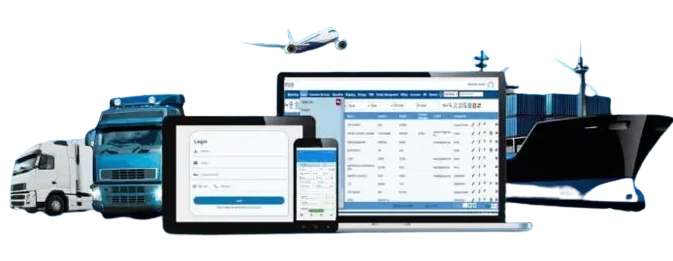
 Freight Forwarding Software
 Warehouse Management System
 Transport Management System
 Moving/Removal Software
 Customer Service Portal
 Move Survey Quote Pro
 Digital Logistics Inventory App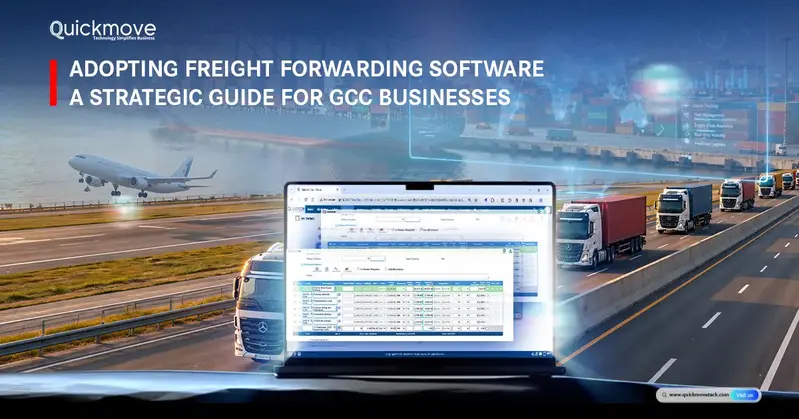
The freight forwarding industry across the GCC is becoming increasingly digital. As logistics companies manage higher shipment volumes, complex international trade requirements, multiple transportation modes, and growing customer expectations, traditional spreadsheets and disconnected systems are becoming difficult to manage.
For freight forwarders in the UAE, Qatar, Saudi Arabia, Bahrain, Oman, and Kuwait, adopting freight forwarding software can provide a more structured way to manage daily operations, improve shipment visibility, reduce manual work, and support business growth.
However, selecting and implementing the right technology is not simply an IT decision. It is a strategic business decision that can influence operational efficiency, customer service, financial control, and long-term scalability.
This guide explains what GCC freight forwarding businesses should consider when adopting freight forwarding software and how the right solution can support modern logistics operations.
Why GCC Freight Forwarders Are Moving Toward Digital Operations
GCC countries are major hubs for global trade, transportation, warehousing, and distribution. Freight forwarding companies operating in the region often coordinate shipments across air, ocean, and road transportation while dealing with customers, carriers, customs requirements, warehouses, and delivery partners.
Managing these activities manually can create several operational challenges.
Common problems include:
- Repetitive data entry
- Spreadsheet-based shipment tracking
- Delays in quotation preparation
- Manual documentation
- Limited shipment visibility
- Communication gaps between departments
- Billing and invoicing errors
- Difficulty monitoring shipment profitability
- Lack of centralized customer information
- Time-consuming reporting
As shipment volumes increase, these challenges can become more expensive.
This is where digital freight software can make a significant difference.
What Is Freight Forwarding Software?
Freight forwarding software is a digital platform designed to help logistics and freight forwarding companies manage their operations from a centralized system.
Depending on the platform, it can support processes such as:
- Freight quotations
- Customer management
- Shipment bookings
- Air freight operations
- Ocean freight operations
- Road transportation
- Shipment tracking
- Documentation
- Billing and invoicing
- Warehouse coordination
- Financial management
- Reporting and analytics
Instead of managing each process separately, companies can connect important freight operations within a single freight forwarding management system.
This creates better visibility across the shipment lifecycle.
7 Reasons GCC Businesses Should Adopt Freight Forwarding Software
1. Reduce Manual Administrative Work
Freight forwarding involves a large amount of repetitive administrative work.
Employees may spend hours entering shipment information, preparing quotations, updating spreadsheets, sending documents, and creating invoices.
A modern freight management software platform can automate many of these repetitive processes.
For example, information entered during the quotation or booking process can be reused across relevant operational workflows.
This reduces duplicate data entry and allows employees to spend more time on customer service and business development.
2. Improve Shipment Visibility
Customers increasingly expect real-time information about their shipments.
They want to know:
- Where is the shipment?
- Has it been picked up?
- What is the current shipment status?
- When is the expected delivery?
- Are there any delays?
A centralized logistics software platform can provide better shipment visibility by bringing tracking information into one system.
For freight forwarding companies, this means fewer manual status updates and faster responses to customer questions.
3. Manage Air, Ocean, and Road Freight From One Platform
GCC logistics businesses often handle multiple transportation modes.
A company may manage:
- Air freight
- Ocean freight
- Road freight
- Multimodal transportation
- Warehousing
- Local delivery
Managing each operation through separate tools can create information gaps.
An end-to-end logistics software platform can help businesses manage multiple freight activities through a centralized environment.
This provides management teams with a clearer view of operations across different transportation modes.
4. Automate Quotations and Pricing
Preparing freight quotations quickly is important in a competitive logistics market.
Manual quotation processes can result in:
- Slow response times
- Pricing errors
- Inconsistent rates
- Missed opportunities
- Difficulty comparing costs
With freight forwarding software, businesses can organize rates, charges, customer information, and quotation workflows in one system.
Sales teams can therefore respond to customer inquiries faster while maintaining greater pricing consistency.
5. Improve Billing and Invoicing Accuracy
Financial processes are another important area where freight forwarders can benefit from automation.
Freight shipments can involve multiple charges, including:
- Freight charges
- Handling fees
- Documentation charges
- Customs-related costs
- Storage
- Delivery charges
- Surcharges
- Other operational expenses
Manually calculating and tracking these charges can increase the risk of billing errors.
A freight management software solution can connect operational information with billing workflows, helping companies create invoices more efficiently and maintain better financial control.
6. Make Shipment Profitability Easier to Monitor
Revenue alone does not show whether a shipment is profitable.
A shipment may generate significant revenue but produce a much smaller margin after carrier costs, handling charges, storage, customs expenses, delivery costs, and other operational expenses are considered.
Freight forwarding software can help businesses bring revenue and operational cost information together.
This allows management teams to evaluate:
- Revenue per shipment
- Operational costs
- Gross margin
- Customer profitability
- Trade-lane profitability
- Shipment-level performance
Better profitability visibility can help GCC freight forwarders make more informed pricing and customer decisions.
7. Support Business Growth
A system that works for a small number of shipments may become difficult to manage as the business expands.
As companies grow, they may add:
- More customers
- More employees
- More shipments
- New trade lanes
- Additional branches
- New transportation services
Scalable logistics software for small business and growing freight companies can provide a stronger operational foundation for expansion.
Instead of continuously adding spreadsheets and disconnected tools, businesses can build their processes around a centralized platform.
What Should GCC Businesses Look for in Freight Forwarding Software?
Choosing software should not be based only on the number of features.
The right platform should match the company’s operational requirements and growth plans.
Here are some important capabilities to evaluate.
1. Multi-Modal Freight Management
Look for software that can support air, ocean, and road freight operations.
This is particularly important for companies managing different types of shipments and multimodal logistics.
2. Automated Quotations
The software should make it easier to create, manage, and track customer quotations.
Faster quotation workflows can help sales teams respond to opportunities more efficiently.
3. Shipment Tracking
Real-time or near-real-time shipment visibility can improve customer communication and reduce the need for manual status updates.
4. Documentation Management
Freight forwarding generates significant amounts of documentation.
A centralized system can help teams organize and access important shipment information more efficiently.
5. Billing and Invoicing
Financial automation should be an important consideration.
The platform should help businesses manage charges, invoices, payments, and related financial information accurately.
6. Reporting and Analytics
Management teams need visibility into business performance.
Useful reports can include:
- Shipment volumes
- Revenue
- Costs
- Profit margins
- Customer performance
- Carrier performance
- Operational activity
7. Integration Capabilities
Modern freight forwarding companies often use multiple business systems.
When evaluating software, businesses should consider whether it can integrate with relevant accounting, CRM, warehouse, transportation, or other operational systems.
8. Ease of Use
A powerful system is not useful if employees struggle to use it.
The interface should be intuitive enough for operational teams, sales teams, finance teams, and management to adopt without unnecessary complexity.
How to Successfully Implement Freight Forwarding Software
Buying software is only the first step.
Successful implementation requires planning.
Step 1: Identify Current Operational Problems
Before selecting a platform, document the biggest operational challenges.
Ask:
- Where are employees spending the most time?
- Which processes are still manual?
- Where do errors occur?
- Which reports are difficult to produce?
- How quickly can quotations be prepared?
- How easily can shipment status be accessed?
This helps identify the features that matter most.
Step 2: Map Your Freight Processes
Document the workflow from the first customer inquiry through final delivery.
For example:
Quotation → Booking → Shipment → Documentation → Tracking → Delivery → Billing → Reporting
Understanding the complete workflow helps businesses determine where automation can create the greatest value.
Step 3: Involve Different Departments
Software adoption should not be handled by one department alone.
Include representatives from:
- Operations
- Sales
- Finance
- Customer service
- Warehouse
- Management
Each department interacts with freight operations differently and can identify different requirements.
Step 4: Train Employees
Employees need to understand not only how to use the software but also why the company is adopting it.
Proper training can improve adoption and reduce resistance to operational changes.
Step 5: Start With High-Impact Processes
Businesses do not necessarily need to automate everything immediately.
Start with processes that create the biggest operational impact, such as:
- Quotations
- Shipment management
- Tracking
- Documentation
- Billing
Once employees become comfortable with the platform, additional workflows can be introduced.
The Role of AI in Modern Freight Forwarding
Artificial intelligence is becoming an important part of modern logistics technology.
AI-powered capabilities can help freight companies reduce repetitive work and improve how operational information is captured and processed.
For example, AI can support areas such as:
- Document processing
- Data extraction
- Shipment information management
- Image-based surveys
- Audio-based surveys
- Workflow automation
- Operational insights
For GCC freight forwarding companies, AI can complement traditional freight forwarding software by reducing manual processes and helping teams work more efficiently.
Why Cloud-Based Logistics Software Matters for GCC Companies
Cloud-based platforms provide another important advantage for growing logistics businesses.
Teams can access relevant business information from different locations without depending entirely on a single office-based system.
This can be particularly useful for companies with:
- Multiple branches
- Remote employees
- Regional operations
- Sales teams
- Warehouse teams
- Management teams
A cloud-based digital freight software platform can help create a more connected operational environment.
QuickMove: A Digital Platform for Modern Freight Operations
For freight forwarding companies looking to centralize their logistics operations, QuickMove provides an integrated platform designed to support modern freight and logistics workflows.
QuickMove brings freight, warehouse, transport, and moving operations into one platform, helping businesses reduce manual work and improve operational visibility.
The platform can support important freight processes such as:
- Freight quotations
- Shipment management
- Air, ocean, and road operations
- Real-time shipment tracking
- Billing and invoicing
- Warehouse operations
- Transportation management
- AI-powered operational capabilities
By connecting these activities within one platform, logistics businesses can reduce dependence on disconnected spreadsheets and manual processes.
For GCC companies looking for a scalable end-to-end logistics software solution, a centralized platform can provide the operational foundation needed to manage growth.
Final Thoughts
Adopting freight forwarding software is no longer simply about replacing spreadsheets.
For GCC logistics companies, it is an opportunity to build a more connected, automated, and scalable business operation.
The right freight forwarding management system can help companies reduce manual work, improve shipment visibility, automate quotations and billing, monitor profitability, and deliver better customer service.