Email Us
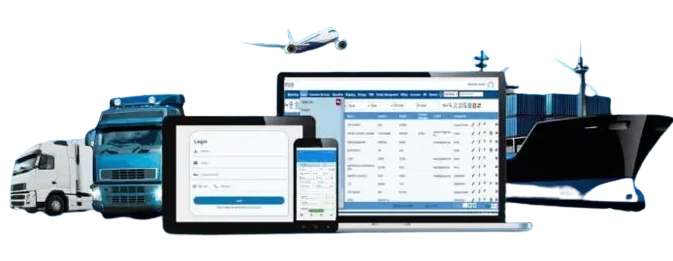
 Freight Forwarding Software
 Warehouse Management System
 Transport Management System
 Moving/Removal Software
 Customer Service Portal
 Move Survey Quote Pro
 Digital Logistics Inventory App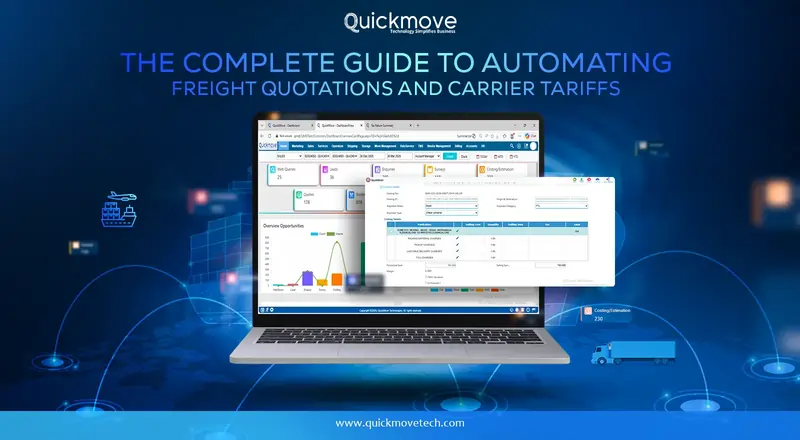
In today’s fast-paced logistics industry, speed and accuracy are no longer optional—they’re essential. Freight forwarders, logistics providers, and shipping companies handle hundreds of quotations every week while managing carrier tariffs that change frequently. Relying on spreadsheets, emails, and manual calculations often leads to pricing errors, delayed responses, and lost business.
This is where modern freight forwarding software becomes a game-changer. It automates freight quotations, centralizes carrier tariffs, and enables logistics companies to provide accurate pricing within minutes instead of hours.
Whether you’re managing air freight, ocean freight, or multimodal shipments, the right logistics software simplifies the entire quoting process while improving operational efficiency and profitability.
Understanding Freight Quotations
A freight quotation is a price estimate provided to a customer based on shipment details such as:
- Origin and destination
- Shipment weight and dimensions
- Cargo type
- Shipping mode (Air, Ocean, Road, or Rail)
- Transit time requirements
- Customs charges
- Fuel surcharges
- Additional handling or documentation fees
Customers expect quotations to be accurate and delivered quickly. A delay of even a few hours can result in losing business to competitors. Modern freight platforms automate much of this process by consolidating pricing information into a single system.
What Are Carrier Tariffs?
Carrier tariffs are the pricing structures established by shipping lines, airlines, trucking companies, and logistics providers.
These tariffs include:
- Base freight charges
- Fuel surcharges
- Peak season surcharges
- Security fees
- Terminal handling charges
- Documentation charges
- Currency adjustment factors
- Validity periods
Since tariffs are updated regularly, manually maintaining them becomes increasingly difficult as a logistics business grows.
A centralized tariff management system ensures that the latest rates are always available for quotation generation.
Challenges of Managing Freight Quotations Manually
Many freight forwarding companies still depend on Excel spreadsheets and email communication to prepare quotations. While this may work for a small number of shipments, it creates significant operational challenges.
Some common issues include:
- Using outdated carrier rates
- Human calculation errors
- Slow quotation turnaround
- Duplicate data entry
- Missing surcharges
- Difficulty comparing multiple carriers
- Poor version control of tariffs
- Limited visibility across departments
These issues can directly impact customer satisfaction and reduce profit margins. Industry discussions also highlight that scattered rate information and manual processes are common causes of pricing mistakes.
How Freight Forwarding Software Automates Freight Quotations
Modern freight forwarding software transforms the entire quotation workflow by bringing all pricing information into one centralized platform.
1. Centralized Carrier Tariff Data base
Instead of maintaining multiple spreadsheets, all carrier rates are stored in one secure database.
Benefits include:
- Instant access to current tariffs
- Reduced duplication
- Better rate consistency
- Easier updates
- Controlled user permissions
2. Automated Rate Calculations
The software automatically calculates shipping costs by considering:
- Freight charges
- Weight or volume
- Air freight rates
- Fuel surcharges
- Local charges
- Taxes
- Customs fees
- Profit margins
This minimizes manual errors while significantly reducing quotation preparation time.
3. Fast Carrier Comparison
Rather than opening multiple carrier websites or spreadsheets, logistics teams can instantly compare:
- Transit time
- Shipping cost
- Service level
- Carrier availability
- Profit margin
This allows sales teams to recommend the most suitable shipping option for every customer.
4. Real-Time Tariff Updates
Carrier tariffs change frequently due to market conditions, seasonal demand, fuel prices, and capacity fluctuations.
A good freight software for logistics allows businesses to:
- Upload new tariffs quickly
- Replace expired rates
- Schedule future pricing
- Maintain historical records
- Track tariff validity dates
This ensures quotations always use the latest approved rates.
5. Faster Customer Response
Customers appreciate quick quotations.
With automated pricing, companies can:
- Respond within minutes
- Improve customer satisfaction
- Increase quote conversion rates
- Win more business
- Enhance sales productivity
Managing Air Freight Quotations More Efficiently
Handling air freight quotations requires managing airline rates, dimensional weight calculations, airport charges, security fees, and fuel surcharges.
Without automation, preparing an air freight quote can become time-consuming.
A dedicated freight management solution helps businesses:
- Store airline tariffs
- Calculate chargeable weight automatically
- Apply airline surcharges
- Generate professional quotations
- Compare airline pricing
- Improve quotation accuracy
This enables logistics teams to serve customers faster while reducing pricing errors.
Key Features to Look for in Logistics Software
When selecting logistics software, businesses should look for features such as:
- Freight quotation management
- Carrier tariff management
- Air freight pricing
- Ocean freight pricing
- Customer-specific pricing
- Automated surcharge calculations
- Multi-currency support
- Quotation templates
- Shipment tracking
- CRM integration
- Reporting dashboards
- Document management
These features streamline operations and improve overall business efficiency.
Business Benefits of Freight Software for Logistics
Implementing modern freight software for logistics offers measurable advantages:
1. Improved Accuracy – Automated calculations reduce human errors and eliminate pricing inconsistencies.
2. Faster Operations – Sales teams spend less time preparing quotations and more time acquiring customers.
3. Better Profitability – Automated margin calculations help maintain healthy profits while remaining competitive.
4. Stronger Customer Experience – Quick, accurate quotations increase customer confidence and improve retention.
5. Scalable Growth – As shipment volumes grow, automation allows businesses to expand without significantly increasing administrative workload.
Why Digital Tariff Management Matters
Carrier pricing is becoming increasingly dynamic, making manual rate management difficult to sustain. Centralized tariff systems help freight forwarders maintain a single source of truth for pricing, reducing outdated quotes and improving consistency across teams.
Final Thoughts
Managing freight quotations and carrier tariffs manually is becoming increasingly inefficient in today’s competitive logistics environment.
Businesses that continue relying on spreadsheets risk slower response times, pricing mistakes, and reduced profitability.
By implementing modern freight forwarding software, logistics companies can automate quotation generation, maintain accurate carrier tariffs, streamline air freight pricing, and improve customer satisfaction. The right logistics software not only saves valuable time but also helps organizations scale their operations with confidence.