Email Us
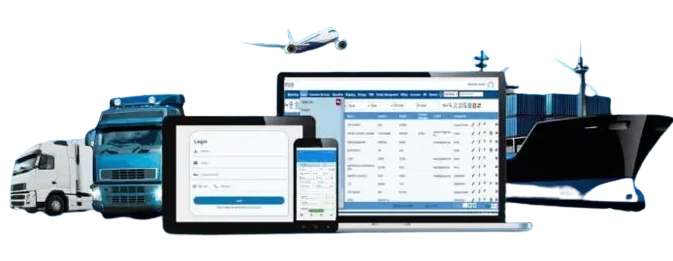
 Freight Forwarding Software
 Warehouse Management System
 Transport Management System
 Moving/Removal Software
 Customer Service Portal
 Move Survey Quote Pro
 Digital Logistics Inventory App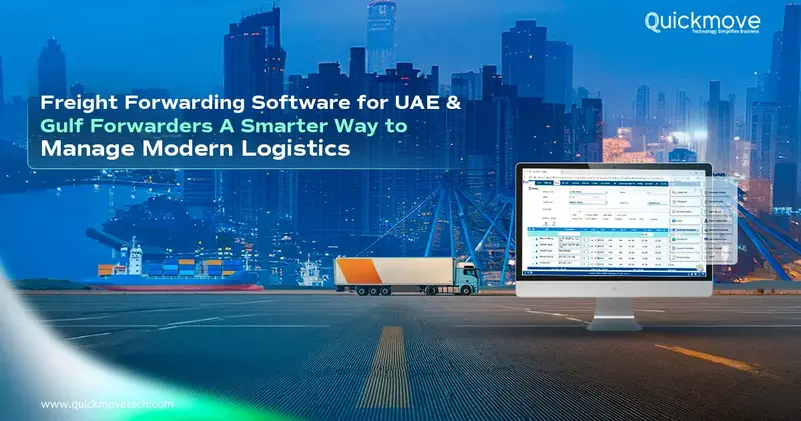
The freight forwarding industry in the UAE and the Gulf is changing quickly. Spreadsheets, emails, paperwork, and fragmented systems are no longer adequate for freight forwarders due to growing global trade, increasing cargo numbers, more compliance standards, and increased customer expectations.
For businesses operating in the UAE, Saudi Arabia, Qatar, Kuwait, Bahrain, and Oman to be competitive, having the right technology is becoming essential.
Freight forwarding software might be very helpful in this situation.
Businesses may handle shipments, quotes, clients, paperwork, invoicing, tracking, operations, and reporting from a single, centralized system with the use of a contemporary freight forwarding platform. Forwarders can link their daily operations thru a single digital platform rather than handling each step independently.
The shift to cloud-based freight software and digital operations is more than just automation for expanding logistics companies in the Gulf. Gaining more control over the company while providing a quicker and more transparent client experience is the goal.
Why UAE and Gulf Freight Forwarders Need Better Technology
The United Arab Emirates has become a significant hub for trade and logistics, linking companies in Asia, Europe, Africa, and the Middle East. A variety of air, sea, road, and multimodal goods are handled by Dubai, Abu Dhabi, Jebel Ali, Sharjah, and other logistics hubs.
Freight forwarding businesses benefit from this, but there are operational difficulties as well.
An expanding forwarding business might have to handle:
- Several shipments concurrently
- Road, sea, and air freight
- Rate management and quotations
- Communication between customers and agents
- Documentation for shipping
- Information about customs
- Additional costs and freight charges
- Payments and invoices
- Monitoring shipments
- Coordination between carriers and vendors
- Reports on profitability and operations
When separate tasks are carried out using multiple spreadsheets, emails, and applications, information can easily become fragmented.
A digital freight forwarding system unifies these activities, giving management and employes a greater grasp of what is happening across the entire organization.
What Is Freight Forwarding Software?
A technological solution called freight forwarding software was created to assist freight forwarding businesses in managing the entire shipment lifecycle.
Processes ranging from receiving a customer inquiry and creating a quote to booking shipments, paperwork, operations, billing, tracking, and reporting may be covered, depending on the platform.
For example, a typical workflow could look like:
Customer Enquiry → Quotation → Booking → Shipment Operations →Documentation → Tracking → Billing → Reporting
A centralized freight software platform enables teams to work with linked information rather than manually transferring data across departments.
This can lessen the need for repetitive data entry, increase visibility, and facilitate management’s monitoring of company performance.
The Shift from Traditional Processes to Digital Freight Operations
Many well-known freight forwarding companies have years of experience and strong client relationships. They don’t always struggle with a lack of operational knowledge.
Often, the issue is with information management. A shipment may require multiple emails, Excel files, documents, phone calls, approvals, and modifications. As the volume of shipments increases, maintaining accuracy becomes more difficult.
Many companies are moving to digital freight software as a result. Freight forwarders can replace disjointed procedures with organized workflows thanks to digitalization. Instead of digging thru numerous files and communication channels, employes can obtain pertinent information from a single platform.
Replacing seasoned freight professionals is not the goal. Giving them better tools will enable them to work more quickly and make better decisions.
Key Benefits of Freight Software for Gulf Forwarders
1. Centralized Shipment Management
Shipment data can be centralized using a contemporary freight forwarding software.
Teams can manage shipment details, customer information, cargo details, documentation, costs, status updates, and operational activities thru a linked system.
When a business is managing numerous shipments to various places, this becomes particularly helpful.
2. Faster Quotations
A key component of gaining new business is using quotations.
The procedure may become too slow if staff members must review numerous files, rates, emails, and prior records in order to prepare a quotation.
Teams can more effectively produce quotations and arrange rate information with the use of freight software.
A faster quotation process can improve the customer experience and help sales teams respond to opportunities while they are still active.
3. Better Shipment Visibility
Consumers are becoming more demanding when it comes to timely shipment information.Teams can get a centralized picture of shipment progress and significant operational milestones from a digital freight forwarding system.
4. Improved Documentation
There is a lot of paperwork involved with freight forwarding.Manual document management raises the risk of data entry errors, missing information, and using out-of-date files.
Documentation pertaining to shipments can be arranged with the use of a centralized system, which also facilitates information access for authorized users.
5. Smarter Billing and Financial Control
Freight forwarding success is contingent on effective revenue and expense management. A shipment may be subject to freight fees, handling fees, documentation fees, customs costs, vendor fees, and other additional charges.
6. Better Customer Service
Customers’ impressions of logistics organizations are increasingly influenced by technology. Customers want timely responses, transparent communication, accurate documentation, and visibility of shipments.
When employes have access to centralized information, customer support teams can respond with greater assurance and efficiency.
Why Cloud-Based Freight Software Makes Sense for Growing Companies
For many Gulf freight forwarders, flexibility is becoming as vital as functioning.
A cloud-based freight software solution enables authorized users to access corporate information over the internet rather than relying solely on a traditional office-based infrastructure.
This can be useful for companies with:
- Multiple branches
- Remote teams
- Sales teams working outside the office
- Managers who need access to reports while travelling
- Operations teams working across different locations
Businesses may find it simpler to scale their technology as operations expand with cloud-based technologies.
For a corporation moving from one site to other Gulf markets, having a connected digital platform can help maintain consistency in operations.
Supporting Multimodal Freight Operations
Gulf logistics firms frequently manage various forms of transportation based on client needs.
A shipment could travel by:
- Freight by sea
- Air freight
- Transportation by road
- Transportation in multiple modes
Operational coordination may become more challenging if each mode is managed by separate systems.
A modern freight forwarding solution may integrate these processes, allowing organizations to handle various shipment types while keeping centralized customer, financial, and operational data.
This provides management with a more comprehensive understanding of the company’s logistical activities.
How QuickMove Can Support Freight Forwarding Businesses
For any freight forwarding business, selecting the appropriate technology is crucial.
To assist companies in managing and automating crucial logistics and freight forwarding procedures, we offer an integrated logistics software platform.
Businesses can handle operational, customer, financial, and business activities in a single environment rather than depending on numerous disparate apps.
A technology like QuickMove can help Gulf freight forwarders upgrade their operations by facilitating the shift from manual procedures to a more connected and digital operating model.
What Should Gulf Forwarders Look for in Freight Forwarding Software?
Software selection is a long-term business choice. Cost shouldn’t be the only factor taken into account.
Freight forwarding businesses should consider whether a platform can meet their needs now and in the future before selecting one.
Important areas to consider include:
- Multi-Modal Capabilities: The company’s air, sea, road, or multimodal operations should be supported by the system.
- Cloud Accessibility: Teams should have safe access to pertinent data whenever and wherever they require it.
- Automation: Look for automated processes that eliminate repetitive administrative tasks and manual data entry.
- Billing and Accounting: Operational and financial procedures should be integrated rather than kept separate.
- Customer Visibility: Customer-facing capabilities can enhance communication and transparency.
- Reporting and Analytics: Shipments, income, expenses, customers, and profitability must all be clearly communicated to management.
- Scalability: Business expansion, more users, branches, and higher shipment volumes should all be supported by the program.
Digital Transformation Is Becoming a Business Requirement
For many years, digital transformation in logistics was thot to be something that businesses may think about when they had the funds or time.
Today’s circumstances are different. Consumers anticipate quicker communication. Workers anticipate improved equipment. Real-time visibility is essential for management. Operational costs are still important, and competition is growing.
The Future of Freight Forwarding in the Gulf
In the UAE and around the Gulf, freight forwarding will become more automated, data-driven, and linked in the future.
Freight forwarders will keep searching for methods to decrease manual procedures while enhancing operational control and service quality.
The contemporary freight forwarding ecosystem will progressively incorporate automation, cloud platforms, customer portals, digital documentation, real-time tracking, artificial intelligence, and integrated financial management.
Final Thoughts
Using contemporary freight forwarding software can be a useful strategy for UAE and Gulf freight forwarders to increase productivity, visibility, customer service, and financial control.
Investing in the appropriate freight software can strengthen a firm’s foundation for future success, regardless of whether it is an established logistics provider, a developing freight forwarder, or a company operating throughout the Gulf.
Paperwork is not the only thing that a digital freight forwarding system can do. People, procedures, shipments, clients, and financial data are all connected in one setting.