Email Us
 Freight Forwarding Software
 Warehouse Management System
 Transport Management System
 Moving/Removal Software
 Customer Service Portal
 Move Survey Quote Pro
 Digital Logistics Inventory App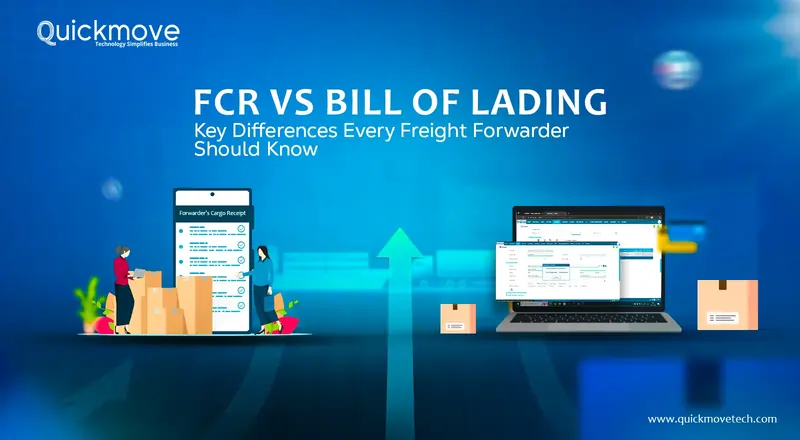
In international logistics, shipping documents play a crucial role in ensuring cargo moves efficiently from the exporter to the consignee. Among the most important documents are the Forwarder’s Certificate of Receipt (FCR) and the Bill of Lading (BL). Although they may appear similar, they serve very different purposes and have distinct legal implications.
Understanding the difference between an FCR and a Bill of Lading is essential for freight forwarders, exporters, importers, and logistics professionals. Using the wrong document can result in shipment delays, customs issues, payment disputes, and operational inefficiencies.
This is where freight forwarding software becomes invaluable. Modern freight software, freight software for logistics, and logistics software automate shipping documentation, reduce manual errors, improve compliance, and provide complete visibility across the supply chain. Instead of managing documents through spreadsheets, emails, and paper files, businesses can centralize every shipment within a single digital platform.
In this comprehensive guide, we’ll explain what FCR and Bill of Lading are, highlight their key differences, and explore how freight forwarding software simplifies document management for modern logistics companies.
What is an FCR (Forwarder’s Certificate of Receipt)?
A Forwarder’s Certificate of Receipt (FCR) is a document issued by a freight forwarder confirming that they have received cargo from the exporter in good condition and accepted responsibility for arranging its transportation according to the agreed shipping instructions.
Unlike a Bill of Lading, an FCR does not transfer ownership of the goods. Instead, it serves as proof that the freight forwarder has received the cargo and is responsible for organizing its movement.
An FCR confirms:
- The freight forwarder has received the cargo.
- The shipment matches the exporter’s instructions.
- Goods will be forwarded according to the agreed transport plan.
- The exporter has handed over responsibility to the freight forwarder.
FCRs are commonly used in long-term business relationships where buyers and sellers already trust each other and ownership transfer is not required.
What is a Bill of Lading (BL)?
A Bill of Lading (BL) is one of the most important legal documents in international shipping. It is typically issued by the shipping line or carrier once the cargo has been loaded onto the vessel.
The Bill of Lading performs three essential functions:
- Acts as a receipt for the goods.
- Serves as the contract of carriage between the carrier and the shipper.
- Functions as a document of title, allowing ownership of the cargo to be transferred.
Because it represents ownership, the Bill of Lading is widely used in international trade, especially when shipments involve banks, Letters of Credit, or multiple buyers.
FCR vs Bill of Lading: Key Differences
When Should You Use an FCR?
Freight forwarders typically issue an FCR when:
- Buyers and sellers have an established relationship.
- Ownership transfer is unnecessary.
- Exporters only need confirmation that goods have been received.
- Cargo is managed directly by the freight forwarder.
- Documentation needs to be completed quickly.
Because it simplifies documentation, the FCR is widely used for routine international shipments.
When is a Bill of Lading Required?
A Bill of Lading is essential when:
- International trade financing is involved.
- Banks require shipping documents under Letters of Credit.
- Ownership of cargo needs to change during transit.
- Customs authorities require official transport documentation.
- The consignee must present the original document before cargo release.
For sea freight shipments, the Bill of Lading is one of the most critical documents in the logistics process.
Common Challenges of Managing Shipping Documents Manually
Many freight forwarding companies still rely on manual processes to prepare FCRs, Bills of Lading, invoices, and customs documents. As shipment volumes increase, these outdated methods become difficult to manage.
Common problems include:
- Duplicate data entry
- Manual typing errors
- Missing shipment information
- Incorrect consignee details
- Lost or misplaced documents
- Delayed document approvals
- Compliance risks
- Poor communication between departments
These issues can lead to shipment delays, increased operational costs, and dissatisfied customers.
Why Freight Software Is Essential for Modern Logistics
The logistics industry is becoming increasingly digital, and manual documentation is no longer sustainable. Modern freight software helps freight forwarders automate routine tasks while improving operational efficiency and document accuracy.
Whether you’re managing air freight, sea freight, or multimodal transportation, freight software for logistics enables businesses to digitize shipment management, quotations, documentation, invoicing, customer communication, and reporting from a single platform.
Advanced logistics software also provides centralized access to shipping documents, allowing operations teams, finance departments, customs brokers, and customers to collaborate more effectively.
As global trade grows more complex, investing in digital logistics solutions has become essential for businesses that want to remain competitive.
How Freight Forwarding Software Simplifies FCR and Bill of Lading Management
Modern freight forwarding software is designed to automate documentation while providing complete shipment visibility. Instead of creating shipping documents manually, businesses can generate accurate documents with just a few clicks.
1. Automated Document Generation
A modern freight forwarding software platform automatically creates:
- Forwarder’s Certificate of Receipt (FCR)
- House Bill of Lading (HBL)
- Master Bill of Lading (MBL)
- Commercial Invoice
- Packing List
- Shipping Instructions
- Delivery Orders
- Customs Documentation
By entering shipment information only once, the software populates all related documents automatically, reducing repetitive work and minimizing errors.
2. Centralized Document Management
Instead of storing documents across emails, spreadsheets, and physical files, freight software keeps all shipment records in one secure location.
Users can instantly access:
- Shipment details
- Customer information
- Cargo records
- Container information
- Shipping documents
- Customs documentation
- Financial records
This centralized approach saves time and improves collaboration between teams.
3. Reduced Documentation Errors
Manual data entry often leads to costly mistakes. Modern freight software for logistics eliminates duplicate entries by automatically syncing shipment information across all shipping documents.
Businesses can significantly reduce:
- Incorrect consignee details
- Wrong port information
- Duplicate shipment numbers
- Missing cargo information
- Invoice discrepancies
This improves document accuracy and minimizes shipment delays.
4. Real-Time Shipment Tracking
Many modern logistics software platforms integrate shipment tracking with shipping documentation.
Operations teams and customers can monitor:
- Cargo pickup
- Port arrivals
- Vessel departures
- Customs clearance
- Final delivery
This transparency improves customer satisfaction and reduces the number of status inquiries.
5. Compliance and Regulatory Support
International shipping regulations continue to evolve. Freight forwarding software helps businesses maintain compliance by ensuring mandatory shipping information is included in every document.
Automated validation also reduces the risk of customs delays caused by incomplete or inaccurate documentation.
6. Financial and Operational Integration
Modern freight software doesn’t stop at documentation. It also integrates with accounting, invoicing, freight quotations, carrier tariffs, customer relationship management (CRM), and operational reporting.
This enables logistics companies to manage their entire freight operation from one platform instead of using multiple disconnected systems.
7. Benefits of Using Freight Forwarding Software
Implementing freight forwarding software offers significant advantages for freight forwarders and logistics providers.
Some of the biggest benefits include:
- Faster document creation
- Reduced manual workload
- Improved document accuracy
- Better shipment visibility
- Centralized document management
- Improved compliance
- Automated freight quotations
- Better carrier tariff management
- Enhanced customer communication
- Lower operational costs
- Increased employee productivity
- Scalable business operations
Whether you’re a small freight forwarding company or a global logistics provider, adopting freight software for logistics can dramatically improve efficiency and profitability.
8. Choosing the Right Freight Software for Logistics
Not every logistics company has the same requirements, so selecting the right freight software for logistics is an important business decision.
A modern solution should include:
- FCR and Bill of Lading generation
- Air, sea, and road freight management
- Freight quotation management
- Carrier tariff management
- Shipment tracking
- Customer portal
- Customs documentation
- Financial accounting and invoicing
- Reporting and analytics
- Multi-branch operations
- Cloud accessibility
- Integration with ERP and third-party systems
The right logistics software should support your business as shipment volumes grow while improving operational efficiency and customer satisfaction.
9. Best Practices for Managing FCR and Bill of Lading
To reduce documentation errors and improve operational efficiency, freight forwarders should follow these best practices:
- Verify shipment information before generating documents.
- Use standardized document templates.
- Digitize all shipping documentation.
- Automate document approvals.
- Maintain secure digital records.
- Integrate documentation with shipment tracking.
- Train employees on compliance requirements.
- Adopt freight forwarding software to automate repetitive processes.
These practices help freight forwarding companies maintain accuracy, reduce costs, and provide better service to customers.
Conclusion
Although both the Forwarder’s Certificate of Receipt (FCR) and the Bill of Lading (BL) are essential shipping documents, they serve very different purposes. An FCR simply confirms that a freight forwarder has received the cargo, while a Bill of Lading acts as a receipt, a contract of carriage, and a document of title that enables ownership transfer.
Managing these documents manually can create unnecessary delays, increase administrative costs, and expose businesses to compliance risks. By implementing modern freight forwarding software, companies can automate document creation, streamline shipment management, improve operational visibility, and eliminate manual errors.