Email Us
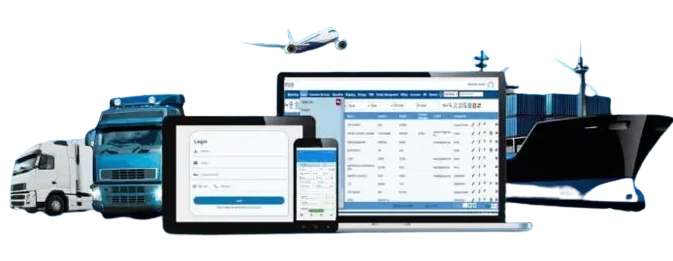
 Freight Forwarding Software
 Warehouse Management System
 Transport Management System
 Moving/Removal Software
 Customer Service Portal
 Move Survey Quote Pro
 Digital Logistics Inventory App
In today’s highly competitive logistics industry, success is no longer determined by the volume of goods handled. It is expected of freight forwarding firms to maintain compliance, deliver shipments more quickly, save operating costs, and give customers total insight.
The problem is that a lot of companies still use spreadsheets and manual reporting, which makes it challenging to find operational bottlenecks before they affect profitability. Software for freight forwarding becomes crucial in this situation.
Logistics firms may track performance in real time using useful Key Performance Indicators (KPIs) thanks to modern freight software. Businesses can use precise operational data to boost productivity, boost profits, and provide better customer service rather than making decisions based on conjecture.
For total operational control, advanced platforms also include air freight software, ocean freight, road transport, accounting, CRM, and reporting into a single system.
In order to promote sustainable growth, every logistics company should keep an eye on the top 10 KPIs for freight forwarding businesses, which are examined in this guide.
Why KPIs Matter in Freight Forwarding
Each shipment produces useful operational data. Businesses are unable to assess if they are outperforming rivals or improving without monitoring the appropriate data.
Freight forwarding KPI monitoring benefits businesses:
- Boost operational effectiveness
- Boost the profitability of shipments
- Cut down on human errors
- Provide improved client experiences
- Increase worker productivity
- Make business decisions based on facts.
- Expand operations without adding more overhead.
These KPIs are automatically updated through real-time dashboards with an integrated freight forwarding software solution, doing away with manual reporting and enhancing decision-making.
Top 10 Freight KPIs Every Freight Forwarder Should Track
1. On-Time Shipment Delivery Rate
One of the most significant key performance indicators for freight forwarding is shipment punctuality.
This statistic calculates the proportion of shipments that are delivered within the allotted period.
Formula: (Total Shipments × On-Time Delivery) × 100
A high delivery rate on a regular basis suggests:
- Improved planning for operations
- Robust ties with carriers
- Effective paperwork
- Increased client satisfaction
Businesses can track shipment milestones in real time with the use of modern air freight software, which enables teams to proactively address delays before they negatively impact customers.
2. Shipment Profit Margin
The success of a business is not solely determined by revenue.
After deducting transportation, customs, storage, handling fees, and operating costs, each freight forwarder should be aware of the precise profit each shipment makes.
After deducting transportation, customs, storage, handling fees, and operating costs, each freight forwarder should be aware of the precise profit each shipment makes.
Monitoring shipping profitability benefits companies in:
- Determine which clients have high margins.
- Make pricing schemes more effective
- Cut down on unstated expenses
- Make financial planning better
By automatically calculating work costing, billing, and profitability, a contemporary freight software platform provides management with total financial transparency.
3. Documentation Accuracy Rate
One of the main reasons for shipment delays is still inaccurate documentation.
Inaccurate commercial invoices, air waybills, bills of lading, or customs paperwork may lead to:
- Penalties for customs
- The shipment is held
- A rise in operating expenses
- Unhappiness among customers
Companies ought to measure:
Accurate Documents Produced ÷ Total Documents
By using automated document production and defined workflows, automated freight forwarding software dramatically lowers documentation errors.
4. Average Shipment Processing Time
How long does it take to complete the booking and execution of a shipment?
This KPI gauges departmental operational effectiveness.
Companies that have faster processing times can:
- Manage additional shipments
- Accelerate client service
- Boost operational capability
- Lessen the workload for staff
Teams may handle shipments considerably more quickly thanks to automation in contemporary freight software, which reduces repetitive manual chores.
5. Customer Satisfaction Score (CSAT)
Retaining current customers is far more economical than finding new ones.
Businesses can better understand service quality by monitoring client happiness.
Among the useful measures are:
- Client comments • The time it takes to resolve complaints
- The percentage of repeat business
- NPS, or Net Promoter Score
By giving clients access to documents and real-time shipment tracking, integrated customer portals in freight forwarding software increase transparency.
6. Invoice Processing Time
Cash flow is immediately impacted by delayed invoices.
Forwarders of goods should measure:
- Average time to generate an invoice
- Cycle of payment collecting
- Unpaid accounts receivable
Freight software’s automated billing improves invoice accuracy, speeds up revenue collection, and minimizes manual labor.
7. Customs Clearance Time
Customs efficiency is a crucial performance metric for global logistics firms.
Monitoring the typical time it takes to clear customs can reveal:
- Problems with documentation
- Delays in regulations
- Bottlenecks unique to a country
- Inefficiencies in operations
By guaranteeing that necessary paperwork are prepared correctly and submitted on time, integrated customs documentation within freight forwarding software helps minimize delays.
8. Carrier Performance Score
Not all delays in logistics come from within.
Companies should routinely assess carrier performance using measures like:
- Timely pickups
- On-time delivery
- Rates of damage
- The quality of communication
- Economical
Freight forwarders can improve service quality and negotiate better contracts by keeping an eye on carrier KPIs.
9. Warehouse Utilization Rate
For businesses managing warehouse operations alongside freight forwarding, warehouse efficiency directly affects profitability.
Important warehouse metrics include:
- Storage utilization
- Inventory accuracy
- Average storage duration
- Order fulfillment speed
Integrated warehouse modules within freight forwarding software provide complete visibility into inventory movement, storage billing, and warehouse performance.
10. Employee Productivity
Your logistics team is one of your most valuable assets.
Tracking employee productivity helps management identify opportunities for process improvement.
Useful metrics include:
- Shipments handled per employee
- Documentation completed
- Customer response time
- Task completion rate
Automation reduces repetitive administrative work, allowing employees to focus on higher-value activities such as customer service and operational planning.
Key Takeaways for Freight Forwarders
Monitoring the right freight KPIs enables logistics businesses to improve operational performance, increase profitability, and deliver better customer experiences.
Some of the most important takeaways include:
- Freight KPI tracking is essential for improving freight forwarding operations.
- Monitoring freight KPI for logistics small business helps growing companies scale efficiently.
- Tracking freight KPI for logistics business improves operational visibility.
- Every freight KPI for companies should align with business goals and customer expectations.
- Companies using freight KPI for logistics can make faster, data-driven decisions.
- Understanding freight KPI companies need to know helps identify bottlenecks before they become costly problems.
- Every freight KPI for small company owner should know contributes to smarter financial and operational planning.
- KPI freight forwarder companies monitor include on-time delivery, shipment profitability, documentation accuracy, customs clearance, and customer satisfaction.
- If you’re asking What KPIs Are Used by Freight Shipping Companies, the answer includes transportation, financial, warehouse, customer service, documentation, and employee performance metrics.
How Freight Forwarding Software Simplifies KPI Tracking
Manually collecting KPI data from multiple spreadsheets and disconnected systems is both time-consuming and error-prone.
A centralized freight forwarding software solution automatically consolidates operational, financial, and customer data into a single dashboard, enabling businesses to monitor performance in real time.
With an integrated platform, companies can:
- Monitor shipment performance across air, sea, and road freight
- Track profitability for every job
- Automate documentation and invoicing
- Analyze carrier and warehouse performance
- Improve customer communication
- Generate real-time management reports
- Make faster, data-driven decisions
For organizations handling international cargo, dedicated air freight software features such as Air Waybill management, milestone tracking, automated documentation, and shipment visibility further enhance operational efficiency.
Best Practices for KPI Tracking
To maximize the value of KPI reporting:
- Set measurable business goals.
- Review KPIs weekly or monthly.
- Use real-time dashboards instead of manual spreadsheets.
- Analyze trends instead of isolated numbers.
- Continuously optimize operations using KPI insights.
- Benchmark performance against industry standards.
- Automate reporting wherever possible.
Businesses that consistently review KPIs improve efficiency while reducing operational costs.
Why Choose QuickMove Technologies?
QuickMove Technologies is more than just freight forwarding software.
It is an all-in-one logistics management platform built specifically for freight forwarders, logistics providers, moving companies, transport businesses, and warehouse operators.
Our integrated solution includes:
- Freight Forwarding Software
- Air Freight Management
- Ocean Freight Management
- Road Transport Management
- Warehouse Management System
- CRM
- Accounting & Finance
- Automated Documentation
- Billing & Invoicing
- Customer Portal
- KPI Dashboards
- Real-Time Reporting
- Business Intelligence
Instead of using multiple disconnected systems, QuickMove centralizes your entire logistics operation into one cloud-based platform helping you reduce costs, improve efficiency, and grow faster.
Ready to Transform Your Logistics Business?
If you’re looking to improve operational efficiency, gain complete visibility into your business, and make data-driven decisions, QuickMove Technologies is the partner you need.
Book a personalized demo today and discover how our AI-powered freight forwarding software helps logistics companies automate operations, track KPIs in real time, increase profitability, and deliver exceptional customer experiences.
Final Thoughts
In an increasingly competitive logistics environment, measuring the right performance indicators is essential for long-term success. Businesses that consistently monitor the right KPI for freight forwarding can identify operational inefficiencies, improve customer satisfaction, reduce costs, and increase profitability.
The combination of clearly defined KPIs and intelligent freight software provides logistics companies with the visibility needed to make informed business decisions. Instead of reacting to operational problems after they occur, businesses can proactively optimize workflows, strengthen customer relationships, and scale with confidence.