Email Us
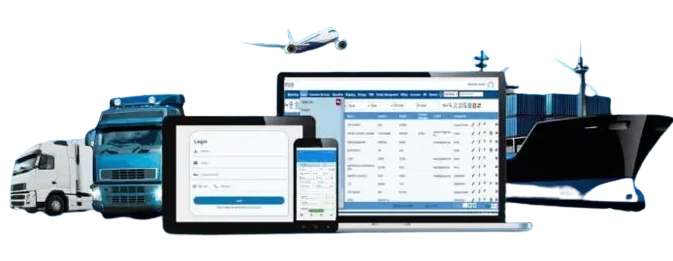
 Freight Forwarding Software
 Warehouse Management System
 Transport Management System
 Moving/Removal Software
 Service Portal
 Move Survey Quote Pro
 Digital Logistics Inventory App
Freight documentation is one of the most important—and often misunderstood—parts of international shipping. A shipment can be perfectly planned, priced correctly, and packed well, but if the documents are wrong or delayed, the cargo will not move. In many cases, poor documentation leads to customs delays, storage charges, disputes over cargo ownership, or missed delivery deadlines.
This guide explains the most important freight documents used in sea and air freight, how they connect with each other, and why accuracy matters at every step. From HBL and MBL to AWB and MAWB, from commercial invoices to delivery orders, we’ll walk through the documentation flow in a practical, easy-to-understand way.
Understanding the Role of Freight Documentation
Freight documents serve three main purposes:
- Legal proof of shipment, contract, and cargo ownership
- Operational guidance for carriers, agents, terminals, and truckers
- Compliance support for customs and trade authorities
Each document is created for a specific reason and at a specific stage of the shipment. Problems occur when documents don’t match each other, are issued late, or contain incorrect data.
That’s why experienced freight forwarders focus heavily on documentation accuracy and consistency, often supported by structured systems like QuickMove’s freight forwarding software, which helps manage documents from booking to delivery.
HBL and MBL: The Foundation of Sea Freight Documentation
House Bill of Lading (HBL)
The House Bill of Lading (HBL) is issued by the freight forwarder to the shipper. It confirms that the forwarder has received the cargo and agrees to transport it under agreed terms.
An HBL typically includes:
- Shipper and consignee details
- Cargo description
- Port of loading and destination
- Freight terms
For the shipper, the HBL is the primary reference document. Any mistake here—such as wrong consignee name or cargo description—can create serious issues at destination.
Master Bill of Lading (MBL)
The Master Bill of Lading (MBL) is issued by the carrier to the freight forwarder. It covers the consolidated shipment and links multiple HBLs under one master record.
The key difference:
- HBL connects shipper ↔ forwarder
- MBL connects forwarder ↔ carrier
Consistency between HBL and MBL is critical. Mismatches often lead to customs queries or cargo holds. This is where centralized document generation through QuickMove’s freight forwarding software helps reduce manual errors and duplicated data entry.
AWB and MAWB: Core Documents for Air Freight
Air freight uses similar documentation but with different terminology.
Air Waybill (AWB)
The Air Waybill (AWB) is issued by the freight forwarder to the shipper. It confirms receipt of goods for air transport and outlines routing and shipment details.
Unlike bills of lading, AWBs are not negotiable documents, but they are still legally binding and operationally critical.
Master Air Waybill (MAWB)
The Master Air Waybill (MAWB) is issued by the airline to the freight forwarder. It covers the consolidated air shipment.
Just like HBL and MBL, the AWB and MAWB must align perfectly. Any inconsistency can delay cargo release at the destination airport.
Using a single platform like QuickMove’s freight software to generate AWB and MAWB ensures data consistency across all air freight documents.
Arrival Notice: Informing the Consignee on Time
An arrival notice informs the consignee that their cargo has arrived or is about to arrive. This document is more important than it looks.
A proper arrival notice includes:
- Shipment reference details
- Arrival date
- Cargo summary
- Next steps for clearance and delivery
Late arrival notices often result in:
- Missed customs preparation
- Demurrage or storage charges
- Frustrated customers
When arrival notices are generated promptly and accurately, consignees can prepare documents and payments in advance. Freight forwarders often rely on structured workflows, such as those available in QuickMove’s freight forwarding software, to avoid delays in sending arrival notices.
Cargo Manifest: Full Visibility of Goods in Transit
The cargo manifest is a consolidated list of all cargo onboard a vessel or aircraft. Authorities, terminals, and carriers use it to verify shipment details before unloading.
A cargo manifest typically includes:
- Shipment numbers
- Consignee and shipper names
- Cargo descriptions
- Weights and package counts
Errors in the manifest can trigger inspections or clearance delays. Because it pulls data from multiple shipments, accuracy across source documents like HBLs, AWBs, and invoices is essential.
Commercial Invoice, Packing List, and Certificate of Origin
These three documents are critical for customs clearance and trade compliance.
Commercial Invoice (CI)
The Commercial Invoice declares the value of goods and the terms of sale. Customs authorities use it to calculate duties and taxes.
A CI must clearly show:
- Buyer and seller details
- Cargo value
- Currency
- Incoterms
Even small errors can lead to reassessment or fines.
Packing List (PL)
The Packing List provides physical shipment details such as:
- Number of packages
- Weight and dimensions
- Packaging method
Customs officers rely on packing lists during inspections. Warehouse teams use them to verify cargo during handling.
Certificate of Origin (COO)
The Certificate of Origin confirms where the goods were manufactured. Many countries require it to apply correct duty rates or comply with trade agreements.
Handling CI, PL, and COO together reduces clearance risks. Managing these documents within QuickMove’s freight software helps forwarders keep everything aligned and easily accessible.
Pre-Alert: Preparing the Destination Agent
A pre-alert is sent to the destination agent before cargo arrival. It includes copies of key documents so the agent can prepare for clearance and delivery.
A typical pre-alert contains:
- HBL or AWB
- Commercial invoice and packing list
- Cargo details and ETA
Without a proper pre-alert, destination teams are forced to work reactively, which increases delays. Sending clear and complete pre-alerts improves coordination and speeds up cargo release.
Trucking Orders: Connecting Sea, Air, and Land Transport
A trucking order instructs a transporter to move cargo between locations. It acts as a bridge between ports, airports, warehouses, and final delivery points.
A trucking order includes:
- Pickup and delivery locations
- Cargo details
- Timing instructions
Clear trucking orders reduce misunderstandings and ensure cargo moves as planned. When documentation is scattered across emails or spreadsheets, mistakes happen. Centralized documentation management, like that offered by QuickMove’s freight forwarding software, helps maintain clarity.
Stuffing and Unstuffing Reports: Proof of Cargo Handling
Stuffing Report
A stuffing report records how cargo is loaded into a container. It documents:
- Package arrangement
- Quantity loaded
- Container condition
Unstuffing Report
An unstuffing report records cargo unloading at destination.
These reports are especially useful for:
- Damage claims
- Quantity disputes
- Customer transparency
Having clear stuffing and unstuffing records protects both the forwarder and the customer.
Delivery Order (D/O): The Final Release Step
The Delivery Order (D/O) authorizes the release of cargo to the consignee or their representative. Without it, cargo cannot be collected from the port or terminal.
A proper D/O process includes:
- Issuance of the delivery order
- Verification of required documents
- Release approval
Delays in D/O issuance are one of the most common causes of extended storage charges. Managing D/O issuance and release workflows efficiently helps forwarders avoid unnecessary costs and customer complaints.
Why Structured Documentation Management Matters
Freight documentation is not just paperwork—it is the control system of global trade. Each document depends on the accuracy of the previous one. Errors multiply when processes are manual or disconnected.
By using structured tools like QuickMove’s freight forwarding software, freight forwarders can:
- Generate consistent documents
- Reduce manual errors
- Maintain clear documentation workflows
- Improve coordination with agents and customers
Final Thoughts
From HBL and MBL to AWB and MAWB, from commercial invoices to delivery orders, freight documentation touches every stage of a shipment’s journey. When documents are accurate, timely, and well-managed, cargo moves smoothly. When they are not, delays and costs quickly follow.
Understanding each document and its role is essential for freight forwarders, logistics teams, and shippers alike. With the right processes—and the right documentation tools—freight operations become more predictable, compliant, and efficient.