Email Us
 Freight Forwarding Software
 Warehouse Management System
 Transport Management System
 Moving/Removal Software
 Customer Service Portal
 Move Survey Quote Pro
 Digital Logistics Inventory App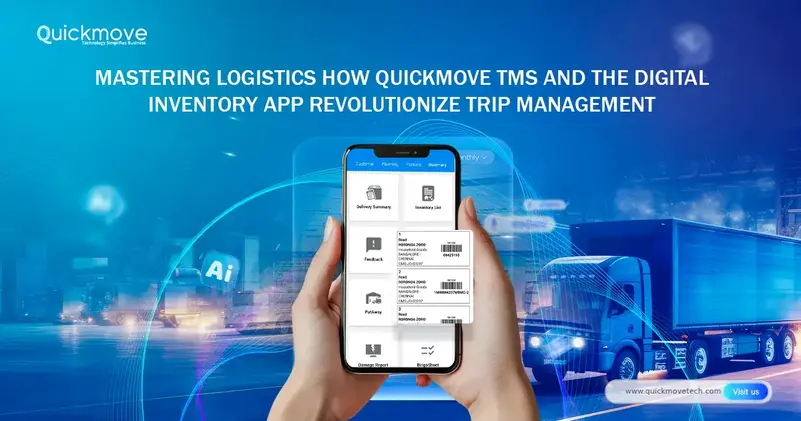
Fleet managers and logistics directors live in a world of friction. Dispatchers burn hours on phone tag with drivers. Operations teams piece together trip data from crumpled paperwork. Finance departments chase signatures that exist only on carbon copies lost somewhere in a truck cab.
This is the reality of managing a mixed fleet of company-owned iron and short-term leased trailers. The operational drag is immense, and the margin for costly errors is razor-thin.
QuickMove TMS eliminates this friction. It provides a unified digital backbone that orchestrates every phase of a freight journey, from ignition to final signature. The system brings surgical precision to the complete trip lifecycle for both owned and leased assets. Here is how it rewires the entire process.
The High Cost of Operating in the Dar
The freight industry has suffered from a persistent visibility problem. When a truck rolls out, the back office essentially goes blind. Real-time operational data is scarce, leading to a cascade of profit-draining issues:
- Revenue leakage from detention because dwell time tracking is nonexistent or manual
- Cargo claim disputes due to lack of photographic evidence at pickup
- Leased asset inefficiency with zero visibility into utilization patterns
- Invoicing bottlenecks caused by missing or illegible Proof of Delivery signatures
- Underutilized equipment from deadheading because load readiness times remain unknown
QuickMove TMS closes this visibility gap. It provides a digital thread connecting the driver, dispatcher, and customer in a real-time data loop. The platform operates as a unified cloud-based system, planning, executing, and tracking freight movements with end-to-end integration across CRM, ERP, billing, and HR modules. This eradicates information silos and introduces operational harmony across departments.
The Digital Arsenal: Features That Drive the Trip Lifecycle
QuickMove TMS is not just a tracking tool. It is a comprehensive transport management system built for real-world complexity. It focuses on simplifying daily operations while improving shipment visibility and enabling faster, clearer decision-making.
Smarter Route and Load Planning
The platform features optimized Full Truck Load and Part Truck Load planning. It considers cost, distance, capacity, and service levels to suggest the best possible plan. This capability extends to multi-stop routing, ensuring that fleet assignments, whether for owned rigs or contracted carriers, are optimized for maximum efficiency.
Unified Fleet and Carrier Management
QuickMove TMS manages both internal fleets and third-party logistics providers. It features fleet assignment tools that facilitate coordination and includes vendor onboarding capabilities. This flexibility allows logistics managers to adapt quickly to capacity demands, shifting loads between owned and leased assets based on real-time data.
Live Shipment Tracking
The system provides in-transit tracking of goods and vehicles, coupled with instant alerts to stakeholders. This 360-degree visibility enables logistics managers to track progress from dispatch to delivery and actively deal with exceptions. GPS and geolocation tracking eliminate the guesswork of calling carriers to determine a load’s whereabouts. Logistics managers can see a shipment’s progress en-route to its destination in real-time, compare estimated arrival times to actual arrival times, and set notifications when a truck enters or exits a designated geofence.
Proactive Exception Handling
A truly intelligent TMS enables proactive exception management. The platform notifies designated personnel when certain events occur, such as when a truck lingers beyond a pre-set dwell time at a facility. This proactive approach minimizes disruptions and ensures the highest level of service by intervening before issues escalate.
The Trip Lifecycle: From Startup to Shutdown
Here is the step-by-step breakdown of how QuickMove TMS manages the complete freight journey.
1. Start: Verification and Authorization
The trip begins with rigorous asset verification. For owned equipment, the system confirms the specific Unit ID, license plate, and trailer assignment. For leased assets, the platform cross-checks lease agreement details and expiration dates, ensuring the driver is only authorized to use approved equipment.
The pre-trip inspection is transformed from a paperwork exercise into a digital documentation process. Drivers photograph existing damage such as scratches, dents, or tire wear. This is crucial for owned assets to maintain fleet value and for leased assets to avoid being billed for pre-existing damage upon return. All inspection data is time-stamped and geo-tagged, providing undeniable proof of the vehicle’s condition at trip commencement.
2. Load: Inventory Accuracy and Exception Capture
This phase is where operational accuracy drives profit. Barcode and QR scanning replaces manual counting, reconciling physical inventory against the electronic Bill of Lading in real-time. The driver scans freight labels using the phone’s camera, and the inventory is automatically verified against the manifest.
Exception reporting is immediate. If cargo is damaged, missing, or incorrectly labeled, the driver captures photographic evidence and logs the issue in the app. An alert triggers to the dispatcher instantly, enabling immediate negotiation with the shipper rather than discovering the problem days later. Weight verification through integration with onboard scales or dock sensors ensures the loaded weight matches the shipping manifest, preventing costly overweight fines and ensuring regulatory compliance.
3. In-Transit: Real-Time Visibility
The system provides a bird’s-eye view of the entire transportation network. This level of visibility arms logistics managers with the information to address customer inquiries quickly and effectively. Automated status updates via email or SMS inform customers about key milestones, fostering transparency and trust. The platform supports integration with Electronic Logging Devices, providing more than just location data and enabling deeper operational insight into driver behavior and vehicle performance.
4. Unload and Delivery: Bulletproof Proof of Delivery
Arrival is not the finish line; it is where liability shifts. The receiver signs the device directly, creating an electronic Proof of Delivery that is instantly attached to the trip record. No more chasing paper, no more lost documents, and no more delayed invoicing because the signature was illegible.
Condition reporting at the time of unload provides visual documentation of cargo integrity. The driver photographs the cargo as it is unloaded, documenting any damage that may have occurred during transit. This evidence is invaluable for insurance claims and customer dispute resolution. Weight verification at unload is compared against pickup weight to ensure cargo integrity throughout the journey.
5. Gate Pass Management: The Digital Key
Gate passes have historically been a nightmare of lost forms and security delays. QuickMove TMS digitizes this process entirely. The driver presents a digital gate pass on the mobile device. The guard scans the QR code, instantly verifying the appointment time, trailer number, and authorized personnel.
The system records the exact moment the gate pass is issued and returned, creating an indisputable audit trail for access control. Automated dwell time calculation ensures detention fees are tracked and billed correctly. This is a critical function for leased trailers where every minute of waiting time erodes profit margins.
6. End: Closing the Data Loop
The cycle concludes with a complete data sync. Leased equipment returns trigger a final walkaround inspection with photo documentation, protecting against false damage claims and cleaning fees. Hours of service data syncs automatically, ensuring compliance with driving regulations and accurate driver payroll.
All data from the first pre-trip inspection to the final unloading signature syncs to the QuickMove TMS backend instantly. This closes the accounting and operational loop, allowing for immediate invoicing and driver payroll calculations.
The Strategic Edge: Owned vs. Leased Asset Management
One of the standout features of the QuickMove TMS system is how it applies distinct intelligence to owned and leased assets.
For Owned Equipment
Preventive maintenance tracking monitors mileage and engine hours, automatically generating maintenance work orders based on actual usage rather than calendar guesses. This keeps equipment on the road and out of the shop.
Per-mile profitability analysis provides granular revenue data per truck, enabling data-driven decisions about fleet composition and route profitability. Detailed trip logs support accurate depreciation calculation and tax filings.
For Leased Assets
Usage auditing provides precise mile and hour tracking for reconciling lease invoices against actual utilization. This ensures you are paying only for what you actually use.
The detention shield provided by automated timestamping gives ironclad proof to push back on unnecessary surcharges, saving thousands in lease penalties. Utilization radar offers visibility into when leased equipment is earning revenue versus sitting idle, supporting ruthless decisions on renewal or replacement.
The Feature Arsenal of QuickMove TMS
- Mobile-first application designed for the cab, not the boardroom
- Live data streaming so dispatchers see trip status updates in real-time
- Offline mode that works in dead zones and syncs when signal returns
- Visual documentation with photos attached to every critical milestone
- Electronic signatures that capture binding Proof of Delivery on the spot
- Rapid scanning with barcode and QR reading that beats manual counting
- Tailored checklists customizable for specific trailers and cargo types
- Seamless integration that plugs directly into the broader business ecosystem
Tangible Business Outcomes
Investing in a TMS with in-transit visibility delivers substantial benefits. By replacing manual processes, organizations reduce administrative drag significantly. A centralized console providing a bird’s-eye view of the entire operation allows logistics experts to drive efficiencies and focus on high-value tasks rather than firefighting.
End-to-end visibility dismantles information silos and provides a holistic perspective on the entire transportation ecosystem, empowering managers to make better-informed decisions and deliver superior customer experiences. The platform supports scalability for future business growth and expansion. Whether managing an in-house fleet or contracting with vendors, the platform fits into the business model.
Happy customers are the backbone of every successful logistics company. Real-time tracking and automated status updates are among the best ways to foster loyalty and encourage repeat business. Reducing deadheading by knowing exact load readiness times allows dispatchers to book backhauls aggressively, juicing utilization for both owned and leased assets.
Frequently Asked Questions
Can the app function without internet connectivity?
Does the system handle specialized freight like refrigerated or bulk cargo?
Is the Digital Inventory App a separate purchase from the TMS?
How does the system handle leased trailer returns?
Can customers view their shipment status directly?
What happens if a driver encounters an exception during loading?
The Verdict: Data Wins Every Time
QuickMove TMS provides that information advantage. It delivers end-to-end shipment visibility and automates transport planning and billing operations. By digitizing the entire freight journey from ignition to unload, it transforms every scan and signature into a profit-protecting data point.
Whether you run a fleet of ten company-owned rigs or rely heavily on leased trailers, QuickMove TMS provides the digital infrastructure to move your business forward with confidence, efficiency, and profitability. The clipboard era is over. The age of digital freight execution has arrived.