Email Us
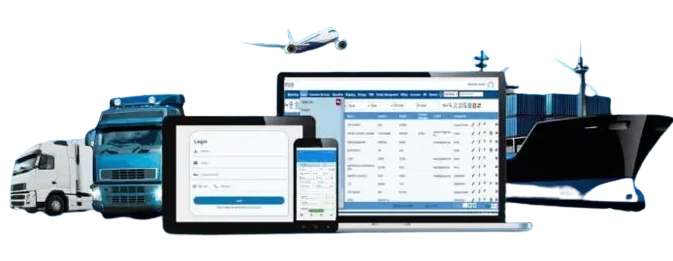
 Freight Forwarding Software
 Warehouse Management System
 Transport Management System
 Moving/Removal Software
 Customer Service Portal
 Move Survey Quote Pro
 Digital Logistics Inventory App
Spreadsheets have been part of freight forwarding operations for years. They are flexible, familiar, inexpensive, and easy to start with. For a small freight forwarding company handling a limited number of shipments, Excel or similar spreadsheet tools may appear to be enough.
But as the business grows, freight operations become more complicated.
More shipments mean more quotations, customers, carriers, documents, invoices, shipment updates, costs, and communication. When all this information continues to depend on spreadsheets, emails, and manual follow-ups, the same tools that once helped the business can eventually slow it down.
This is where businesses start considering digital freight software, freight management software, and a modern freight forwarding management system.
But how do you know when it is actually time to move away from spreadsheets?
Here are seven signs that your freight forwarding business may have outgrown them.
1. Your Team Is Spending Too Much Time Updating Spreadsheets
One of the first signs is the amount of time your employees spend entering, updating, checking, and sharing spreadsheet data.
A single shipment may require information about:
- Customer details
- Quotation and rates
- Booking information
- Container or cargo details
- Shipment milestones
- Documentation
- Vendor costs
- Billing information
- Delivery status
When employees have to update this information manually across multiple files, repetitive data entry can consume valuable working hours.
It can also create inconsistencies.
One employee may have the latest shipment status while another is working from an older spreadsheet. Someone may update a quotation without updating the corresponding cost sheet.
With freight forwarding software, these processes can be brought together into a centralized system. Instead of maintaining multiple disconnected spreadsheets, teams can work with shared operational information.
The objective is not simply to eliminate Excel. It is to reduce unnecessary manual work and give employees more time to focus on customers, shipments, and business development.
2. You Are Managing Too Many Files, Emails, and WhatsApp Messages
Freight forwarding involves constant communication.
Your team may communicate with customers, carriers, agents, transport providers, warehouses, customs teams, and internal departments.
When important information is spread across spreadsheets, email threads, WhatsApp conversations, and paper documents, finding the right information can become difficult.
For example, a customer may ask:
“What is the current status of my shipment?”
Your employee may need to check an email, open a spreadsheet, contact an operations colleague, and then provide an update.
As shipment volumes increase, this process becomes increasingly difficult to manage.
An End-to-End Logistics Software platform can bring important operational information into one connected environment. QuickMove, for example, combines freight operations with documentation, billing, customer portals, tracking, and other logistics functions.
This gives teams a more structured way to access and share operational information.
3. Shipment Errors and Duplicate Data Are Increasing
Manual data entry creates another challenge: errors.
A small mistake in a shipment reference, customer detail, rate, cost, invoice, or document can create additional work for your team.
The problem becomes more serious when the same information needs to be entered into several different files.
For example:
Customer enquiry → Quotation → Booking → Shipment → Documentation → Billing
If every stage requires separate manual updates, there are more opportunities for information to become inconsistent.
Modern freight management software can connect these workflows and reduce unnecessary duplicate data entry.
QuickMove’s platform includes automated workflows such as AI-assisted job-order creation, automated vendor invoice processing, costing, and enquiry management.
Automation does not eliminate the need for human oversight. Instead, it can reduce repetitive administrative work and allow teams to focus on exceptions and decisions that require human attention.
4. Customers Are Constantly Asking for Shipment Updates
Customer expectations have changed.
Customers increasingly expect quick answers about shipment status, estimated delivery, documentation, and exceptions.
If your operations team receives multiple calls or emails every day asking:
- Where is my shipment?
- Has the cargo been dispatched?
- Has it reached the destination?
- Is there any delay?
- Can I get the latest document?
- What is the expected delivery date?
your existing process may not be providing enough visibility.
A modern freight forwarding management system can provide shipment and milestone visibility to internal teams and customers.
QuickMove provides real-time shipment status and milestone tracking, along with customer and agent portals for shipment updates.
This can reduce the need for customers to depend entirely on your operations team for routine updates.
5. Your Business Is Growing, but Your Processes Are Not Scaling
Growth sounds positive, but growth can expose weaknesses in operational processes.
Imagine a freight forwarder handling 50 shipments per month. A spreadsheet-based process may be manageable.
Now imagine handling 500 or 1,000 shipments.
The number of customers, documents, quotations, invoices, vendors, shipments, and operational updates increases significantly.
If your company responds to this growth by simply adding more spreadsheets and more employees to manage them, operational complexity can increase along with revenue.
This is one of the strongest signs that your business needs scalable digital freight software.
Technology can help create standardized workflows that support growth without requiring every new shipment to generate an equivalent amount of manual administrative work.
For smaller and growing logistics companies, Logistics Software for Small Business can also provide a structured foundation for managing operations as shipment volumes increase.
The goal is not to make a small business operate like a large enterprise. It is to give a growing business the systems needed to handle increasing complexity.
6. You Cannot Easily See Profitability by Shipment
Managing revenue is only one part of running a profitable freight forwarding business.
You also need visibility into costs.
A shipment may involve carrier charges, handling costs, transportation expenses, documentation charges, customs-related costs, storage, and other operational expenses.
If these figures are maintained across different spreadsheets or entered manually, getting an accurate picture of shipment profitability can take time.
This creates a challenge for management.
You may know how much revenue a shipment generated, but do you know how much profit it actually produced?
Modern freight systems can connect shipment information with costing, billing, and profitability analysis.
QuickMove provides integrated billing, cost-sheet management, margin control, and profitability analysis as part of its logistics platform.
With better visibility into revenue and costs, management can make more informed decisions about pricing, customers, services, and operational performance.
7. Your Team Is Spending More Time Managing Data Than Managing Logistics
Perhaps the biggest warning sign is simple:
Your team is spending too much time managing information instead of managing logistics.
Freight forwarding professionals should be focused on activities such as:
- Building customer relationships
- Managing shipments
- Negotiating rates
- Coordinating carriers
- Solving exceptions
- Improving service quality
- Managing costs
- Finding new business opportunities
Instead, if employees are spending a large part of their day:
- Updating spreadsheets
- Searching for documents
- Copying information between systems
- Checking email threads
- Preparing manual reports
- Following up for shipment updates
- Re-entering customer information
Your business may have reached the point where spreadsheets are no longer the right primary operational system.
This is where an End-to-End Logistics Software platform can make a difference.
What Should You Look for When Moving Beyond Spreadsheets?
Moving away from spreadsheets does not mean buying the most complicated software available.
The right system should solve the operational problems your business actually faces.
When evaluating freight forwarding software, consider whether the platform can support:
Shipment Management
Can your team manage air, sea, and road shipments from a centralized system?
Documentation
Can the system help automate or organize important freight documents such as Bills of Lading, Air Waybills, invoices, and other records?
Tracking and Visibility
Can your team and customers access shipment status and milestone information?
Cost and Billing Management
Can you connect shipment costs, billing, and profitability information?
Customer Communication
Can customers access relevant shipment information without repeatedly contacting your operations team?
Workflow Automation
Can repetitive activities be automated or standardized?
Scalability
Can the system continue supporting your business as shipment volumes and teams grow?
Regional Requirements
For businesses operating in the Gulf region, consider whether the platform supports the operational requirements of your target markets.
For example, companies searching for Logistics Software UAE, Freight Forwarding Software Middle East, or Freight Management Software Qatar may need a system capable of supporting multi-country and multi-modal freight operations.
QuickMove provides freight software for UAE and Qatar operations and supports air, sea, and land freight workflows, along with tracking, documentation, billing, and other logistics functions.
Spreadsheets Are Not the Problem Using Them for Everything Is
Spreadsheets still have their place.
They can be useful for analysis, calculations, temporary data, reporting, and many other business tasks.
The problem starts when spreadsheets become the central system for managing an increasingly complex freight forwarding operation.
When every shipment depends on multiple files, every update requires manual intervention, and every customer request requires someone to search through different sources, operational complexity can quickly increase.
The solution is not necessarily to eliminate spreadsheets completely.
It is to create a central operational system and use spreadsheets where they make sense.
How QuickMove Can Help Freight Forwarders Move Beyond Manual Processes
QuickMove is an all-in-one logistics platform designed to bring freight forwarding, transportation, warehousing, moving operations, CRM, ERP, accounting, customer portals, and automation into a connected environment.
For freight forwarders, the platform supports shipment and job tracking, FCL/LCL and groupage handling, documentation automation, real-time milestone tracking, billing, cost management, and customer visibility.
Instead of managing every process separately, businesses can create a more connected workflow from quotation and booking through shipment execution, documentation, billing, and customer communication.
For a growing freight forwarder, this can provide a more structured foundation for managing increasing operational complexity.
Final Thoughts
Spreadsheets can be useful when a freight forwarding business is small and its processes are relatively simple.
But when shipment volumes increase, customers demand faster updates, operational costs become harder to track, and employees spend more time managing data, it may be time to reconsider the way your business operates.