Email Us
 Freight Forwarding Software
 Warehouse Management System
 Transport Management System
 Moving/Removal Software
 Customer Service Portal
 Move Survey Quote Pro
 Digital Logistics Inventory App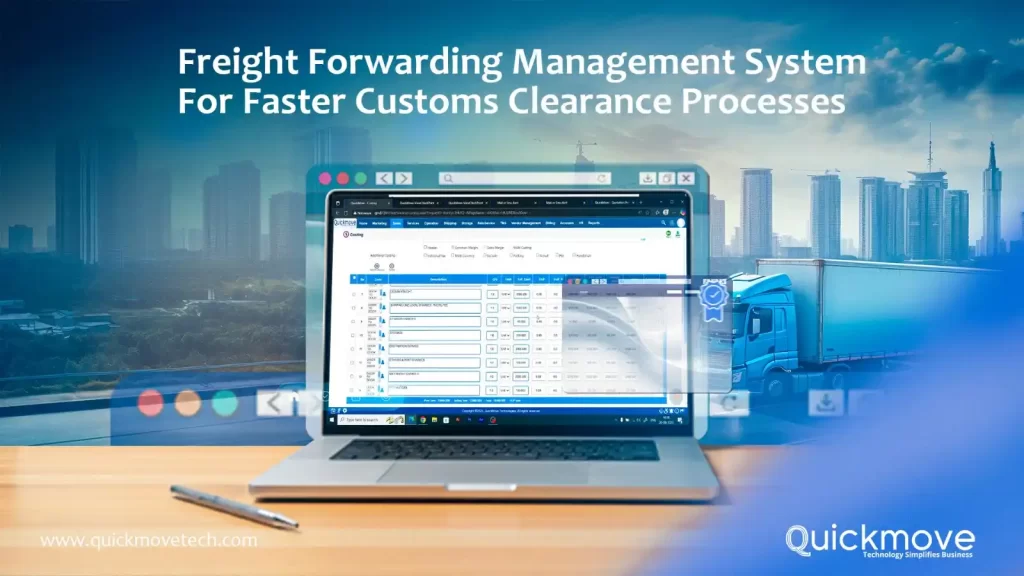
Customs clearance is one of the most crucial processes in international logistics that decides whether a delivery reaches its destination on time. Regardless matter how carefully an item is prepared, packed, and transported, customs delays have the potential to interrupt the whole supply chain. For freight forwarders, problems with customs clearance can lead to increased operational costs, disgruntled customers, and lost business prospects.
As global trade continues to expand, freight forwarding companies are handling larger cargo amounts, more complex regulations, and higher customer demands than ever before. Completing customs documentation by hand is no longer practical for businesses hoping to remain competitive in today’s logistics sector.
In this case, a modern freight forwarding management system is essential. With the use of advanced freight forwarding software, businesses may automate customs-related processes, improve compliance, reduce documentation errors, and speed up cargo transportation across international borders.
Whether a company handles road transportation, marine freight, or primarily relies on air freight software for time-sensitive items, using digital freight management systems may significantly improve customs clearing efficiency.
This article will explain why modern freight software is becoming more and more important for logistics enterprises worldwide, as well as how a freight forwarding management system may help businesses pass customs more swiftly.
Understanding the Importance of Customs Clearance
The process of getting permission from government officials to import or export products across international boundaries is known as customs clearance. Before a shipment may enter or leave a country, customs inspectors must verify the cargo information, documentation, tariffs, taxes, and compliance requirements.
The customs clearance process typically involves:
- Submission of shipping documents
- Cargo declaration
- Duty and tax calculations
- Regulatory compliance checks
- Inspection procedures
- Customs approval and release
Significant delays might result from even little mistakes in paperwork. Customs holds that affect delivery schedules might be caused by missing invoices, imprecise product descriptions, erroneous shipment amounts, or incomplete declarations.
Manually completing customs procedures poses needless risks and operational difficulties for freight forwarders who handle hundreds or thousands of shipments each month.
Common Challenges in Customs Clearance
The following are a few of the most typical difficulties with customs clearance:
1. Errors in Documentation
One of the main reasons for customs delays is inaccurate cargo information. Errors in bills of lading, packing lists, invoices, and customs declarations are more likely to occur when data input is done by hand.
2. Complexity of Regulation
Customs laws and compliance standards vary from nation to nation. Freight forwarders need to keep up with evolving import regulations, paperwork requirements, and trade rules.
3. Insufficient Visibility
Logistics personnel might not be aware of when customs problems occur if they don’t have real-time shipment tracking. This makes it challenging to reduce delays and react promptly.
4. Lack of Communication
Customs clearance involves several stakeholders, including importers, exporters, government agencies, carriers, freight forwarders, and customs brokers. Inadequate communication often results in needless delays.
5. Time-consuming manual processes
Making customs paperwork by hand requires a lot of time and work. As the quantity of shipments increases, managing manual activities becomes increasingly challenging.
These challenges demonstrate why many logistics companies are using digital technology to improve customs procedures.
How Freight Forwarding Software Improves Customs Clearance
Customs management is one of the logistical processes that modern freight forwarding software is intended to automate and streamline. Businesses may handle shipments more quickly and effectively by decreasing manual involvement and increasing data accuracy.
Centralized Shipment Information
One of the biggest advantages of a freight forwarding management system is centralized data management.
Instead of storing shipment information across multiple spreadsheets, emails, and software applications, all data is stored within a single platform.
This allows logistics teams to:
- Access shipment details instantly
- Retrieve customs documents quickly
- Reduce duplicate data entry
- Improve operational efficiency
Having a centralized source of information ensures that customs-related documents remain accurate and easily accessible whenever needed.
Automated Documentation Management
Customs clearance requires several important documents, including:
- Commercial invoices
- Packing lists
- Bills of lading
- Air waybills
- Certificates of origin
- Customs declarations
Managing these documents manually can be time-consuming and prone to errors.
A modern freight forwarding software solution automates document generation using shipment data already stored within the system. This reduces paperwork, improves accuracy, and speeds up customs processing.
Automation also ensures that required documents are generated in standardized formats that meet customs requirements.
Improved Compliance Management
Regulatory compliance is one of the most challenging aspects of international logistics.
A freight forwarding management system helps businesses maintain compliance by:
- Storing customs requirements
- Managing shipment records
- Tracking regulatory updates
- Supporting audit preparation
- Maintaining document history
With better compliance management, businesses can reduce customs holds, avoid penalties, and ensure smoother shipment movement across borders.
Faster Customs Declaration Submission
Preparing customs declarations manually can delay shipment processing.
Advanced freight software simplifies declaration preparation by automatically populating required information from shipment records.
This reduces preparation time and ensures declarations are submitted accurately and on schedule.
Faster submissions allow customs authorities to review shipments sooner, helping businesses achieve quicker cargo release.
The Role of Air Freight Software in Accelerating Customs Clearance
Speed is one of the biggest advantages of air transportation. However, because air shipments move quickly, customs documentation must be prepared and submitted accurately before cargo arrives.
This is where specialized air freight software becomes particularly valuable.
Air freight software helps logistics companies:
- Manage air waybill documentation
- Track cargo movement in real time
- Coordinate with airlines
- Automate customs processes
- Improve shipment visibility
- Reduce paperwork delays
For businesses handling urgent international shipments, efficient customs management is essential to maintaining delivery commitments.
Using dedicated air freight software ensures that customs processes keep pace with the speed of air transportation.
Real-Time Shipment Visibility and Customs Monitoring
One of the biggest benefits of modern freight technology is real-time visibility.
A freight forwarding management system allows logistics teams to monitor shipments throughout the entire transportation process.
This visibility provides several advantages:
- Early identification of customs issues
- Faster response to delays
- Improved customer communication
- Better shipment planning
- Enhanced operational control
Customers also benefit from real-time updates, which improve transparency and build trust.
When customs clearance issues occur, logistics teams can take corrective action immediately rather than discovering problems after significant delays have already occurred.
Better Collaboration Between Stakeholders
Successful customs clearance depends on effective collaboration between multiple parties.
These stakeholders often include:
- Freight forwarders
- Customs brokers
- Airlines
- Shipping lines
- Importers
- Exporters
- Government agencies
Without a centralized platform, communication often becomes fragmented.
Modern freight forwarding software improves collaboration by allowing stakeholders to access shipment information, exchange documents, and communicate through a shared system.
This reduces misunderstandings and ensures everyone has access to the latest shipment updates.
Reducing Costs Through Faster Customs Clearance
Customs delays can become expensive very quickly.
Businesses may face:
- Storage charges
- Demurrage fees
- Additional handling costs
- Customer compensation expenses
- Administrative costs
By implementing a freight forwarding management system, businesses can reduce these costs significantly.
Automation helps minimize errors, while faster customs processing reduces the likelihood of costly shipment delays.
Over time, these operational savings can provide a strong return on investment.
Enhancing Customer Satisfaction
In today’s logistics industry, customers expect fast and reliable delivery services.
Shipment delays caused by customs issues can negatively impact customer relationships.
A modern freight software solution helps businesses improve customer satisfaction by:
- Providing shipment visibility
- Reducing customs delays
- Improving communication
- Delivering accurate shipment information
- Enhancing service reliability
Customers appreciate transparency and timely updates, making technology-driven freight forwarding companies more competitive in the marketplace.
Why Digital Transformation Is Essential for Freight Forwarders
The logistics industry is rapidly evolving. Businesses that continue relying on manual processes may struggle to meet customer expectations and regulatory demands.
Digital transformation offers several advantages:
- Increased operational efficiency
- Better shipment control
- Improved compliance management
- Faster customs clearance
- Enhanced customer service
- Greater scalability
As shipment volumes continue to grow, freight forwarders need technology that supports long-term business growth.
Investing in modern freight forwarding software is no longer just an operational improvement—it is a strategic business decision.
Choosing the Right Freight Forwarding Management System
Not all freight management platforms offer the same capabilities.
When evaluating solutions, freight forwarders should look for features such as:
- Customs documentation management
- Shipment tracking
- Air freight management
- Ocean freight management
- Automated workflows
- Customer portals
- Billing and invoicing
- Compliance tools
- Reporting and analytics
- Cloud-based accessibility
A scalable and user-friendly system allows businesses to adapt to changing market requirements while improving overall efficiency.
Final Thoughts
Fast and efficient customs clearance is essential for successful international shipping. A modern freight forwarding management system helps freight forwarders reduce documentation errors, improve compliance, automate processes, and gain better shipment visibility.
By using reliable freight forwarding software, freight software, and air freight software, logistics companies can minimize delays, improve customer satisfaction, and keep shipments moving smoothly across global borders. As the logistics industry continues to evolve, investing in the right technology is key to achieving long-term operational success.