Email Us
 Freight Forwarding Software
 Warehouse Management System
 Transport Management System
 Moving/Removal Software
 Customer Service Portal
 Move Survey Quote Pro
 Digital Logistics Inventory App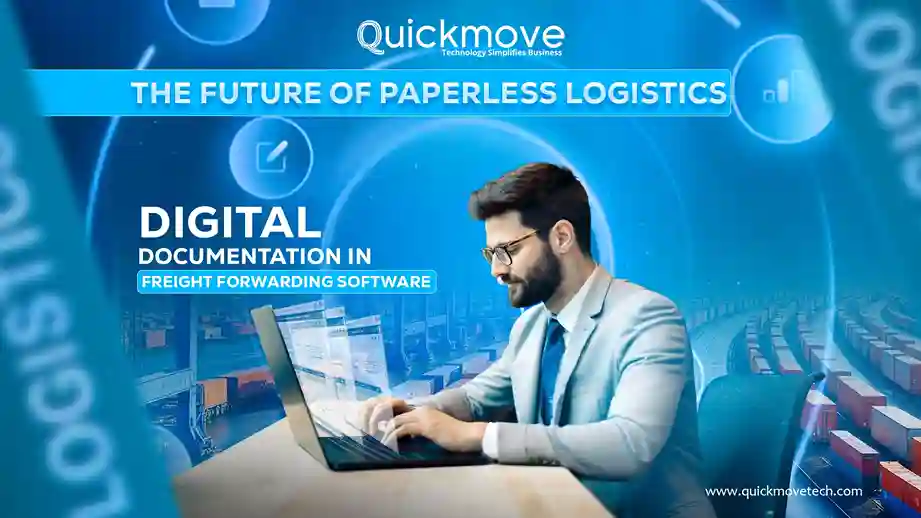
In today’s fast-paced global trade environment, logistics companies are under constant pressure to move faster, reduce costs, and eliminate errors. One of the biggest transformations driving this change is the shift toward paperless logistics, powered by modern freight forwarding software.
Digital documentation is no longer a nice-to-have it’s becoming the backbone of efficient, scalable freight operations.
What is Paperless Logistics?
Paperless logistics refers to the use of digital systems to create, manage, store, and share shipping documents electronically instead of relying on physical paperwork.
Traditional freight forwarding involves a mountain of documents such as:
- Bills of Lading (B/L)
- Commercial Invoices
- Packing Lists
- Delivery Orders
- Customs Documentation
With freight forwarding software, all of these can now be handled digitally faster, safer, and more accurately.
Why the Industry is Moving toward Digital Documentation
The logistics industry has long struggled with manual processes. Paper-based systems slow down operations and increase the risk of costly mistakes.
Here’s why companies are rapidly adopting freight forwarding software:
1. Speed & Efficiency
Manual paperwork takes time printing, signing, scanning, emailing. Digital documentation eliminates these steps, allowing instant document generation and sharing.
2. Reduced Errors
Human errors in documentation can lead to shipment delays or compliance issues. Automated workflows in freight forwarding software reduce mistakes significantly.
3. Real-Time Accessibility
With cloud-based freight forwarding software, documents can be accessed anytime, anywhere whether by your team, clients, or partners.
4. Cost Savings
Going paperless reduces printing, storage, and courier costs. Over time, this leads to significant operational savings.
5. Better Compliance
Digital records make it easier to maintain compliance with international trade regulations and audits.
Key Features of Digital Documentation in Freight Forwarding Software
Modern freight forwarding software offers powerful tools to fully digitize logistics operations:
Automated Document Generation
instantly create invoices, B/L, manifests, and more.
Centralized Document Storage
Store all shipment-related documents in one secure platform.
E-Signatures & Approvals
Speed up approvals without physical paperwork.
Integration with Customs Systems
Seamless data exchange with customs authorities.
Real-Time Tracking with Documents Linked
Access documents alongside shipment tracking data.
Benefits of Going Paperless in Freight Forwarding
Adopting freight forwarding software for digital documentation offers clear competitive advantages:
- Faster shipment processing
- Improved customer satisfaction
- Increased operational transparency
- Better collaboration with global partners
- Scalable operations for growing businesses
Challenges to Consider
While the transition to paperless logistics is beneficial, it’s not without challenges:
- Initial setup and training
- Resistance to change from teams used to manual processes
- Data security concerns
However, with the right freight forwarding software, these challenges can be managed effectively through training, secure systems, and gradual implementation.
The Future of Freight Forwarding Software
The future of freight forwarding software lies in deeper digital transformation. Technologies like AI, blockchain, and IoT will further enhance digital documentation by:
- Enabling smart contracts for automated approvals
- Improving document verification and fraud prevention
- Providing predictive insights for logistics planning
Paper-based systems will soon become obsolete as digital-first logistics becomes the industry standard.
Conclusion
The shift toward paperless logistics is not just a trend it’s the future. Companies that adopt freight forwarding software for digital documentation will gain a strong competitive edge through efficiency, accuracy, and cost savings.
If your logistics operations are still dependent on manual paperwork, now is the time to transition. Embracing digital documentation today will prepare your business for the smarter, faster logistics ecosystem of tomorrow.