Email Us

 Freight Forwarding Software
 Warehouse Management System
 Transport Management System
 Moving/Removal Software
 Customer Service Portal
 Move Survey Quote Pro
 Digital Logistics Inventory App
Warehouse order picking is the backbone of any fulfillment operation. No matter how advanced your warehouse is, if order picking is slow, inaccurate, or inefficient, everything else suffers — customer satisfaction, delivery timelines, labor productivity, and even profit margins.
In most warehouses, order picking alone accounts for nearly 50–60% of total warehouse operating costs. That makes it the single biggest opportunity for improvement. Yet many warehouses still rely on outdated layouts, manual processes, or guesswork instead of structured systems.
The good news? Improving warehouse order picking doesn’t always require massive investments or complete overhauls. Small, well-planned changes — combined with the right tools — can deliver big results.
In this blog, we’ll break down tips to improve warehouse order picking.
What Is Warehouse Order Picking (And Why It Matters So Much)
Warehouse order picking is the process of locating, retrieving, and preparing items from storage locations to fulfill customer orders. Sounds simple, but in reality, it’s a complex operation involving:
- Multiple SKUs
- Different storage zones
- Varying order sizes
- Tight dispatch timelines
- Human and machine coordination
Even small inefficiencies in warehouse order picking can lead to:
- Wrong items shipped
- Missed delivery deadlines
- Increased labor fatigue
- Higher returns and customer complaints
That’s why improving warehouse order picking should be a continuous effort, not a one-time project.
Proven Tips to Improve Warehouse Order Picking
When warehouse order picking follows clear methods and defined workflows, teams are able to handle higher order volumes without confusion or last-minute firefighting. Let us explore practical tips to improve warehouse order picking:
1. Organize Your Warehouse Layout for Picking Efficiency
One of the most common mistakes warehouses make is trying to improve order picking without fixing the layout first.
Why Layout Matters in Warehouse Order Picking
Pickers spend most of their time walking, not picking. If your layout forces them to walk long distances, cross paths, or backtrack, productivity will always suffer — no matter how skilled the team is.
Practical Layout Tips:
- Store fast-moving SKUs closer to packing and dispatch areas
- Keep similar items grouped together
- Avoid dead-end aisles where pickers must turn back
- Clearly define pick zones and pathways
Even reorganizing shelves based on order frequency can significantly reduce pick times.
When combined with a WMS that supports route-optimized execution, such as QuickMove’s system, pickers are guided through the most efficient path instead of relying on memory or guesswork.
2. Use the Right Picking Method for Your Order Profile
There is no single “best” picking method. The right approach depends on your order volume, SKU count, and order types.
Common Warehouse Order Picking Methods:
- Single Order Picking – Best for low order volumes
- Batch Picking – Ideal when multiple orders contain similar items
- Wave Picking – Works well for time-based dispatch schedules
- Zone Picking – Effective for large warehouses with defined areas
Many warehouses stick to one method even when their business has outgrown it.
A flexible WMS, like QuickMove Technologies’ Warehouse Management System, supports batch picking and wave picking, allowing warehouses to adjust picking strategies as demand changes — especially during peak seasons.
3. Standardize the Picking Process (Remove Guesswork)
Inconsistent processes are a silent killer of warehouse efficiency.
If every picker has their own way of:
- Reading pick lists
- Picking quantities
- Handling exceptions
…then accuracy will always be inconsistent.
How to Standardize Warehouse Order Picking:
- Define a clear picking flow (start → pick → confirm → move)
- Use consistent bin labels and location codes
- Standardize how partial picks and substitutions are handled
- Ensure everyone follows the same confirmation steps
Auto-generated pick lists based on FIFO, FEFO, or LIFO logic — a feature available in QuickMove’s WMS — help eliminate decision-making at the picker level and ensure compliance with inventory rules.
4. Improve Slotting Strategy Regularly
Slotting is the process of deciding where items are stored in the warehouse.
Many warehouses set up slots once and never revisit them — even when demand patterns change.
Smart Slotting Tips:
- Review sales data monthly or quarterly
- Move high-frequency SKUs to eye-level and waist-height locations
- Avoid storing heavy or bulky items in high shelves
- Keep commonly picked items close to each other
Good slotting alone can improve warehouse order picking speed by 15–30% without adding staff or equipment.
5. Use Barcode and QR Codes to Reduce Errors
Manual picking without scanning is one of the biggest causes of errors.
Human memory fails, especially under pressure.
Benefits of Barcode & QR-Based Picking:
- Reduces wrong item picks
- Speeds up location verification
- Improves inventory accuracy
- Builds accountability
QuickMove’s WMS supports QR and barcode auto-generation for:
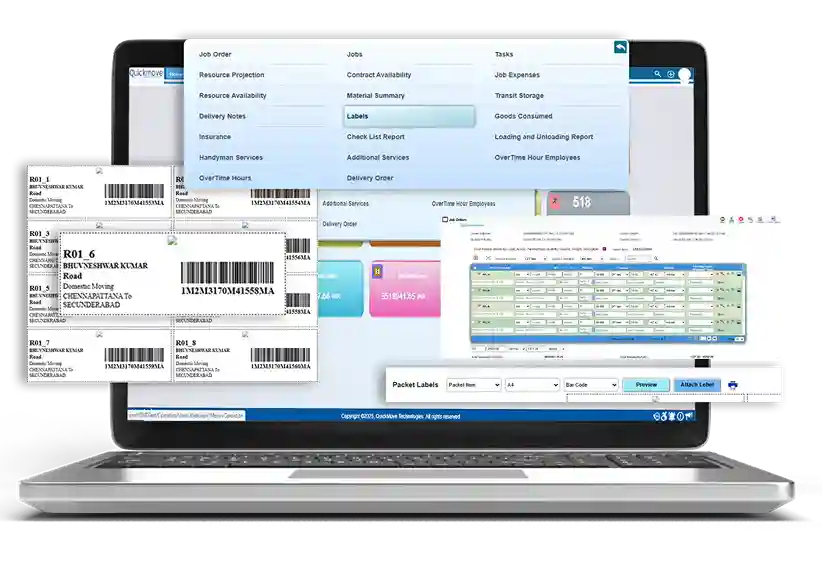
- Bins
- Locations
- Pallets
- Packets
- Job items
When combined with mobile scanning and thermal printers, pickers can verify every pick in real time — without slowing down operations.
6. Train Pickers Beyond Just How to Pick
Most warehouse training focuses only on basic picking instructions. That’s not enough.
Well-trained pickers understand:
- Why accuracy matters
- How errors impact customers
- How to handle exceptions properly
Effective Picker Training Includes:
- Hands-on walk-throughs of picking routes
- Training on SKU identification and labeling
- Safety and ergonomics
- How to use handheld scanners or mobile devices
Technology is only effective when the team knows how to use it confidently.
7. Reduce Walking Time with Route Optimization
Walking is non-value-added time.
Every unnecessary step reduces productivity and increases fatigue.
A WMS that supports route-optimized execution, like QuickMove’s, automatically calculates the most efficient pick path based on:
- Warehouse layout
- Item locations
- Order priority
Even without software, warehouses can:
- Use one-way aisles
- Avoid crossing paths
- Group picks by proximity
But automated route optimization consistently delivers better results at scale.
8. Use Pick-to-Light or Voice Picking Where Applicable
For high-volume warehouses, visual or voice-guided picking can significantly boost speed.
When These Work Best:
- Pick-to-light: High-speed, repetitive picking
- Voice picking: Hands-free environments
While not every warehouse needs these systems, they can be powerful when combined with strong WMS logic underneath.
9. Balance Speed and Accuracy (Don’t Sacrifice One for the Other)
Fast picking means nothing if orders are wrong.
The best warehouse order picking operations focus on accuracy first, then speed.
Ways to Maintain Balance:
- Use scan-to-confirm steps
- Track error rates by picker
- Reward accuracy, not just speed
- Conduct regular audits
A good WMS provides real-time visibility into both speed and accuracy, allowing managers to identify training needs early.
10. Monitor KPIs That Actually Matter
You can’t improve what you don’t measure.
Key Warehouse Order Picking KPIs:
- Picks per hour
- Order accuracy rate
- Pick cycle time
- Error rate per picker
- Travel time per order
Modern WMS platforms, including QuickMove’s system, provide dashboards that make necessary warehouse KPIs easy to track — without complex reports.

11. Plan for Peak Periods in Advance
Peak seasons expose weaknesses in warehouse order picking.
Instead of reacting last minute:
- Pre-slot fast-moving items
- Switch to batch or wave picking
- Increase temporary scanning stations
- Simplify pick paths
Warehouses that plan ahead handle peaks with less chaos and fewer errors.
12. Improve Communication Between Picking and Packing Teams
Picking doesn’t happen in isolation.
If packing teams face issues like:
- Missing items
- Incorrect quantities
- Poor labeling
…it usually traces back to picking.
Regular feedback loops between teams help catch issues early and refine processes.
13. Maintain Clean and Well-Labeled Storage Areas
A cluttered warehouse slows down even the best pickers.
Simple improvements:
- Clear aisle markings
- Proper bin labels
- Clean shelves
- Visible location codes
These reduce hesitation and mistakes during warehouse order picking.
14. Use FIFO/FEFO Rules Automatically, Not Manually
Manually following FIFO or FEFO rules is risky and inconsistent.
Automated pick list generation ensures:
- Expiry-sensitive items are prioritized
- Old stock moves first
- Compliance without extra effort
QuickMove’s WMS supports FIFO, FEFO, and LIFO logic, making this process seamless and reliable.
15. Continuously Review and Improve
Warehouse order picking is not a “set and forget” operation.
Customer behavior, product mix, and order volumes change constantly.
Make improvement a habit:
- Review KPIs monthly
- Talk to pickers regularly
- Test small changes before scaling
- Use data, not assumptions
Improving Warehouse Order Picking Is a Journey
Improving warehouse order picking doesn’t require chasing trends or buying every new technology. It starts with understanding your current process, fixing the basics, and then layering in smart tools where they add real value.
A balanced approach — combining:
- Well-organized layouts
- Trained staff
- Standardized processes
- And supportive technology like QuickMove Technologies’ Warehouse Management System
…creates a picking operation that is fast, accurate, scalable, and future-ready.
If you focus on continuous improvement rather than quick fixes, warehouse order picking can become a competitive advantage — not a daily struggle.