Email Us
 Freight Forwarding Software
 Warehouse Management System
 Transport Management System
 Moving/Removal Software
 Customer Service Portal
 Move Survey Quote Pro
 Digital Logistics Inventory App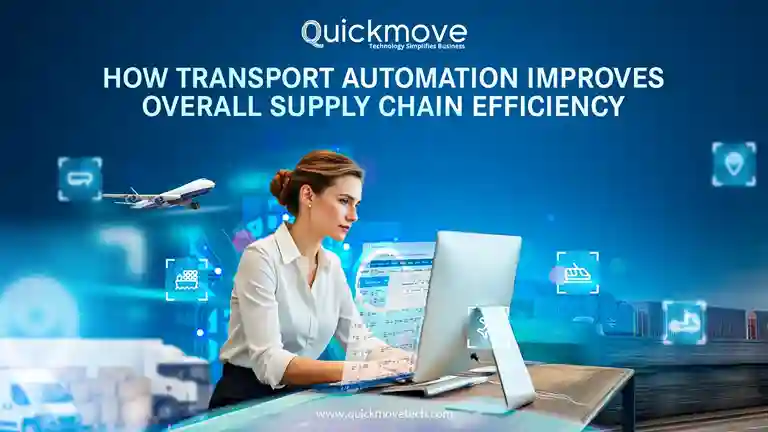
Supply chains today move faster than ever. Customers expect quicker deliveries, real-time updates, and fewer errors. Businesses, on the other hand, are under constant pressure to reduce costs, manage rising fuel prices, and handle increasing shipment volumes without increasing their workforce.
This is where transport automation is quietly changing the way logistics works.
Instead of relying on manual processes, calls, spreadsheets, and guesswork, companies are turning to automation to manage their transport operations more efficiently. From planning routes to tracking shipments and generating invoices, automation simplifies the entire journey from pickup to delivery.
In this blog post, we will explore how transport automation improves overall supply chain efficiency, why it matters for modern logistics businesses, and how adopting the right technology can make a measurable difference.
Understanding Transport Automation in Simple Terms
Transport automation means using technology to handle repetitive and time-consuming logistics tasks with minimal human effort. It does not replace people. Instead, it supports teams by reducing manual work and improving accuracy.
It includes automation in areas such as:
- Shipment planning
- Route optimization
- Load planning
- Freight cost calculations
- Documentation
- Real-time tracking
- Notifications and alerts
- Billing and invoicing
When all these processes run through a centralized system, operations become faster, smoother, and more reliable.
A transport management system plays a major role in enabling this automation. It connects different parts of the supply chain and ensures that information flows smoothly between them.
Why Efficiency Matters More Than Ever
Supply chains are becoming more complex. Companies are handling:
- More shipments than before
- Deliveries across multiple locations
- Multiple transport partners
- Tight delivery deadlines
- Constant customer queries
Manual handling of such operations often leads to delays, mistakes, and rising operational costs.
Even small inefficiencies can cause big problems. A delayed dispatch may lead to missed delivery windows. Incorrect documentation may hold up shipments. Poor route planning may increase fuel usage.
Transport automation helps remove these weak points and brings consistency to operations.
Faster Planning Means Faster Movement
Planning transport manually takes time. Teams need to check shipment details, vehicle availability, routes, delivery timelines, and customer requirements. This process can take hours every day.
Automation simplifies this.
With the right system in place, shipment details are automatically organized. Routes can be suggested instantly. Load distribution becomes easier. Dispatch planning becomes quicker and more accurate.
When planning becomes faster, shipments move faster. This directly improves supply chain efficiency.
Businesses using solutions like the transport management system from QuickMove Technologies often notice that daily planning time reduces significantly, allowing teams to focus on execution instead of paperwork.
Better Route Optimization Saves Time and Fuel
Fuel is one of the biggest expenses in transport operations. Even small route inefficiencies can lead to increased fuel costs over time.
Transport automation helps in identifying the best possible routes by considering:
- Distance
- Traffic conditions
- Delivery timelines
- Multiple stops
This leads to:
- Reduced travel time
- Lower fuel consumption
- Improved delivery speed
When vehicles follow optimized routes consistently, the entire supply chain benefits. Deliveries become predictable, delays reduce, and customers receive goods on time.
Real-Time Visibility Improves Coordination
One of the biggest challenges in supply chains is the lack of visibility. When teams don’t know where shipments are, they rely on phone calls and manual updates.
Transport automation provides real-time tracking and status updates. Everyone involved — from planners to customer service teams — can see the movement of shipments.
This improves coordination across the supply chain.
For example:
- Warehouses can prepare for incoming goods
- Customers can get accurate delivery updates
- Managers can quickly respond to delays
This level of visibility reduces confusion and improves decision-making.
Reducing Manual Errors Improves Reliability
Manual work often leads to mistakes. It could be incorrect shipment entries, wrong delivery details, billing errors, or missing documents.
Even small errors can create major delays.
Automation reduces these risks by:
- Auto-populating shipment details
- Validating data entries
- Generating accurate documents
- Tracking every step digitally
When errors reduce, operations become more reliable. This reliability improves customer trust and strengthens long-term relationships.
Many logistics companies see a clear improvement in operational accuracy after implementing QuickMove Technologies’ transport management system because it standardizes processes and reduces dependency on manual handling.
Faster Dispatch Leads to Better Utilization
Delays in dispatch often lead to underutilized vehicles. A truck waiting for paperwork or planning is lost time and money.
Transport automation speeds up dispatch readiness by:
- Preparing documentation automatically
- Assigning loads faster
- Tracking vehicle availability
This ensures that vehicles spend more time moving shipments and less time waiting.
Better vehicle utilization directly improves supply chain efficiency because more deliveries can be completed using the same resources.
Improving Communication Across Teams
Transport operations involve multiple teams:
- Planning
- Dispatch
- Drivers
- Customer support
- Accounts
Without a centralized system, communication gaps are common. Teams depend on calls, messages, and emails to stay updated.
Automation connects all departments through one platform.
This ensures:
- Shipment updates are shared instantly
- Everyone sees the same information
- Decisions are based on real-time data
Better communication leads to smoother operations and fewer misunderstandings.
Smarter Load Planning Reduces Costs
When loads are not planned properly, vehicles may travel half empty. This increases per-shipment costs.
Transport automation helps in combining shipments smartly and maximizing load capacity.
Benefits include:
- Fewer trips needed
- Lower fuel expenses
- Better asset utilization
Over time, this has a big impact on overall supply chain efficiency.
Faster Documentation Improves Shipment Flow
Documentation is a major part of logistics. Preparing delivery notes, invoices, and transport documents manually can slow down operations.
Automation generates these documents quickly and accurately.
This helps in:
- Faster shipment processing
- Reduced paperwork delays
- Easier compliance management
With digital documentation, teams spend less time on admin tasks and more time managing operations.
Better Decision-Making Through Data
Transport automation collects data at every stage.
It tracks:
- Delivery times
- Route performance
- Vehicle usage
- Cost patterns
- Shipment volumes
This data helps businesses identify what is working and what needs improvement.
For example:
- Which routes cause delays
- Which customers have frequent urgent shipments
- Which vehicles are underutilized
With clear insights, companies can make better decisions and improve efficiency over time.
Using a structured platform like QuickMove Technologies’ transport management system software makes it easier to convert daily operational data into useful insights.
Handling Higher Shipment Volumes Without Stress
As businesses grow, shipment volumes increase. Managing this growth manually becomes difficult.
Teams may feel overwhelmed. Errors may increase. Delays may become common.
Transport automation allows companies to handle more shipments without adding too many extra resources.
Because processes are automated:
- Planning stays organized
- Tracking remains clear
- Documentation stays accurate
This scalability is a major benefit for growing logistics businesses.
Improving Customer Experience
Customers today expect transparency and speed. They want to know where their shipments are and when they will arrive.
Transport automation supports this by providing:
- Real-time tracking
- Timely updates
- Accurate delivery timelines
When customers receive consistent service, their trust increases.
Happy customers often lead to repeat business, which strengthens long-term supply chain stability.
Many companies using QuickMove Technologies’ TMS have seen improved customer satisfaction simply because updates and communication become faster and clearer.
Reducing Operational Costs Over Time
Automation requires investment, but it helps reduce costs in the long run.
Savings come from:
- Lower fuel usage
- Fewer errors
- Better planning
- Reduced manual workload
- Improved vehicle utilization
These savings may not appear overnight, but they add up steadily.
Over time, transport automation makes supply chains more cost-efficient and sustainable.
Better Control Over the Entire Transport Process
When operations run manually, it becomes difficult to track everything. Managers may struggle to get a clear picture of daily performance.
Automation brings everything under one system.
This helps in:
- Monitoring shipment progress
- Tracking delays
- Reviewing performance
- Identifying problem areas
Better control leads to better management.
And better management leads to stronger supply chain efficiency.
Supporting Business Growth and Expansion
When logistics operations are organized and automated, businesses can expand more confidently.
They can:
- Add new delivery locations
- Work with more customers
- Increase shipment volumes
Without automation, growth often creates operational pressure.
With automation, growth becomes manageable.
Solutions like QuickMove Technologies’ transport management system support expansion by keeping processes structured and scalable.
Improving Accountability Across Operations
Transport automation keeps digital records of every action.
This improves accountability because:
- Shipment history is tracked
- Delivery times are recorded
- Performance can be reviewed
Teams become more responsible when operations are transparent.
This leads to better discipline and consistency.
Reducing Dependency on Individual Knowledge
In many logistics companies, operations depend heavily on experienced staff who know routes, customers, and processes.
If they are unavailable, operations may slow down.
Automation reduces this dependency by storing all key information in one system.
This makes operations more stable and less dependent on individuals.
Helping Teams Focus on What Matters
When teams spend most of their time on repetitive tasks, they have little time for strategic work.
Automation handles routine tasks so that teams can focus on:
- Improving service quality
- Building customer relationships
- Planning growth strategies
This shift improves overall productivity and business performance.
Strengthening the Entire Supply Chain
Transport is one of the most important parts of the supply chain.
If transport runs smoothly:
- Warehouses function better
- Deliveries happen on time
- Customers stay satisfied
Transport automation strengthens this critical link and improves coordination across the entire chain.
This creates a ripple effect of efficiency from start to finish.
Why Experience and Practical Solutions Matter
Every logistics business operates differently. Routes, customers, shipment types, and challenges vary from one company to another.
That is why choosing the right automation partner matters.
A system designed with real logistics experience tends to work better in real-world situations.
QuickMove Technologies’ transport management system has been built with practical operational understanding in mind, helping businesses streamline their transport workflows without making processes complicated.
The Long-Term Impact of Transport Automation
Transport automation is not just about saving time today. It is about building a stronger, more efficient supply chain for the future.
Over time, businesses that adopt automation benefit from:
- Stable operations
- Predictable performance
- Better cost control
- Stronger customer relationships
These advantages help companies stay competitive in a fast-moving logistics industry.
Final Thoughts
Supply chain efficiency depends on how well each part of the system works together. Transport plays a central role in this movement.
When transport operations are manual and scattered, inefficiencies grow. When they are automated and organized, everything becomes smoother.
Transport automation improves planning, reduces errors, speeds up deliveries, and gives businesses better control over operations. It helps teams work smarter, not harder.
More importantly, it prepares companies for future growth.
By using structured solutions like QuickMove Technologies’ transport management system, logistics businesses can build a strong operational foundation, handle increasing shipment volumes with confidence, and deliver better service without increasing complexity.
In the long run, automation is not just a technology upgrade. It is a smarter way to run a supply chain.