Email Us
 Freight Forwarding Software
 Warehouse Management System
 Transport Management System
 Moving/Removal Software
 Service Portal
 Move Survey Quote Pro
 Digital Logistics Inventory App
A significant digital shift is taking place in the worldwide logistics and transportation sector. Logistics firms are under pressure to increase productivity and decrease operating delays due to growing shipping quantities, increased consumer expectations, and complicated international trade restrictions.
Modern freight operations can no longer be managed using traditional manual procedures. Intelligent digital solutions that help streamline logistics management, provide visibility, and automate processes are now necessary for businesses. A contemporary freight forwarding management system is essential in this situation.
These days, logistics firms can handle shipments, automate paperwork, track goods in real time, enhance client communication, and simplify financial operations all from a single platform thanks to sophisticated freight forwarding software.
Businesses that wish to stay competitive must comprehend the newest technological advances as the logistics sector continues to change. The most significant freight forwarding system developments that every logistics business should be aware of in 2026 will be discussed in this article.
What is a Freight Forwarding Management System?
A digital software program created to streamline and automate logistics and freight operations is called a freight forwarding management system. Through a single system, it makes it possible for supply chain organizations, freight forwarders, logistics providers, and transportation companies to control their whole process.
By integrating several logistical tasks onto a single platform, modern freight software helps companies decrease human labor and boost operational effectiveness.
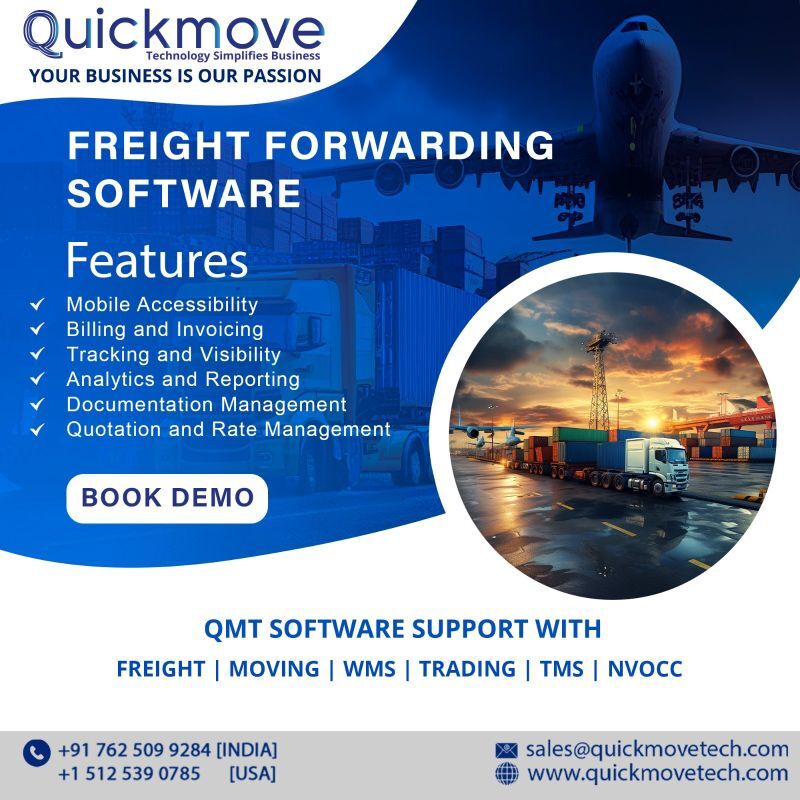
Key Features of Quick Move Freight Forwarding Software
- Shipment booking and management
- Cargo tracking and monitoring
- Air, sea, and road freight management
- Invoice and billing automation
- Customs and compliance documentation
- Warehouse and inventory management
- Customer communication tools
- Financial reporting and analytics
- Multi-branch operation management
By using a reliable freight forwarding system, businesses can improve productivity, reduce operational errors, and deliver better customer experiences.
Why Logistics Companies are Investing in Freight Forwarding Software
Every year, the logistics sector grows more intricate. Profitability may be directly impacted by delays, erroneous documentation, poor shipping visibility, and growing operating expenses.
Through automation and digitization, a contemporary freight forwarding software solution assists companies in overcoming these obstacles.
Major Benefits of Freight Software
1. Improved Operational Efficiency
Automation reduces manual tasks and saves time across logistics operations.
2. Better Shipment Visibility
Real-time tracking allows businesses and customers to monitor cargo movement instantly.
3. Reduced Human Errors
Digital workflows improve documentation accuracy and reduce costly mistakes.
4. Faster Communication
Integrated communication tools improve coordination between teams, customers, and partners.
5. Enhanced Customer Experience
Customers receive faster updates, better transparency, and improved service quality.
6. Scalable Business Operations
Cloud-based systems support business growth without requiring major infrastructure investments.
Top Freight Forwarding Management System Trends in 2026
1. Cloud-Based Freight Forwarding Software
One of the biggest changes in the logistics industry is the adoption of cloud technology. More companies are moving away from traditional on-premise systems and choosing cloud-based freight forwarding software.
Cloud platforms provide flexibility, remote accessibility, and improved collaboration across logistics operations.
Benefits of Cloud-Based Freight Software
- Access data from anywhere
- Real-time collaboration between branches
- Lower hardware and maintenance costs
- Faster software updates
- Better data backup and recovery
- Easy scalability for growing logistics businesses
Cloud-based freight forwarding systems are especially useful for businesses operating across multiple locations or handling international freight operations.
2. Real-Time Shipment Tracking and Visibility
Modern customers expect complete shipment transparency. Real-time tracking is no longer an optional feature — it has become a necessity in logistics operations.
Advanced freight forwarding software now includes GPS integration, live cargo tracking, and automated notifications to provide accurate shipment updates.
Why Real-Time Tracking Matters
- Improves customer trust
- Reduces shipment-related inquiries
- Provides accurate delivery timelines
- Enhances operational visibility
- Helps businesses identify delays quickly
A smart freight forwarding management system allows logistics companies to monitor shipments across every stage of transportation.
3. Automation of Logistics Operations
Automation is transforming the logistics industry by reducing repetitive manual work and improving workflow efficiency.
Modern freight software automates several operational activities that previously required significant human effort.
Processes Commonly Automated
- Invoice generation
- Shipment updates
- Bill of lading creation
- Customs documentation
- Payment reminders
- Freight quotations
- Email notifications
- Delivery confirmations
Automation not only saves time but also reduces operational costs and improves accuracy.
4. Artificial Intelligence and Predictive Analytics
Artificial Intelligence (AI) is becoming an important part of modern freight forwarding systems. AI-powered tools help logistics businesses analyze large amounts of operational data and improve decision-making.
5. Integrated Accounting and Financial Management
Managing logistics operations and accounting separately often creates inefficiencies. This is why many businesses now prefer integrated freight forwarding software solutions.
Modern systems combine logistics operations with accounting and GST management.
Financial Features in Freight Software
- Invoice automation
- GST calculation
- Expense tracking
- Profit and loss reporting
- Payment management
- Financial dashboards
Integrated financial management helps logistics companies maintain accurate records and simplify compliance processes.
6. Mobile-Friendly Freight Forwarding Systems
The logistics industry operates 24/7, and businesses require access to operational data anytime and anywhere.
Mobile-friendly freight forwarding software allows employees, managers, drivers, and customers to stay connected in real time.
Mobile Features Include
- Shipment tracking
- Delivery status updates
- Push notifications
- Digital proof of delivery
- Mobile document uploads
- Customer communication tools
Mobile accessibility improves operational flexibility and speeds up communication across the supply chain.
7. Customer Self-Service Portals
Customer experience has become a major competitive factor in the logistics industry. Modern freight forwarding systems now include self-service portals to improve customer convenience.
Features of Customer Portals
- Online shipment tracking
- Invoice downloads
- Booking requests
- Document access
- Payment tracking
- Real-time shipment updates
Customer portals reduce dependency on support teams while improving transparency and service quality.
8. API and Third-Party System Integration
Logistics companies often use multiple business tools for operations, accounting, communication, and customer management. Modern freight forwarding software supports seamless integration with third-party systems.
Common Integrations
- ERP software
- CRM platforms
- Shipping lines
- Airlines
- Customs systems
- Payment gateways
- Warehouse management systems
API integration improves workflow efficiency and eliminates duplicate data entry.
9. Advanced Data Security and Cybersecurity
As logistics operations become increasingly digital, cybersecurity is becoming a top priority.
A secure freight forwarding management system protects sensitive shipment data, customer information, and financial records from cyber threats.
Important Security Features
- Multi-factor authentication
- Encrypted data storage
- Role-based user access
- Automated data backups
- Secure cloud infrastructure
Strong cybersecurity measures help businesses maintain operational continuity and customer trust.
10. Sustainability and Paperless Logistics Operations
Sustainability is becoming an important focus in the logistics industry. Businesses are looking for ways to reduce environmental impact while improving efficiency.
Modern freight forwarding software supports sustainable logistics operations through digital processes.
Sustainable Logistics Trends
- Paperless documentation
- Digital invoicing
- Fuel-efficient route planning
- Reduced manual paperwork
- Optimized transportation management
A digital freight forwarding system helps businesses support environmentally responsible logistics practices.
Challenges Faced Without Modern Freight Software
Businesses still relying on outdated systems or manual processes may face several operational challenges.
Common Problems Include
- Delayed shipment updates
- Manual documentation errors
- Lack of operational visibility
- Poor customer communication
- Slow invoice processing
- Difficulty managing multiple branches
- Inefficient reporting and analytics
Without advanced freight forwarding software logistics companies may struggle to compete in an increasingly digital market.
How to Choose the Right Freight Forwarding Software
Selecting the right freight forwarding management system is critical for long-term business success.
Important Factors to Consider
1. Ease of Use
The software should have a user-friendly interface.
2. Scalability
Choose a system that can support future business growth.
3. Customization
The platform should adapt to your operational requirements.
4. Integration Capabilities
Ensure compatibility with existing business tools.
5. Security Features
Strong data protection is essential.
6. Customer Support
Reliable technical support helps avoid operational disruptions.
Businesses should invest in a freight forwarding system that aligns with both current operations and future expansion plans.
The Future of Freight Forwarding Software
The future of logistics will be heavily driven by technology, automation, and data intelligence. Businesses that adopt digital transformation early will gain a significant competitive advantage.
Future developments in freight forwarding software may include:
- AI-powered automation
- Blockchain-based documentation
- Advanced predictive analytics
- IoT-enabled cargo monitoring
- Smart warehouse integration
- Autonomous logistics operations
As technology continues to evolve, logistics companies will increasingly rely on advanced freight software to improve operational efficiency and customer satisfaction.
Conclusion
The logistics industry is undergoing a major transformation, and digital innovation is becoming essential for long-term success. Modern freight forwarding software, freight software, and freight forwarding systems are helping businesses automate operations, improve shipment visibility, reduce costs, and deliver better customer experiences.
From cloud-based platforms and AI-powered analytics to automation and real-time tracking, these trends are shaping the future of freight management.
Businesses that invest in the right freight forwarding management system will be better prepared to handle operational challenges, improve efficiency, and stay competitive in the evolving logistics landscape.
Choosing a smart and scalable freight forwarding software solution is no longer optional — it is now a necessity for logistics companies aiming for sustainable growth and operational excellence.