Email Us
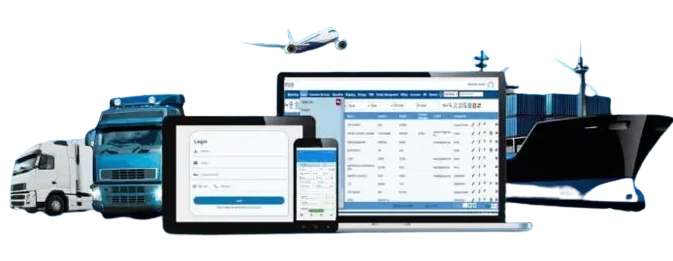
 Freight Forwarding Software
 Warehouse Management System
 Transport Management System
 Moving/Removal Software
 Customer Service Portal
 Move Survey Quote Pro
 Digital Logistics Inventory App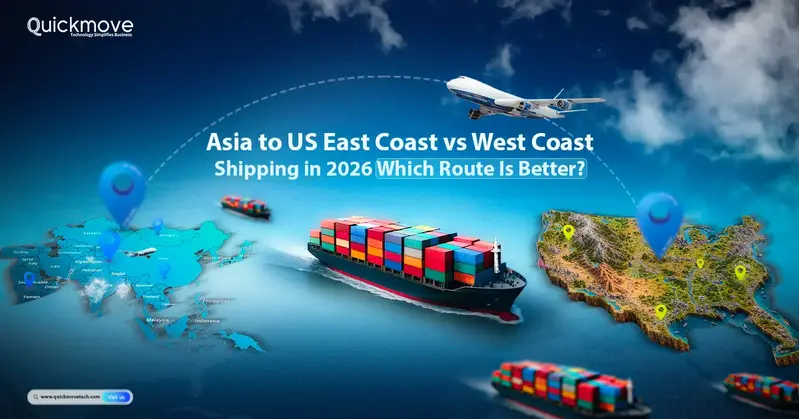
In 2026, choosing a US gateway for Asian cargo requires more than comparing ocean rates. Freight forwarders and importers must consider landed cost, reliability, inland transportation, inventory needs, and disruption risk.
The West Coast usually offers a shorter ocean journey, while the East Coast can better serve eastern warehouses and customers. The right option depends on door-to-door performance not only the port-to-port rate.
East Coast vs West Coast Shipping: Quick Comparison
| Factor | US West Coast | US East Coast |
| Ocean journey from Asia | Usually shorter | Usually longer |
| Common routing | Direct trans-Pacific services | Often through the Panama Canal; some services may use the Suez Canal |
| Best suited for | Western markets and time-sensitive imports | Eastern and southeastern markets |
| Inland transportation | Longer for many eastern destinations | Shorter for many eastern destinations |
| Key operational risk | Port, rail, and inland-network pressure | Canal, weather, and longer-voyage exposure |
| Main advantage | Speed from Asia to the US gateway | Proximity to major East Coast markets |
Actual results vary by origin, carrier, service, destination, cargo type, season, and inland capacity. Businesses should request current schedules and rates before booking.
Why Choose US West Coast Shipping from Asia?
Ports such as Los Angeles, Long Beach, Oakland, Seattle, and Tacoma are major trans-Pacific gateways and often provide direct connections from Asia.
Advantages of West Coast Shipping
- Shorter ocean transit: A direct trans-Pacific service usually reaches the West Coast before a vessel continuing to the East Coast.
- Faster access to western markets: It is a logical route for destinations in California and surrounding states.
- Support for urgent inventory: A shorter voyage can benefit seasonal, high-value, or time-sensitive cargo.
- Intermodal connectivity: Rail and trucking networks connect western ports with inland destinations.
When Is the West Coast the Better Choice?
Choose the West Coast when ocean speed is critical, the destination is in the western United States, or dependable intermodal service can move cargo inland efficiently.
Possible West Coast Challenges
A faster port arrival does not guarantee faster final delivery. Terminal dwell, rail or truck capacity, and cross-country distance can reduce the advantage of a shorter voyage.
Why Choose US East Coast Shipping from Asia?
Gateways including New York and New Jersey, Savannah, Charleston, Norfolk, and Houston can place cargo closer to eastern and southeastern markets.
Advantages of East Coast Shipping
- Closer to eastern demand: Cargo may require fewer inland miles after discharge.
- Simpler regional distribution: Importers can serve nearby warehouses more efficiently.
- Less cross-country transport: This reduces exposure to long rail or truck movements.
- Gateway diversification: Businesses can avoid relying entirely on one coast or port region.
- Potential door-to-door savings: A longer voyage may still cost less overall when inland transport is reduced.
When Is the East Coast the Better Choice?
Choose the East Coast when demand is concentrated in eastern states or inland savings outweigh the longer voyage.
Possible East Coast Challenges
Asia-to-East-Coast services may depend on canal access. In September 2026, the Panama Canal Authority announced temporary transit-capacity adjustments following below-expected precipitation and warned of possible waits for vessels without reservations. Forwarders should maintain realistic buffers and alternatives.
Five Factors That Matter for Asia to US Shipping in 2026
1. Calculate the Total Landed Cost
Do not compare ocean freight rates alone. A proper calculation should include:
- Origin handling, documents, and ocean freight
- Carrier surcharges and destination charges
- Customs, brokerage, rail, and trucking
- Warehousing and inventory carrying costs
- Demurrage, detention, storage, and delay costs
A lower sea-freight rate can become the more expensive choice after inland and delay-related expenses are added.
2. Compare End-to-End Reliability
Review schedule performance, transshipment, port dwell, inland connections, and contingency plans. A slightly longer but consistent route may support better inventory planning.
3. Match the Gateway to the Final Destination
Map customer demand, warehouses, deadlines, and transport availability. The right gateway supports the entire supply chain, not simply the first US port of arrival.
4. Consider the Cargo and Service Level
Urgent, seasonal, high-value, or temperature-sensitive cargo may justify a faster route. Lower-margin goods may require tighter cost control. Also consider shipment size, free time, customs, and delivery appointments.
5. Diversify Routing Risk
A split-routing strategy can send urgent cargo through the West Coast and stable replenishment through the East Coast, reducing dependence on one gateway or corridor.
How Freight Forwarding Software Improves Route Decisions
Separate spreadsheets make route and cost comparison difficult. Modern freight forwarding software brings commercial, operational, and financial information into one platform.
QuickMove helps freight businesses manage:
- Carrier and vendor rates and quotations
- Multimodal freight workflows
- Shipment milestones, updates, and alerts
- Bills of Lading, shipping instructions, and invoices
- Billing, accounting, and shipment profitability
- Operational reports and dashboards
Compare Routes and Control Execution
Structured rates help teams compare complete East Coast and West Coast movements. Tracking and exception alerts support faster responses to disruptions, while automated billing and cost analysis reveal expenses that could damage margins.
Route Data to Review Before Booking
Review the ocean schedule, inland plan, full cost, free time, delivery date, disruption exposure, and backup service. One freight management system creates a clearer decision trail and reduces manual mistakes.
Final Thoughts
There is no single winner. The West Coast often suits western destinations and time-sensitive cargo, while the East Coast can offer better door-to-door economics for eastern distribution.
In 2026, the right choice should balance speed, total landed cost, reliability, inland capacity, and disruption risk. To improve route comparison, shipment visibility, documentation, billing, and profitability control, explore QuickMove Technologies and its integrated freight management solutions.