Email Us
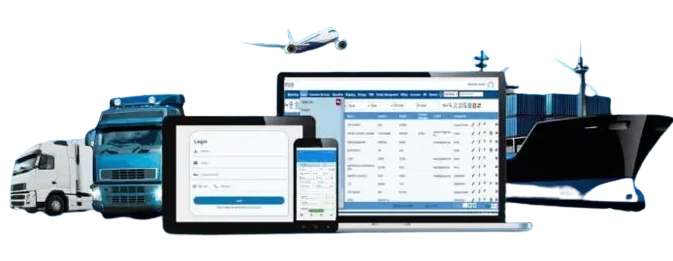
 Freight Forwarding Software
 Warehouse Management System
 Transport Management System
 Moving/Removal Software
 Customer Service Portal
 Move Survey Quote Pro
 Digital Logistics Inventory App
Running ocean freight operations has never been simple. Every shipment moves through multiple hands, across long distances, and under the constant pressure of tight schedules and unpredictable conditions. Even experienced freight forwarders and logistics teams often find themselves juggling emails, spreadsheets, carrier portals, customs paperwork, and customer updates—all at the same time.
As global trade grows more complex, the need for better visibility, faster decision-making, and stronger coordination has become essential. This is where ocean freight management software steps in. It gives logistics teams a central platform to manage their operations while reducing manual work and improving accuracy.
In this blog, we’ll look at some common operational challenges and how a modern ocean freight management software can solve them.
What is an Ocean Freight Management Software?
An ocean freight management software is a digital platform that helps freight forwarders, logistics companies, and shippers plan and manage the entire lifecycle of ocean shipments from one centralized place. The ocean freight forwarding market is expected to grow to USD 120.7 billion by 2035. Therefore, a dependable software is required for ocean freight forwarders to strive in the market.
Instead of relying on spreadsheets, emails, and manual updates, the software connects key operations—such as booking, documentation, customs processes, rate management, and partner communication—into a single streamlined workflow.
Operational Challenges Solved by Ocean Freight Management Software
Various types of operational challenges can be source of a lot of hassle for freight forwarders. However, a trustworthy ocean freight forwarding software can help mitigate these issues effortlessly. Let us discuss some of the common operational challenges solved by ocean freight management software:
1. Manual Documentation and Compliance Risks
Ocean freight is a documentation-heavy industry. Bills of lading, commercial invoices, packing lists, certificates, customs documents—these are only a few of the papers involved. Handling them manually is not just slow; it is risky.
Why This Is a Problem
- Manually preparing documents increases the chance of errors.
- Misplaced or outdated files can cause customs delays or penalties.
- Documentation rules vary between countries, ports, and carriers.
Many freight forwarders still rely on spreadsheets or scattered email attachments, which makes it difficult to ensure accuracy and version control.
How Ocean Freight Software Helps
Ocean freight software centralizes all documentation and automates many of the steps, such as generating templates or pulling data directly from bookings and customer profiles. This leads to:
- Error-free, standardized documentation
- Automatic compliance checks based on country and carrier rules
- Secure digital storage of all paperwork
- Easy sharing of files with customers, agents, and customs brokers
This streamlines workflow, reduces compliance risks, and speeds up the overall shipping process.
Building Operational Resilience in Ocean Freight Operations

As global supply chains continue to evolve, freight forwarders face increasing pressure to operate efficiently while managing uncertainty. Delays, regulatory changes, capacity fluctuations, and customer expectations all demand a more resilient operational setup. Ocean freight management software plays a key role in helping logistics teams build this resilience.
Standardized Processes Across Teams
One of the biggest operational risks in freight forwarding is reliance on manual, person-dependent processes. Software-driven workflows help standardize daily operations such as bookings, documentation, approvals, and milestone tracking. This ensures consistency across branches and teams, even as operations expand or staff changes occur.
Better Visibility Across the Shipment Lifecycle
Operational resilience depends heavily on visibility. With a centralized system, teams gain a unified view of shipment status, documents, costs, and exceptions. This visibility allows forwarders to identify potential disruptions early and take corrective action before issues escalate.
Faster Response to Operational Disruptions
When delays or unexpected events occur, quick decision-making is critical. Ocean freight management software enables teams to access accurate, real-time information, coordinate internally, and communicate updates to stakeholders without delay. This reduces downtime and minimizes the impact of disruptions on customers.
Long-Term Operational Efficiency
Beyond day-to-day execution, freight management software supports continuous improvement by capturing operational data over time. Forwarders can analyze trends, identify bottlenecks, and refine processes to improve efficiency and reliability. This positions organizations to adapt more effectively to changing market demands.
2. Inefficient Communication Between Stakeholders
Freight forwarding involves constant communication with shippers, carriers, agents, customs officials, trucking partners, and more. When communication is spread across emails, WhatsApp messages, and phone calls, it becomes difficult to maintain clarity.
Why This Is a Problem
- Updates get lost in long email threads.
- Miscommunication leads to delays or missed handovers.
- Customers often call repeatedly for updates, creating extra work for teams.
With so many people involved, even a small gap in communication can disrupt the entire shipment timeline.
How Ocean Freight Software Helps
A modern software for ocean freight management centralizes communication so that every update, document, and message sits in one place. Features often include:
- Customer and partner portals
- Integrated messaging linked to shipment records
- Automated notifications for key events (booking confirmation, departure, arrival, customs release, etc.)
This means every stakeholder always has access to the latest information, reducing friction and improving the customer experience.
3. Lack of Control Over Costs and Rates
Managing ocean freight costs is one of the biggest challenges for forwarders. Rates change frequently, surcharges vary between lines, and unexpected fees—such as demurrage and detention—can quickly erode margins.
Why This Is a Problem
- Rate sheets from carriers are often complex.
- Forwarders spend excessive time calculating quotes manually.
- A small error can lead to undercharging or lost revenue.
- Teams struggle to compare multiple carrier options quickly.
Without clear cost visibility, it is hard to maintain profitability or offer competitive rates to customers.
How Ocean Freight Software Helps
Ocean freight management platforms often include advanced rate management and quotation tools. These systems allow teams to:
- Store and update carrier rate sheets
- Automatically calculate quotes using pre-built formulas
- Compare multiple carriers in seconds
- Track actual vs. expected costs
- Flag extra charges or unexpected fees
This not only speeds up the sales cycle but also ensures forwarders maintain healthy profit margins on each shipment.
4. Challenges in Coordinating Multi-Modal Movements
Most ocean shipments are not “ocean-only.” They involve pre-carriage, on-carriage, warehousing, customs clearance, or distribution at different points in the logistics chain. Managing these movements manually can become chaotic.
Why This Is a Problem
- Difficulty syncing truck, rail, and vessel schedules
- Higher risk of missed cut-offs
- Limited visibility once cargo is in transit
- Complex coordination across different partners
Even one mismatch—such as a late truck arrival at the port—can disrupt the entire operation.
How Ocean Freight Software Helps
Software designed for ocean freight operations brings all modes together on a single platform. Teams can:
- Plan and track door-to-door movements
- Assign tasks to different teams or partners
- Receive automated reminders for cut-offs
- Manage milestones for every leg of the journey
This connected workflow ensures smoother operations, fewer delays, and better overall planning.
Technology Is Now Essential for Freight Forwarders
Ocean freight operations will always be complex, but they don’t have to feel chaotic. The right freight management software brings structure and accuracy to every part of the shipping journey. Whether it’s managing documents, coordinating partners, or controlling costs, technology can take a heavy load off your team and significantly improve service quality.
If your organization is looking for a reliable, modern, and user-friendly platform to streamline freight forwarding operations, QuickMove Technologies offers a comprehensive ocean freight management software that can handle ocean freight forwarding challenges—helping forwarders stay competitive in a fast-changing logistics world.