Email Us
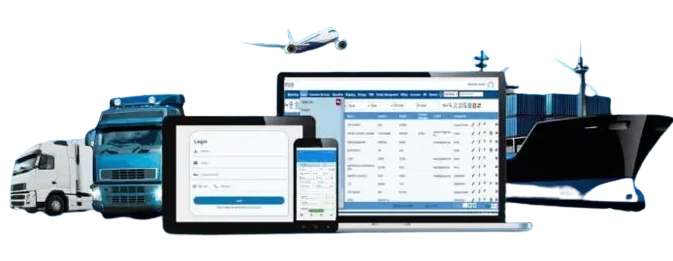
 Freight Forwarding Software
 Warehouse Management System
 Transport Management System
 Moving/Removal Software
 Service Portal
 Move Survey Quote Pro
 Digital Logistics Inventory App
Freight forwarding has always been a business of coordination, timing, and margins. But in today’s environment, where rates fluctuate, customer expectations are higher, and capacity constraints are common, experience alone is no longer enough. Decisions need to be backed by data, and not just any data, but clear, mode-wise insights.
This is where mode-wise volume analytics for Air, Sea, and Road comes in. It gives freight forwarders a real understanding of how shipments move across different transport modes, where volumes are growing or shrinking, and how operations can be optimized.
For modern freight forwarders, this is not an optional feature anymore. It is quickly becoming a competitive necessity.
The Reality of Managing Multiple Transport Modes
Most freight forwarding companies today operate across air, sea, and road. Each mode has its own dynamics:
- Air freight is fast, expensive, and highly sensitive to demand spikes.
- Sea freight handles large volumes but comes with longer lead times and port-related uncertainties.
- Road freight is flexible but impacted by fuel costs, driver availability, and regional regulations.
Despite these differences, many companies still look at volumes in aggregate. A single number for total shipments or monthly volume may look impressive on a report, but it hides more than it reveals.
Without separating data by transport mode, freight forwarders often struggle to answer basic but critical questions:
- Which mode is driving growth?
- Where are volumes declining?
- Are operational resources aligned with actual demand?
Mode-wise volume analytics solves this problem by breaking complexity into clarity.
What Is Mode-Wise Volume Analytics?
Mode-wise volume analytics tracks and analyzes shipment volumes separately for air, sea, and road freight, over time. Instead of one combined dashboard, decision-makers get a clear picture of each transport mode.
This typically includes:
- Number of shipments per mode
- Weight, volume, or container counts
- Trends by route, customer, or region
- Seasonality patterns
- Comparison across time periods
When implemented properly, tools like QuickMove’s freight forwarding software make this data accessible through visual dashboards that operations, sales, and management teams can understand at a glance.
Why Mode-Wise Visibility Changes Everything
1. Better Operational Planning
One of the biggest advantages of mode-wise analytics is accurate planning.
For example:
- If air freight volumes spike during certain months, teams can prepare in advance by securing carrier capacity.
- If sea freight volumes are consistently growing on a specific trade lane, additional documentation or customer support resources can be allocated.
Without this clarity, companies often react too late—scrambling for space, overloading teams, or disappointing customers.
Mode-wise dashboards in QuickMove’s freight software allow planners to spot these trends early and act before problems arise.
2. Smarter Capacity and Carrier Decisions
Capacity constraints are a constant challenge in freight forwarding. Airlines, shipping lines, and trucking partners all have limits, and securing space at the right price depends heavily on volume predictability.
When you understand:
- How much air freight you move monthly
- Which sea routes carry the highest container volumes
- Where road freight demand fluctuates week to week
you can negotiate better contracts and diversify carrier options.
Instead of relying on assumptions, forwarders using QuickMove’s freight forwarding software can base carrier discussions on real data, improving reliability and cost control.
3. Stronger Profitability Insights
Not all volume is good volume.
High shipment counts in one mode may look positive but could actually be hurting margins. For example:
- Air freight may generate revenue but suffer from thin margins during peak seasons.
- Road freight might be profitable on domestic lanes but loss-making on cross-border routes.
Mode-wise volume analytics allows freight forwarders to link volume with profitability. When volume data is analyzed alongside costs, it becomes easier to identify:
- Which modes are driving profit
- Which ones need pricing adjustments
- Where operational inefficiencies exist
This is where analytics-driven platforms like QuickMove’s freight forwarding software add real business value, not just reporting.
4. Improved Sales and Customer Strategy
Sales teams often focus on overall revenue targets without understanding which services customers actually use the most.
Mode-wise volume data changes that conversation.
For instance:
- A customer may be booking occasional air shipments but consistently moving large sea volumes.
- Another customer may rely heavily on road freight for regional distribution.
Armed with this information, sales teams can:
- Cross-sell relevant services
- Offer volume-based pricing
- Build more strategic, long-term relationships
With centralized dashboards in QuickMove’s freight forwarder software, sales and operations teams work from the same data, reducing internal misalignment.
5. Faster Response to Market Changes
The freight market can change quickly. Global disruptions, fuel price changes, or regulatory shifts often impact one mode more than others.
During such times, companies with strong mode-wise analytics have a clear advantage.
They can quickly see:
- Drops in air freight due to rate hikes
- Congestion-related slowdowns in sea freight
- Increased road freight demand as shippers look for alternatives
Instead of reacting blindly, forwarders using QuickMove’s digital freight forwarding software can pivot strategies based on real-time volume trends.
Why Manual Tracking No Longer Works
Many freight companies still rely on spreadsheets or static monthly reports to track volumes. While this might work at a small scale, it becomes risky as operations grow.
Manual tracking often leads to:
- Delayed insights
- Inconsistent data
- Errors across teams
- Limited historical analysis
Modern freight forwarding requires real-time, accurate, and accessible analytics. Mode-wise dashboards eliminate guesswork and help teams focus on execution rather than data compilation.
This shift from manual reporting to automated analytics is one of the reasons why platforms like QuickMove’s freight forwarding software are increasingly adopted by growing logistics companies.
Turning Data into Daily Decisions
The real power of mode-wise volume analytics is not in reports—it’s in daily decision-making.
Operations teams use it to:
- Allocate resources
- Manage workload
- Reduce bottlenecks
Management uses it to:
- Review performance
- Plan expansions
- Adjust strategy
Sales teams use it to:
- Identify growth opportunities
- Strengthen customer relationships
When everyone looks at the same mode-wise data, decisions become faster, clearer, and more confident.
What to Look for in a Mode-Wise Analytics Solution
Not all analytics tools are created equal. Freight forwarders should look for solutions that offer:
- Clear Air / Sea / Road dashboards
- Customizable views by route, customer, or time period
- Easy-to-understand visualizations
- Integration with operational data
- Minimal manual effort
This is where QuickMove’s freight forwarding software stands out by combining operational workflows with analytics, ensuring data stays accurate and actionable.
The Competitive Advantage Forwarders Can’t Ignore
Freight forwarding is no longer just about moving cargo from point A to point B. It’s about moving smarter.
Companies that understand their volumes by transport mode:
- Plan better
- Negotiate stronger
- Serve customers more effectively
- Protect margins in volatile markets
Mode-wise volume analytics provides that understanding. It replaces assumptions with evidence and experience with insight.
As the industry continues to evolve, forwarders that invest in data-driven tools like QuickMove’s freight forwarding software will be better positioned to grow, adapt, and stay competitive.
Final Thoughts
Mode-wise volume analytics is not a trend—it’s a foundational capability for modern freight forwarding businesses. Whether you manage air shipments, ocean freight, road transport, or all three, understanding how volumes move across each mode gives you control in an unpredictable market.
For freight forwarders looking to scale without losing visibility, adopting a digital freight forwarding software with the right analytics features can make all the difference.