Email Us
 Freight Forwarding Software
 Warehouse Management System
 Transport Management System
 Moving/Removal Software
 Service Portal
 Move Survey Quote Pro
 Digital Logistics Inventory App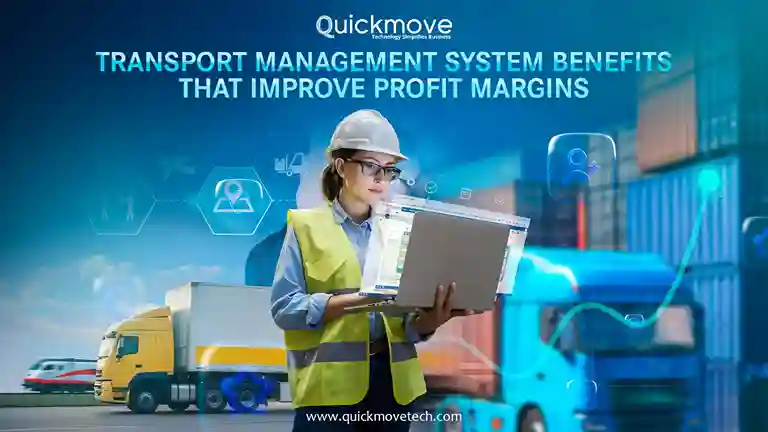
Profit margins in logistics are always under pressure. Fuel prices go up. Customer expectations rise. Competition becomes tighter. And somehow, you’re expected to deliver faster while spending less.
For many logistics and transport businesses, the problem isn’t a lack of work—it’s a lack of control over operations.
This is where a transport management system (TMS) makes a real difference.
A good TMS doesn’t just help you manage shipments. It helps you reduce waste, improve efficiency, and make smarter decisions—things that directly impact your profit margins.
Let’s break this down in a practical way.
Why Profit Margins Are Hard to Maintain in Logistics
Before we talk about solutions, it’s important to understand the problem.
Most logistics businesses lose money in small, unnoticed ways:
- Poor route planning leads to extra fuel usage
- Trucks run partially empty
- Manual errors cause rework and delays
- Lack of visibility leads to poor decisions
- Too much time is spent on repetitive tasks
Individually, these may seem small. But together, they eat into your margins every single day.
A transport management system addresses these exact issues.
1. Lower Fuel Costs Through Smart Route Optimization
Fuel is one of the biggest expenses in logistics. Even a small improvement here can have a huge impact on profits.
A transport management system helps by:
- Finding the shortest and fastest routes
- Avoiding traffic-heavy areas
- Planning multi-stop deliveries efficiently
Instead of relying on guesswork, routes are calculated based on real data.
Over time, this leads to:
- Reduced fuel consumption
- Fewer unnecessary kilometers
- Lower overall transport costs
And since fuel is a recurring expense, the savings keep adding up.
2. Better Vehicle Utilization
Running trucks that are only partially filled is like leaving money on the table.
A TMS improves vehicle utilization by:
- Consolidating shipments
- Matching loads with the right vehicle type
- Reducing empty return trips
When your fleet is used efficiently:
- You need fewer trips
- You reduce wear and tear
- You maximize revenue per trip
This directly improves your margins without increasing workload.
3. Reduced Manual Work and Labor Costs
Manual processes slow everything down. They also increase dependency on people for tasks that could easily be automated.
A transport management system can automate:
- Order creation
- Shipment allocation
- Route planning
- Status updates
This doesn’t mean replacing your team. It means allowing your team to focus on higher-value tasks.
With automation:
- You need fewer resources for repetitive work
- Productivity increases
- Operational costs go down
4. Fewer Errors, Less Financial Loss
Mistakes in logistics are expensive.
A wrong delivery address or incorrect shipment detail can lead to:
- Delivery delays
- Customer complaints
- Extra trips
- Refunds or penalties
A TMS reduces errors by:
- Standardizing workflows
- Validating data before execution
- Reducing manual inputs
When errors decrease, so do the hidden costs that come with fixing them.
5. Real-Time Visibility Improves Decision-Making
Many businesses operate without clear visibility. They don’t know where shipments are or what’s causing delays.
This leads to reactive decision-making.
A transport management system provides:
- Live tracking of shipments
- Real-time updates on delays
- Centralized dashboards
With better visibility:
- You can fix issues quickly
- Avoid unnecessary costs
- Improve planning accuracy
Good decisions save money. Bad decisions cost it.
6. Improved Delivery Performance
Late deliveries don’t just affect customer satisfaction—they affect profitability.
Missed timelines can result in:
- Penalties
- Lost clients
- Increased operational costs
A TMS helps improve delivery performance by:
- Planning realistic schedules
- Monitoring delivery timelines
- Alerting teams about delays
Consistent, on-time delivery builds trust and reduces losses.
7. Smarter Load Planning
Load planning is often underestimated. But poor load distribution leads to inefficiencies.
A transport management system:
- Optimizes how goods are loaded
- Ensures better space utilization
- Reduces unnecessary trips
Better load planning means:
- Lower transportation costs
- Faster deliveries
- Higher revenue per vehicle
8. Automated Billing and Financial Accuracy
Billing errors are more common than most businesses realize.
Incorrect invoices can lead to:
- Revenue loss
- Payment delays
- Disputes with clients
A TMS automates billing by:
- Generating accurate invoices
- Linking billing directly with shipments
- Reducing manual calculations
This ensures you get paid correctly and on time.
9. Data-Driven Cost Control
Without proper data, it’s difficult to control costs.
A transport management system gives you insights into:
- Cost per shipment
- Fuel usage trends
- Delivery performance
- Fleet efficiency
This helps you:
- Identify areas of waste
- Optimize operations
- Make informed financial decisions
When you understand your costs, you can control them.
10. Scalability without Increasing Costs at the Same Rate
Growth is good—but it often comes with increased expenses.
Without a system, scaling operations means:
- Hiring more people
- Managing more complexity
- Increasing operational risk
A TMS allows you to scale efficiently:
- Handle more shipments with the same team
- Manage larger fleets without chaos
- Maintain control as operations grow
This means revenue can grow faster than costs—improving profit margins.
11. Better Customer Retention
Acquiring new customers is expensive. Retaining existing ones is much more profitable.
A transport management system improves customer experience through:
- Accurate delivery timelines
- Real-time updates
- Fewer errors
Satisfied customers are more likely to:
- Stay longer
- Give repeat business
- Recommend your services
This contributes directly to long-term profitability.
12. Reduced Dependency on Manual Communication
Constant calls, emails, and follow-ups slow down operations.
A TMS reduces this by:
- Automating updates
- Providing shared visibility
- Centralizing communication
Less time spent on communication means more time for execution.
13. Improved Compliance and Documentation
Non-compliance can lead to penalties and operational delays.
A transport management system helps by:
- Managing required documents
- Ensuring compliance checks
- Keeping records organized
Avoiding penalties and delays protects your margins.
14. Stronger Coordination Across Operations
Logistics involves multiple moving parts—dispatch, drivers, warehouses, and customers.
A TMS brings everything together:
- Centralized system for all operations
- Better coordination between teams
- Reduced miscommunication
When everything works together smoothly, efficiency improves.
15. Long-Term Operational Stability
Profitability is not just about short-term gains. It’s about consistency.
A transport management system creates:
- Standardized processes
- Predictable performance
- Reliable operations
This stability helps businesses plan better and grow sustainably.
Where the Real Value Comes From
It’s important to understand that no single feature improves profit margins on its own.
The real value comes from combining:
- Automation
- Visibility
- Optimization
- Data insights
When all these work together, small improvements happen across the board. And those small improvements add up to significant profit gains over time.
Choosing the Right System Matters
Not all transport management systems deliver the same results.
The right system should:
- Be easy to use
- Offer strong automation
- Provide real-time visibility
- Scale with your business
Solutions like QuickMove Technologies’ transport management system are designed to bring these capabilities together, helping logistics businesses reduce inefficiencies and improve overall profitability without making operations complicated.
Final Thoughts
Improving profit margins in logistics is not about making one big change. It’s about fixing multiple small inefficiencies that exist across your operations.
A transport management system helps you do exactly that. It:
- Reduces costs
- Improves efficiency
- Minimizes errors
- Enhances decision-making
Over time, these improvements create a strong financial impact.
If your operations still rely heavily on manual processes or disconnected systems, there’s a good chance you’re losing money without realizing it.
The businesses that succeed in today’s logistics environment are not just working harder—they’re working smarter.
And a transport management system is one of the most practical ways to make that shift.