Email Us
 Freight Forwarding Software
 Warehouse Management System
 Transport Management System
 Moving/Removal Software
 Service Portal
 Move Survey Quote Pro
 Digital Logistics Inventory App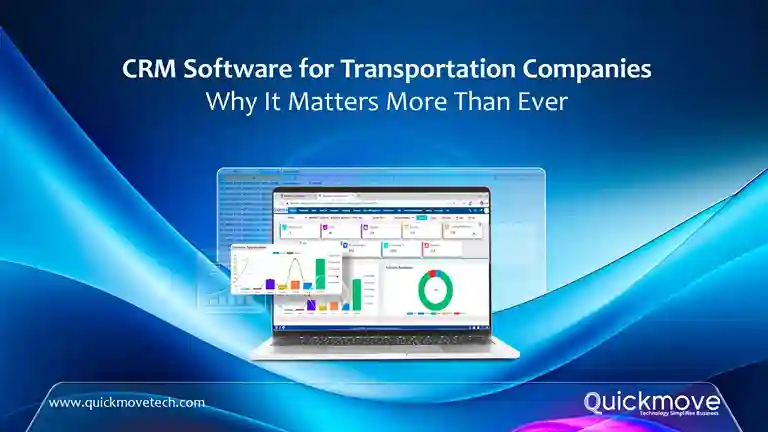
The transportation and logistics industry has changed dramatically over the last few years. Customers now expect faster deliveries, real-time updates, instant responses, and smooth communication throughout the shipping process. At the same time, transportation companies are dealing with rising fuel costs, increasing competition, driver shortages, route planning challenges, and operational pressure.
In the middle of all this, one thing has become very clear: managing customer relationships manually no longer works.
Spreadsheets, WhatsApp messages, emails scattered across inboxes, handwritten notes, and disconnected systems create confusion. Important follow-ups get missed. Customer complaints increase. Sales teams lose track of leads. Operations teams struggle to coordinate updates. And eventually, the company starts losing both customers and revenue.
This is where CRM software for transportation companies becomes essential.
A CRM, or Customer Relationship Management system, helps transportation businesses organize customer data, manage communication, track leads, automate follow-ups, improve customer service, and create better operational visibility across departments.
But generic CRM platforms often fail to understand the real needs of transport and logistics companies.
Transportation businesses need a system that understands fleet operations, shipment movement, customer coordination, quotation management, dispatch communication, invoicing, and logistics workflows. That’s why companies today are looking for industry-specific solutions like the CRM software offered by QuickMove Technologies.
In this blog, we’ll explore how CRM software helps transportation companies grow, what features matter the most, the common problems transport businesses face without CRM systems, and how QuickMove Technologies helps solve these challenges with practical and easy-to-use software solutions.
Why Transportation Companies Need CRM Software
Many transport companies focus heavily on operations but overlook customer management. They invest in trucks, warehouses, drivers, and route planning systems but still manage customer communication manually.
This creates major gaps.
For example:
- Sales teams may not know the latest shipment status
- Operations teams may not know customer commitments
- Customers may receive delayed responses
- Follow-ups may depend entirely on individual employees
- Complaint tracking becomes difficult
- Important documents get lost in email chains
- Repeat customers may not receive personalized service
As the business grows, these issues become bigger.
A transportation CRM system centralizes all customer-related information into one platform. Instead of searching through multiple tools or depending on memory, teams can access everything from a single dashboard.
This improves:
- Customer satisfaction
- Team coordination
- Lead conversion
- Operational visibility
- Revenue tracking
- Service quality
- Customer retention
For logistics businesses, CRM is no longer just a “sales tool.” It has become a business management tool.
What is CRM Software for Transportation Companies?
CRM software for transportation companies is a specialized system designed to manage customer interactions and business workflows related to logistics, freight, shipping, transport operations, and supply chain activities.
Unlike general CRM platforms, transportation CRM software focuses on logistics-specific activities such as:
- Freight quotation management
- Shipment tracking communication
- Driver coordination updates
- Customer support handling
- Delivery status notifications
- Lead and inquiry management
- Route-related customer communication
- Contract and pricing management
- Invoice coordination
- Follow-up automation
The goal is simple: improve customer relationships while making transportation operations more organized and efficient.
Modern CRM software also integrates with other systems like:
- Transport Management Systems (TMS)
- Warehouse Management Systems (WMS)
- Freight Forwarding Software
- ERP software
- Billing systems
- GPS tracking systems
This creates a connected workflow across the organization.
Common Problems Transportation Companies Face Without CRM Software
Many transport companies don’t realize how much revenue they lose due to poor customer management.
Here are some common challenges businesses face when they operate without a proper CRM solution.
1. Missed Leads and Slow Follow-Ups
In transportation, timing matters. Customers often contact multiple logistics providers for quotations. If your team responds late, the customer usually moves on.
Without CRM software:
- Leads are forgotten
- Follow-ups are inconsistent
- Sales teams lose visibility
- Inquiry tracking becomes difficult
A CRM system automatically tracks every lead and reminds teams to follow up on time.
2. Poor Communication Between Departments
Sales teams promise delivery timelines. Operations teams handle execution. Customer support teams answer questions.
When these departments work separately, communication gaps appear.
This leads to:
- Customer frustration
- Incorrect commitments
- Delayed updates
- Internal confusion
CRM software creates a centralized communication system where all departments can access the same information.
3. Lack of Customer History
Imagine a customer calling about a previous shipment, but nobody remembers the details.
Without CRM software:
- Teams struggle to access customer history
- Previous issues are forgotten
- Personalized service becomes impossible
A transportation CRM stores all customer interactions, shipment details, quotations, invoices, and support records in one place.
4. Difficulty Managing Large Customer Volumes
As transport companies grow, managing hundreds or thousands of customers manually becomes impossible.
Spreadsheets eventually fail because:
- Data becomes disorganized
- Searching takes time
- Duplicate entries increase
- Human errors become common
CRM systems simplify large-scale customer management.
5. Weak Customer Retention
Many logistics companies focus only on acquiring new customers while ignoring existing ones.
Without CRM software:
- Existing customers receive less attention
- Follow-up communication becomes inconsistent
- Renewal opportunities get missed
A CRM helps businesses maintain long-term customer relationships.
Key Features to Look for in CRM Software for Transportation Companies
Not all CRM systems are suitable for transport businesses. The logistics industry has unique workflows that require specialized features.
Here are some of the most important CRM features transportation companies should look for.
Lead Management
Transportation businesses receive inquiries from multiple channels:
- Website forms
- Phone calls
- Emails
- Social media
- Referral networks
- Sales teams
A CRM should capture and organize all leads automatically.
Good lead management helps companies:
- Respond faster
- Prioritize high-value customers
- Track inquiry status
- Monitor conversion rates
The CRM solutions from QuickMove Technologies help transportation companies manage leads efficiently without relying on scattered spreadsheets or manual tracking systems.
Quotation Management
Quotation handling is a critical process in logistics.
Pricing often depends on:
- Distance
- Vehicle type
- Fuel costs
- Cargo type
- Weight
- Customs requirements
- Warehousing needs
Manual quotation preparation wastes time and increases errors.
A transportation CRM should allow:
- Quick quote generation
- Pricing templates
- Customer-specific rates
- Quote approval workflows
- Quotation history tracking
This improves both speed and accuracy.
Customer Communication Tracking
Transport businesses deal with constant communication:
- Shipment updates
- Delivery confirmations
- Delay notifications
- Invoice discussions
- Complaint handling
CRM software should track every interaction automatically.
This helps customer support teams provide faster and more informed responses.
Task and Follow-Up Automation
Manual follow-ups are one of the biggest productivity killers in logistics sales.
CRM software should automate:
- Follow-up reminders
- Email notifications
- Customer updates
- Renewal reminders
- Pending payment alerts
Automation reduces human dependency and improves consistency.
Shipment Visibility Integration
Modern customers expect transparency.
A transportation CRM should integrate with tracking systems to provide:
- Shipment status updates
- Estimated delivery timelines
- Dispatch information
- Delivery confirmations
This reduces customer calls and improves trust.
Reporting and Analytics
Data helps transportation businesses make better decisions.
A good CRM provides insights into:
- Lead conversion rates
- Sales performance
- Customer retention
- Revenue trends
- Customer complaints
- Operational bottlenecks
Analytics help businesses identify opportunities for improvement.
Multi-Department Access
Transportation operations involve multiple teams.
CRM software should allow:
- Role-based access
- Shared dashboards
- Department collaboration
- Centralized information flow
This creates better coordination across the organization.
Mobile Accessibility
Transport operations happen everywhere:
- On the road
- At warehouses
- At customer locations
- In ports
- At dispatch centers
A cloud-based CRM with mobile access helps teams stay connected in real time.
How CRM Software Improves Transportation Business Operations
CRM systems do much more than store customer data. They improve daily operations across the organization.
Let’s look at how.
Faster Response Time
In logistics, customers value responsiveness.
A CRM system helps teams:
- Access customer information instantly
- Respond to inquiries quickly
- Share shipment updates faster
- Reduce communication delays
Faster responses improve customer trust.
Better Customer Experience
Customers remember how companies communicate during problems.
With CRM software:
- Complaints are tracked properly
- Support history is visible
- Issues get resolved faster
- Teams stay informed
This creates a smoother customer experience.
Improved Team Productivity
Employees waste less time searching for information when everything is centralized.
CRM software reduces:
- Duplicate work
- Manual data entry
- Communication confusion
- Spreadsheet dependency
Teams become more productive.
Increased Sales Opportunities
CRM systems help transportation companies identify:
- Repeat business opportunities
- Upselling possibilities
- High-value customers
- Seasonal demand trends
Sales teams can work more strategically.
Better Customer Retention
Retaining existing customers is usually cheaper than acquiring new ones.
CRM software helps maintain long-term relationships through:
- Personalized communication
- Timely follow-ups
- Better service tracking
- Consistent customer engagement
Reduced Human Errors
Manual processes create mistakes.
CRM automation reduces:
- Missed follow-ups
- Incorrect data entry
- Lost customer records
- Forgotten tasks
This improves operational accuracy.
Why Generic CRM Platforms Often Fail Transportation Companies
Many businesses initially choose generic CRM software because it appears affordable or popular.
But transportation companies often discover major limitations later.
Generic CRM systems usually lack:
- Logistics-specific workflows
- Freight quotation management
- Shipment integration
- Transport operation visibility
- Delivery communication features
- Fleet-related coordination tools
As a result, companies end up using multiple disconnected systems.
This creates:
- Duplicate work
- Higher operational costs
- Employee frustration
- Data inconsistencies
Industry-specific CRM software works better because it understands transportation workflows from the beginning.
This is where specialized providers like QuickMove Technologies stand out.
How QuickMove Technologies Helps Transportation Companies
QuickMove Technologies develops software solutions specifically designed for logistics, transportation, freight forwarding, and moving businesses.
Instead of offering a generic CRM platform, the company focuses on solving real operational challenges faced by transport businesses.
Their CRM software is designed to support:
- Lead management
- Customer communication
- Logistics workflows
- Shipment coordination
- Sales process management
- Operational visibility
- Team collaboration
The platform is built for companies that want both customer management and transportation workflow efficiency in a single system.
Centralized Customer Information
One of the biggest advantages of using the CRM system from QuickMove Technologies is centralized information management.
All customer-related details remain available in one location:
- Contact information
- Shipment records
- Communication history
- Quotations
- Support requests
- Invoice details
This helps teams respond quickly and accurately.
Improved Logistics Coordination
Transportation businesses often struggle with coordination between sales and operations.
The CRM solution from QuickMove Technologies improves collaboration by allowing departments to access shared information in real time.
This reduces:
- Internal confusion
- Delayed updates
- Communication errors
- Duplicate work
Scalable for Growing Businesses
Many transportation companies start small but eventually expand into:
- Multiple branches
- Larger fleets
- New service areas
- International logistics
- Warehouse operations
Software scalability becomes important during growth.
The CRM platform from QuickMove Technologies is designed to support growing operations without creating operational complexity.
Automation for Better Efficiency
Automation helps logistics businesses save time and reduce repetitive work.
QuickMove’s CRM software supports workflow automation for:
- Lead tracking
- Customer follow-ups
- Notifications
- Task reminders
- Operational updates
This helps teams focus on higher-value work instead of manual coordination.
Real-Time Visibility
Modern logistics businesses require visibility across operations.
The CRM software from QuickMove Technologies helps transportation companies monitor customer interactions, ongoing activities, and workflow progress from centralized dashboards.
This improves decision-making and operational control.
The Growing Importance of Customer Experience in Transportation
Years ago, transportation companies mainly competed on price.
Today, customer experience has become equally important.
Customers expect:
- Faster communication
- Real-time updates
- Accurate information
- Quick problem resolution
- Personalized support
A company with poor communication can lose customers even if pricing is competitive.
CRM software helps businesses deliver better customer experiences consistently.
This becomes a major competitive advantage.
Cloud-Based CRM Software is the Future
Cloud technology has transformed logistics software.
Modern transportation companies prefer cloud-based CRM systems because they offer:
- Remote accessibility
- Real-time updates
- Better scalability
- Lower infrastructure costs
- Easier maintenance
- Improved collaboration
Cloud CRM systems are especially useful for transport businesses with field operations and multiple locations.
CRM and Transportation Management Systems Work Better Together
CRM software and TMS software are not competitors. They complement each other.
A Transport Management System focuses on:
- Route planning
- Dispatch operations
- Fleet management
- Shipment execution
A CRM focuses on:
- Customer relationships
- Communication
- Lead management
- Service coordination
When integrated together, they create a powerful logistics ecosystem.
Transportation companies gain both operational efficiency and stronger customer management.
How CRM Software Helps Increase Revenue
Many companies think CRM systems are only about organization.
In reality, CRM software directly impacts profitability.
Here’s how.
Better Lead Conversion
Faster responses and organized follow-ups improve conversion rates.
Higher Customer Retention
Satisfied customers are more likely to continue working with the company.
Upselling Opportunities
CRM systems help identify customers who may need additional logistics services.
Reduced Operational Costs
Automation reduces manual work and improves efficiency.
Better Decision-Making
Analytics help management identify profitable opportunities.
Signs Your Transportation Company Needs CRM Software
Many businesses delay CRM implementation until operational problems become severe.
Here are some signs your company may already need a CRM solution:
- Customer data is scattered
- Teams rely heavily on spreadsheets
- Leads are getting missed
- Customer complaints are increasing
- Follow-ups are inconsistent
- Employees struggle to coordinate
- Reporting takes too much time
- Customers ask for updates repeatedly
- Business growth feels disorganized
If these issues sound familiar, implementing CRM software can make a major difference.
Choosing the Right CRM Software for Transportation Companies
Not every CRM system will fit your business.
When selecting a transportation CRM solution, consider:
- Industry specialization
- Ease of use
- Integration capabilities
- Scalability
- Customer support
- Workflow customization
- Reporting features
- Mobile accessibility
- Automation options
Most importantly, choose a provider that understands transportation operations.
This is why many logistics businesses prefer solutions from QuickMove Technologies.
Their focus on transportation and logistics workflows makes the software more practical for real-world operational needs.
Final Thoughts
Transportation businesses today operate in a highly competitive and fast-moving environment. Managing trucks, shipments, warehouses, and routes is important—but managing customer relationships is equally critical.
Without proper CRM software, transport companies often struggle with:
- Communication gaps
- Missed opportunities
- Customer dissatisfaction
- Operational inefficiencies
- Disorganized workflows
A specialized CRM system helps transportation businesses create better customer experiences while improving operational control and team coordination.
More importantly, it creates a foundation for long-term growth.
Industry-focused providers like QuickMove Technologies understand the real challenges transportation companies face daily. Their CRM software solutions are designed specifically for logistics and transport businesses that want to improve customer management, streamline operations, and scale efficiently.