Email Us
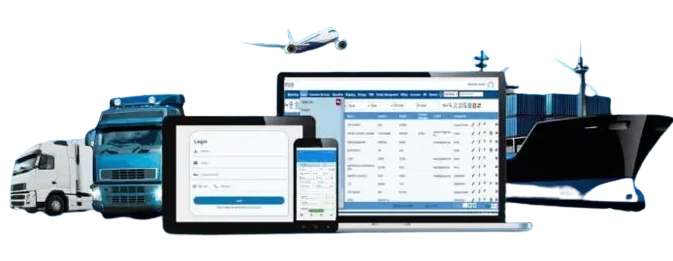
 Freight Forwarding Software
 Warehouse Management System
 Transport Management System
 Moving/Removal Software
 Customer Service Portal
 Move Survey Quote Pro
 Digital Logistics Inventory App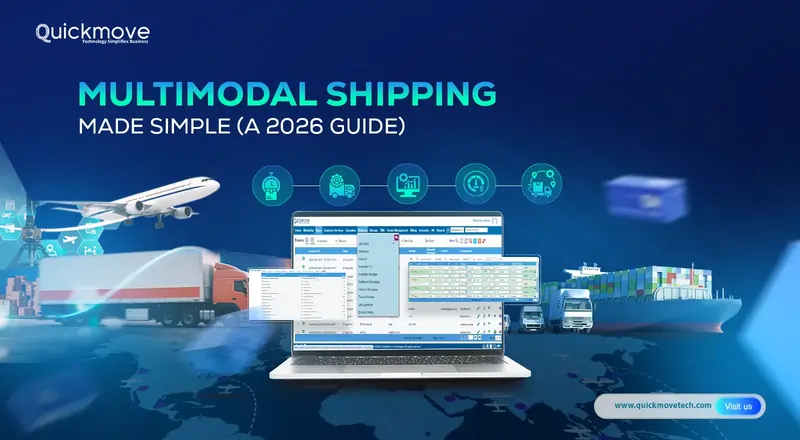
The complexity of international logistics has increased. Logistics firms are being forced to reconsider how they transport goods around the globe due to rising freight prices, shifting trade routes, customer expectations, and supply chain interruptions.
Multimodal shipping is one approach that is still gaining traction. Businesses can lower expenses, enhance delivery efficiency, and obtain more control over their supply chain by integrating various forms of transportation under a unified logistics strategy.
In This tutorial we will describe multimodal shipping, its advantages, difficulties, and how freight forwarders may effectively handle multimodal operations with the aid of contemporary logistics software such as QuickMove Technologies.
What Is Multimodal Shipping?
The shipment of products using two or more modes of transportation under a single contract or reservation is known as multimodal shipping.
A shipment might go via:
- Travel via Road
- Rail Transit
- Freight by Sea
- Freight via Air
Consider this:
A shipment is picked up by truck from a Bengaluru facility, driven to Chennai Port, sent by sea to Dubai, and then delivered by truck to the customer’s warehouse
The package is handled as a single, smooth movement even if it involves several different types of transportation.
Why Multimodal Shipping Is Growing in 2026
More flexibility is needed than ever in modern supply chains.
Today’s businesses must:
- Quicker delivery in foreign markets
- Lower the cost of transportation
- Reduce the number of delays
- Boost the visibility of shipments
- Manage rising trade volumes
- Effectively handle interruptions
In order to maximize both cost and delivery time, businesses are selecting the optimal combination of road, rail, sea, and air transportation rather than depending just on one. A growing number of contemporary freight management platforms are built to facilitate these mixed-mode operations from a single system.
How Multimodal Shipping Works
A typical multimodal shipment follows these stages:
1. Cargo Collection: Goods are picked up from the supplier using local road transportation.
2. Inland Transportation: Cargo moves to a railway terminal, airport, or seaport.
3. International Transportation: Depending on urgency and destination, cargo travels via:
- Ocean Freight
- Air Freight
- Rail Network
4. Customs Clearance: Required shipping documents are processed to comply with international trade regulations.
5. Final Delivery: The shipment is transported to the consignee using local road transportation.
When all these stages are managed from one platform, businesses experience fewer delays and greater operational efficiency.
Key Benefits of Multimodal Shipping
1. Lower Transportation Costs:
Businesses can choose the most cost-effective transport mode for each stage of the journey instead of relying on expensive end-to-end air freight.
This leads to: >>Reduced freight costs >>Better container utilization >>Improved route planning
2. Greater Supply Chain Flexibility:
Unexpected delays happen.
Whether it’s port congestion, weather disruptions, or carrier schedule changes, multimodal shipping allows logistics teams to reroute shipments quickly without disrupting the entire supply chain.
3. Better Shipment Visibility:
Managing shipments across multiple carriers becomes easier when everything is available on one dashboard.
Real-time tracking enables businesses to:
- Monitor shipment status
- Track milestones
- Receive delay notifications
- Improve customer communication
4. Faster International Deliveries:
Combining transport modes strategically often results in shorter transit times compared to relying on a single mode.
For example: Road → Air → Road
can significantly reduce delivery time for urgent shipments.
5. Reduced Operational Complexity:
Instead of managing separate systems for air, sea, road, and rail shipments, businesses can centralize operations through one logistics platform that supports multimodal workflows.
Common Challenges in Multimodal Shipping
While multimodal shipping offers many advantages, it also introduces operational complexity.
Some common challenges include:
- Multiple carrier coordination
- Documentation management
- Customs compliance
- Shipment tracking across transport modes
- Cost allocation
- Billing accuracy
- Communication between stakeholders
Without the right technology, these challenges can quickly become time-consuming and expensive.
How Technology Simplifies Multimodal Shipping
Modern freight forwarding software automates many manual logistics processes.
An advanced logistics platform should provide:
- Centralized shipment management
- Multi-modal booking support
- Automated documentation
- Customs workflow management
- Container tracking
- Financial management
- Customer portals
- Real-time shipment visibility
- Analytics and reporting
Automation reduces paperwork, improves operational efficiency, and minimizes costly errors.
How QuickMove Technologies Supports Multimodal Shipping
Managing multimodal logistics requires complete visibility across every shipment.
QuickMove Technologies offers a unified logistics platform designed for freight forwarders, NVOCC operators, and logistics service providers handling complex global shipments.
With QuickMove, businesses can:
- Manage air, sea, road, and rail shipments from one platform
- Track shipments in real time
- Automate Bills of Lading, invoices, and shipping documentation
- Manage consolidation and deconsolidation
- Improve container utilization
- Handle customs documentation efficiently
- Monitor shipment profitability
- Simplify billing and accounting
- Collaborate across teams through a centralized dashboard
Rather than switching between disconnected systems, teams can manage their entire freight operation through one integrated solution. These capabilities are part of QuickMove’s freight management and freight forwarding platform.
Industries That Benefit from Multimodal Shipping
Multimodal logistics is widely used across industries, including:
- Manufacturing
- Automotive
- Retail & E-commerce
- Pharmaceuticals
- Food & Beverage
- Chemicals
- Electronics
- Industrial Equipment
- Freight Forwarding
- Third-Party Logistics (3PL)
Future Trends in Multimodal Shipping
As logistics continues to evolve, multimodal shipping will become even more technology-driven.
Key trends include:
- AI-powered route optimization
- Predictive shipment tracking
- Automated documentation
- Digital freight management
- Integrated customs processing
- Sustainability-focused transport planning
- End-to-end shipment visibility
Businesses that invest in digital logistics platforms today will be better prepared for the future.
Conclusion
Multimodal shipping is no longer just a competitive advantage—it’s becoming a necessity for businesses operating in today’s global supply chains.
By combining multiple transportation modes with intelligent logistics software, organizations can reduce costs, improve visibility, enhance customer satisfaction, and build more resilient supply chains.
If you’re looking to simplify complex freight operations, automate documentation, and manage multimodal shipments from a single platform, explore QuickMove Technologies.