Email Us
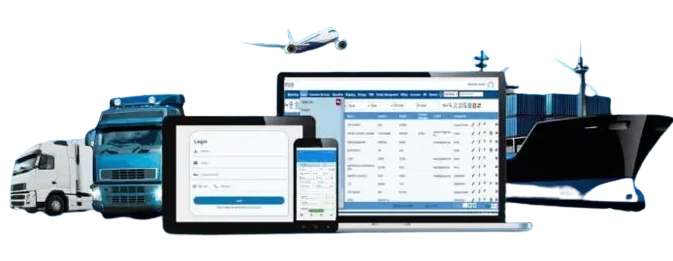
 Freight Forwarding Software
 Warehouse Management System
 Transport Management System
 Moving/Removal Software
 Customer Service Portal
 Move Survey Quote Pro
 Digital Logistics Inventory App
Cross-border logistics across the GCC is becoming increasingly complex. Freight forwarders are expected to manage shipments faster, respond to customers quickly, control costs, maintain accurate documentation, and provide visibility throughout the shipment journey.
For companies operating across the UAE, Saudi Arabia, Qatar, Kuwait, Bahrain, and Oman, these demands can become difficult to manage when operations depend on spreadsheets, email threads, disconnected accounting tools, and manual documentation.
This is where freight forwarding software becomes more than an operational tool. The right system can become the digital foundation of a freight forwarding business—connecting sales, quotations, shipment operations, documentation, billing, accounting, customer service, and profitability in one environment.
For GCC freight forwarders looking to increase efficiency while preparing their businesses for growth, investing in a modern digital freight forwarding system can provide a practical path from manual operations to connected logistics management.
Why Cross-Border Freight Operations Need a Digital Approach
A cross-border shipment rarely involves a single activity.
A typical freight movement can involve:
- Customer quotation and rate negotiation
- Carrier selection
- Booking
- Import or export documentation
- Master and House Bills of Lading
- Customs-related processes
- Container management
- Inland transportation
- Shipment tracking
- Customer communication
- Vendor costs
- Billing and invoicing
- Profitability analysis
The problem is not necessarily the volume of data. It is the lack of connectivity between processes.
A modern freight software platform connects these activities so that information can move with the shipment instead of being repeatedly entered and searched for by different teams.
Our freight forwarding platform is designed around this connected approach, supporting air, sea, and road freight together with quotation management, shipment coordination, documentation, billing, tracking, and profitability analysis.
Why GCC Freight Forwarders Are Looking Beyond Manual Processes
Manual processes can work when a freight forwarding company is small and shipment volumes are manageable, but the challenges become more complex as the business grows.
More customers mean more quotations, more shipments require more documentation, more carriers bring additional rates to manage, and expanding into more countries requires greater coordination. At the same time, increasing business volumes add financial complexity.
As a result, teams can spend more time maintaining processes than focusing on growth and customer service. This is where cloud-based freight software can create measurable operational value by bringing key processes and information into a centralized system.
Instead of relying on multiple files and disconnected systems, freight forwarding companies can maintain a single source of operational information, helping teams work more efficiently, reduce manual effort, and gain better visibility across their operations.
The shift looks like this:
Manual approach: Spreadsheet → Email → Separate document → Accounting software → Manual follow-up
Digital approach: Customer → Quotation → Booking → Shipment → Documentation → Billing → Profitability
The objective is not to remove experienced logistics professionals from the process.
It is to give them a system that handles repetitive work while allowing them to focus on decisions, customers, exceptions, and business growth.
7 Ways Freight Forwarding Software Can Improve GCC Cross-Border Logistics
1. Speed Up Quotations and Rate Management
Freight forwarding is highly competitive. Customers often expect a quotation quickly, particularly when comparing multiple service providers.
Searching through old spreadsheets or manually checking multiple carrier rates can slow down the sales process.
A modern freight forwarding software solution can centralize rates and quotation information, making it easier for teams to prepare accurate quotes.
QuickMove supports quotation and rate management for ocean, air, and land shipments, including contract-based pricing, customized client rates, automated rate lookup, and carrier comparison.
For a GCC freight forwarder, this can help reduce quotation turnaround time while giving sales teams greater control over pricing.
2. Manage Air, Sea, and Road Freight From One Platform
Cross-border logistics does not follow a single transportation model.
A company may handle ocean imports, air exports, road transportation, or multimodal shipments simultaneously.
Managing each mode through separate systems can create information gaps.
A digital freight software platform can provide one operational environment for different shipment types.
QuickMove supports air, sea, and land freight operations, including FCL and LCL shipment workflows.
This gives operations teams a unified view rather than forcing them to switch between different tools.
3. Automate Freight Documentation
Documentation is one of the most time-consuming areas of freight forwarding.
Bills of Lading, delivery orders, manifests, invoices, arrival notices, and other records must be prepared and shared accurately.
Manual document creation increases repetitive data entry and creates opportunities for errors.
QuickMove supports digital management of Master and House Bills of Lading, automated documentation workflows, arrival notifications, delivery orders, and manifest generation.
For freight forwarders, this means fewer repetitive tasks and better control over important shipment records.
4. Give Customers Better Shipment Visibility
One of the most common questions a freight forwarder receives is:
Where is my shipment?
When customer service teams need to manually check several systems before answering, response times increase.
A digital freight forwarding system can provide shipment milestones and status information in a centralized environment.
We provides shipment and milestone tracking with real-time updates and notifications, helping teams monitor shipment progress and respond to delays or exceptions.
5. Connect Freight Operations With Billing and Accounting
Operational efficiency means little if financial processes remain disconnected.
A freight forwarding company needs to know:
- What was quoted?
- What was actually spent?
- What should the customer be billed?
- Which vendor costs are outstanding?
- What is the shipment margin?
- Which customers or services are profitable?
QuickMove integrates billing and invoicing capabilities with accounting processes, including credit and debit notes.
6. Monitor Shipment-Level Profitability
Revenue is not the same as profit.
A shipment may generate strong revenue but deliver a weak margin after accounting for carrier costs, transportation expenses, handling charges, and other operational costs.
For freight forwarders focused on sustainable growth, profitability visibility is therefore essential.
QuickMove provides profitability and cost analysis at the shipment level, including cost allocation, margin visibility, and P&L analysis.
This gives management a clearer understanding of where money is being made and where margins may need attention.
7. Create a Scalable Digital Freight Operation
A system that works for 50 shipments may not work efficiently for 500 or 5,000.
As your company expands, you may add:
- New customers
- New routes
- New carriers
- New branches
- New employees
- New shipment types
- New markets
A cloud-based freight software solution can provide a more scalable foundation for this growth.
QuickMove positions its freight forwarding platform as a cloud-based solution designed to streamline freight operations and provide centralized access to operational information.
Why Cloud-Based Freight Software Makes Sense for GCC Companies
For businesses operating across multiple locations, accessibility matters.
A cloud-based platform can allow authorized users to work with centralized information without depending on a single office or physical system.
With a connected system, teams can work from the same operational information.
This can be particularly valuable for freight forwarding companies expanding across GCC markets.
QuickMove combines freight operations with CRM, accounting, reporting, customer service, procurement, HR/payroll, and other business functions within its broader logistics platform.
What Should GCC Freight Forwarders Look for in Freight Software?
Choosing freight forwarding software is a business decision, not simply an IT purchase.
Before selecting a platform, decision-makers should evaluate whether it can support their existing operations and future growth.
Look for:
Multimodal support: Can the platform manage air, sea, road, FCL, LCL, and consolidation workflows?
Quotation and rate management: Can your team manage carrier rates and customer-specific pricing efficiently?
Documentation automation: Can the system reduce repetitive document preparation?
Shipment visibility: Can your team monitor milestones and receive important alerts?
Billing and accounting: Can operational transactions connect with financial processes?
Profitability control: Can management understand shipment-level costs and margins?
Customer management: Can sales and customer service teams manage customer information and communication?
Reporting and dashboards: Can management see the metrics needed to make decisions?
Scalability: These questions can help prevent a common mistake: choosing software based on the number of features rather than its ability to solve actual operational problems.
Why QuickMove Is Relevant for GCC Freight Forwarders
For a freight forwarding company, the value of software comes from how well it connects the complete business process. QuickMove’s freight forwarding software is built to support freight operations across air, sea, and road, while bringing together quotation management, booking, documentation, tracking, billing, container management, and profitability analysis.
Beyond freight operations, QuickMove also provides CRM, customer service, procurement, billing and accounting, HR/payroll, and reporting capabilities through its broader logistics platform.
This makes the platform relevant for companies that want more than a basic shipment tracking application.
The objective is to create a connected operating environment where your teams can manage freight and the business behind it.
When Should a Freight Forwarding Company Consider New Software?
You may be ready for a modern freight management system if:
- Your team relies heavily on Excel for shipment management.
- Employees repeatedly enter the same information.
- Customers frequently ask for manual shipment updates.
- Preparing quotations takes too long.
- Documentation requires significant manual work.
- Finance spends too much time reconciling operational data.
- Management cannot easily see shipment profitability.
- Different departments use disconnected systems.
- Your business is adding customers or shipment volumes faster than your current processes can handle.
- You are planning to expand into additional GCC markets.
If several of these situations sound familiar, the problem may not be that your team needs to work harder.
From Freight Management to Freight Business Management
The biggest opportunity with modern freight forwarding software is not simply automation.
It is visibility.
A good system can help management answer important business questions:
Which customers generate the strongest margins?
Which shipments are costing more than expected?
How quickly are quotations being converted?
Where are operational delays occurring?
How much revenue is being generated by each service or route?
Which processes are consuming unnecessary employee time?
When operational, customer, and financial information are connected, freight forwarders can make decisions based on data rather than assumptions.
That is the difference between using software as a database and using software as a business management platform.
The GCC Freight Industry Is Moving Toward Connected Operations
Cross-border logistics will continue to require coordination between customers, carriers, ports, transporters, warehouses, customs processes, and internal teams.
The companies that manage this complexity efficiently will have an advantage.
A modern digital freight forwarding system can help freight forwarders reduce manual work, improve visibility, strengthen customer communication, control costs, and create a more scalable operating model.
For GCC companies, the decision is therefore not simply about replacing spreadsheets.
Ready to Modernize Your Freight Operations?
If your freight forwarding company is still managing quotations, shipments, documents, billing, and profitability across disconnected systems, it may be time to evaluate a more connected approach.
Our freight forwarding software brings core freight processes into one platform, helping companies manage air, sea, and road freight while improving quotation management, documentation, tracking, billing, and profitability visibility.
It is about creating an infrastructure that can support the next stage of the business.