Email Us
 Freight Forwarding Software
 Warehouse Management System
 Transport Management System
 Moving/Removal Software
 Customer Service Portal
 Move Survey Quote Pro
 Digital Logistics Inventory App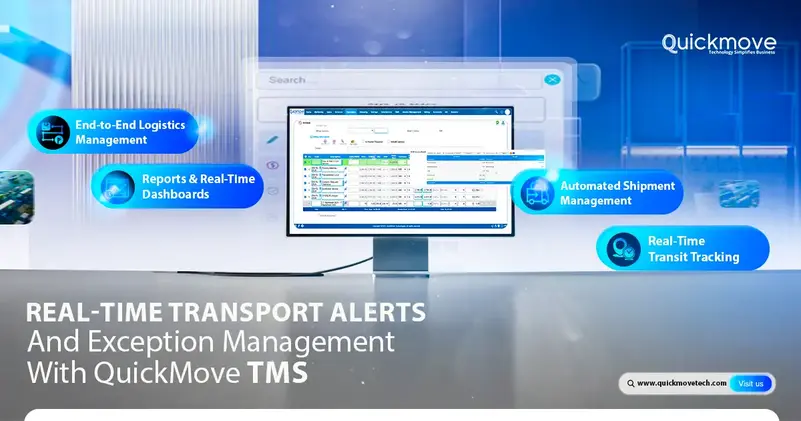
Modern transport operations move quickly, and even a small delay can affect delivery schedules, customer satisfaction, vehicle utilisation, and operating costs. Dispatchers and logistics managers cannot afford to wait until the end of the day to discover that a vehicle has broken down, a driver is running late, or a delivery has failed. They need accurate information while there is still time to act.
QuickMove TMS helps transport businesses stay informed through real-time alerts and exception notifications. Instead of requiring teams to monitor every trip manually, the system highlights events that need attention. This allows the right person to respond quickly, protect the delivery schedule, and keep customers updated.
Why Real-Time Alerts Matter in Transport Management
Traditional transport operations often depend on phone calls, spreadsheets, messaging groups, and periodic driver updates. These methods may work for a small fleet, but they become difficult to manage as trip volumes grow. Important information can arrive late, reach the wrong person, or get buried among routine messages.
Real-time TMS alerts create a more controlled workflow. QuickMove TMS continuously monitors transport activity and notifies users when a defined event or exception occurs. Rather than searching through every shipment, managers can focus on trips that require immediate action.
This visibility helps transport companies:
- Identify delays before they become serious disruptions
- Respond faster to vehicle, driver, route, or delivery problems
- Reduce repeated calls between dispatchers and drivers
- Keep customers informed with timely and accurate updates
- Improve accountability across transport teams
- Protect service-level commitments and delivery timelines
What Is an Exception Notification in TMS Software?
An exception is any event that moves a trip away from its expected plan. It does not always mean that a delivery has failed. It may simply indicate that an activity needs attention for example, a vehicle remaining stationary longer than expected or a driver reaching a destination later than the planned arrival time.
QuickMove TMS exception notifications help users separate normal transport activity from situations requiring intervention. This reduces information overload and ensures that operational teams do not waste time checking trips that are progressing as planned.
Common Transport Exceptions That Require Attention
Depending on the business process and system configuration, important exceptions may include:
- Delayed trip departure
- Deviation from the planned route
- Extended vehicle stoppage
- Late arrival at a pickup or delivery location
- Failed or incomplete delivery
- Missing proof of delivery
- Vehicle breakdown or unexpected unavailability
- Driver document or vehicle document expiry
- Unplanned changes to the trip schedule
- Delivery status not updated within the expected time
By bringing these events to the attention of the relevant user, QuickMove TMS supports faster and more consistent decision-making.
How QuickMove TMS Real-Time Notifications Improve Daily Operations
Alerts are valuable only when they help teams take action. QuickMove TMS connects operational visibility with a structured transport workflow, allowing dispatchers, fleet managers, customer service teams, and decision-makers to work from shared information.
Faster Response to Delays and Disruptions
When a delay is identified early, the transport team has more options. A dispatcher may contact the driver, adjust the route, assign another vehicle, revise the delivery sequence, or inform the customer. Without an alert, the same issue may remain unnoticed until the promised delivery window has already been missed.
Real-time exception management changes the operating approach from reactive to proactive. Teams can address the cause of a delay instead of only explaining the result afterward.
Better Communication Across Drivers, Dispatchers, and Customers
Many customer complaints begin with a lack of information. If the service team does not know the current trip status, it cannot give the customer a reliable answer. QuickMove TMS provides a central view of transport activity so authorised users can see alerts and respond with consistent information.
This helps reduce internal follow-ups such as “Where is the vehicle?” or “Has the delivery been completed?” It also enables customer-facing teams to communicate earlier when an exception may affect the expected delivery time.
Improved Control Over Service-Level Commitments
Transport companies often work with promised pickup times, delivery windows, turnaround targets, and customer-specific service-level agreements. Exception notifications help managers identify when a trip is at risk of missing one of these commitments.
With timely visibility, teams can prioritise urgent trips, escalate critical issues, and record the actions taken. Over time, this creates better operational discipline and makes it easier to analyse recurring causes of service failure.
Key Benefits of Real-Time Alerts in QuickMove TMS
QuickMove TMS provides more than shipment visibility. Its alert-driven approach helps businesses improve the speed, accuracy, and control of transport management.
Reduced Manual Trip Monitoring
Dispatchers should not have to call every driver or refresh multiple tracking sources to identify a problem. Automated notifications draw attention to exceptions, allowing the team to manage more trips without losing operational control.
Lower Risk of Costly Operational Failures
A missed alert can lead to waiting charges, redelivery costs, overtime, additional fuel use, dissatisfied customers, or penalties. Early notification gives the company an opportunity to limit the financial impact of an unexpected event.
More Productive Transport Teams
When routine trips continue without unnecessary intervention, employees can spend more time on activities that add value. Their attention is directed toward exceptions, customer communication, resource planning, and problem-solving.
Greater Accountability and Management Visibility
Centralised notifications make it easier to understand what happened, when it happened, and how the team responded. Managers gain clearer visibility into operational performance and can identify issues that frequently affect particular routes, customers, vehicles, or processes.
Business Outcomes Supported by Alert-Based Transport Management
An effective alert and exception workflow can contribute to:
- Higher on-time pickup and delivery performance
- Faster resolution of transport problems
- Better fleet and driver utilisation
- Fewer avoidable customer escalations
- More accurate delivery communication
- Stronger compliance and document control
- Better data for future transport planning
Using Transport Exception Data for Continuous Improvement
Real-time alerts solve immediate problems, but the collected exception data also supports long-term improvement. If a company repeatedly receives late-arrival alerts on a particular route, the planned travel time may be unrealistic. Frequent stoppage exceptions may reveal congestion patterns, loading delays, or process gaps at a customer location.
Managers can review trends to answer practical questions: Which routes generate the most delays? Which delivery locations have longer turnaround times? What are the most common reasons for failed deliveries? Where should schedules, resources, or operating procedures be adjusted?
By converting day-to-day exceptions into useful operational insight, QuickMove TMS helps companies move beyond guesswork and make decisions based on actual transport performance.
Why Choose QuickMove TMS for Real-Time Transport Visibility?
QuickMove TMS brings trip planning, execution, tracking, alerts, and operational information into one transport management platform. This connected approach reduces dependence on disconnected spreadsheets, calls, and manual follow-ups.
The system is designed to help transport businesses manage growing trip volumes while maintaining visibility and control. Teams can monitor critical events, respond to exceptions, coordinate more effectively, and provide customers with better service. Decision-makers also gain a clearer view of the issues affecting cost, efficiency, and delivery performance.
Final Thoughts
In transport management, knowing about a problem late is often almost as damaging as not knowing about it at all. Real-time alerts and exception notifications give logistics teams the time and information needed to respond before a disruption becomes a major service failure.
QuickMove TMS helps businesses monitor transport operations more intelligently by identifying events that require attention and making them visible to the right users. With faster responses, improved communication, reduced manual monitoring, and better exception data, transport companies can build a more reliable and customer-focused operation.
For organisations looking to improve delivery control, reduce operational surprises, and manage transport activity from a central platform, QuickMove TMS provides the visibility needed to keep every trip moving in the right direction.