Email Us

 Freight Forwarding Software
 Warehouse Management System
 Transport Management System
 Moving/Removal Software
 Customer Service Portal
 Move Survey Quote Pro
 Digital Logistics Inventory App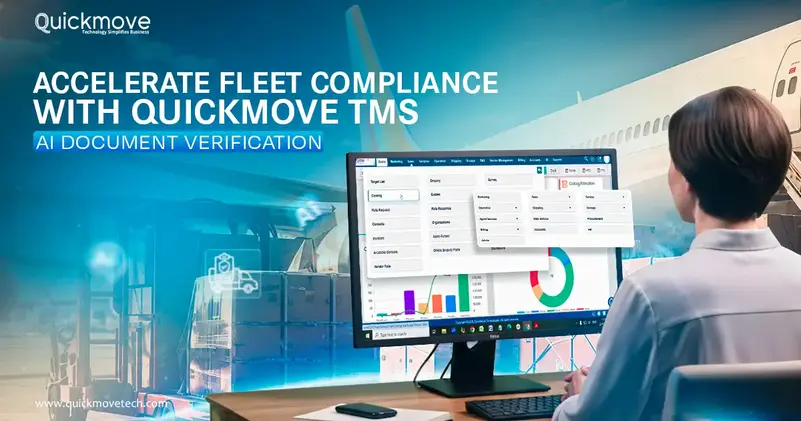
AI-Powered Document Upload and Verification in QuickMove TMS
Transport operations depend on more than vehicles, drivers and delivery schedules. Every trip also relies on valid documents—including a driving licence (DL), vehicle registration certificate (RC) and insurance policy.
Manually collecting and checking these documents can create avoidable delays. Operations teams must inspect document details, confirm validity, record expiry dates and follow up on missing files. When fleets and vendor networks expand, this process becomes difficult to manage through spreadsheets, emails and messaging applications.
QuickMove TMS addresses this challenge through AI-powered document upload and verification. The system helps transport teams digitise documents, extract essential information and identify compliance issues before they affect vehicle deployment.
Why Manual Transport Document Verification Creates Operational Risk
A single expired or incorrect document can delay vehicle allocation, disrupt dispatch planning or expose a transport business to compliance risks.
Manual verification is particularly vulnerable to:
- Incorrect document numbers entered into the system
- Missed driving licence or insurance expiry dates
- Blurred, incomplete or cropped document images
- Duplicate document uploads
- Mismatched driver and vehicle details
- Delayed approval of newly added drivers or vehicles
- Documents scattered across emails, chats and local folders
- Difficulty maintaining an audit-ready compliance record
These problems become more serious when a business works with multiple transporters, contracted drivers and third-party vehicles.
The Cost of Unverified Driver and Vehicle Documents
Document errors do not remain limited to administrative work. They can affect daily transport performance.
An unverified or expired document may result in:
- Vehicles being held back during dispatch
- Drivers becoming unavailable for planned trips
- Increased compliance exposure
- Time-consuming roadside checks
- Insurance-related complications
- Last-minute vehicle replacement
- Delayed order fulfilment
- Reduced fleet utilisation
QuickMove TMS helps teams move document verification earlier in the transport workflow, allowing issues to be identified before trip assignment.
How AI Document Upload Works in QuickMove TMS
QuickMove TMS provides a structured workflow for uploading and managing driver and vehicle documents. Instead of manually typing every detail, users can upload a scanned copy or image of the relevant document.
The AI-assisted process can help:
- Detect the uploaded document type.
- Read printed information using intelligent text extraction.
- Capture important fields from the document.
- Check whether mandatory information is present.
- Flag unclear, incomplete or potentially inconsistent records.
- Store verified information against the correct driver or vehicle profile.
- track expiry dates for future compliance action.
This workflow reduces repetitive data entry while improving the reliability of transport records.
AI-Based Data Extraction From Uploaded Documents
AI-powered extraction converts document images into structured information that transport teams can search, review and use within operational workflows.
Depending on the document, the system can capture details such as:
- Document number
- Driver or vehicle owner name
- Vehicle registration number
- Issue date
- Expiry date
- Vehicle category
- Insurance policy number
- Insurer information
- Authorised driving class
The extracted information can then be presented for review before approval.
Image Quality Checks Before Verification
Document verification depends on readable uploads. QuickMove TMS can support a more controlled submission process by identifying common quality problems, including:
- Blurred photographs
- Excessive glare or shadows
- Cropped document edges
- Low-resolution images
- Missing front or reverse side
- Unreadable numbers
- Unsupported file formats
- Incorrect document categories
Early detection prevents poor-quality files from entering the approval queue.
Driving Licence Verification in QuickMove TMS
A valid driving licence is essential for assigning a driver to a commercial vehicle. AI-assisted DL verification helps operations teams capture licence information without relying entirely on manual entry.
The verification workflow can review:
- Driving licence number
- Licence holder’s name
- Date of birth
- Issue and expiry dates
- Authorised vehicle class
- Photograph and identity information
- Completeness of the uploaded licence
- Alignment with the driver profile
Preventing Invalid Driver Allocation
QuickMove TMS can use verified licence information to strengthen driver allocation decisions. If a licence is expired, incomplete or incompatible with the required vehicle category, the record can be flagged for review.
This helps transport teams:
- Restrict the assignment of non-compliant drivers
- Detect licences approaching expiry
- Maintain current driver records
- Reduce last-minute dispatch interruptions
- Create a traceable approval history
Licence Expiry Monitoring
Recording an expiry date is not enough. Compliance teams also need sufficient time to renew a document before it becomes invalid.
An expiry-monitoring workflow can help generate alerts at defined intervals, allowing teams to:
- Notify drivers before the renewal deadline
- Escalate overdue licence renewals
- Identify drivers who require temporary allocation restrictions
- Track renewed document submissions
- Maintain continuity in fleet planning
RC Verification for Accurate Vehicle Records
The registration certificate establishes a vehicle’s identity and registration details. Manual RC entry can introduce errors in vehicle numbers, ownership information and registration dates.
AI-powered RC verification in QuickMove TMS can help extract and review:
- Vehicle registration number
- Registered owner’s name
- Chassis number
- Engine number
- Vehicle make and model
- Fuel type
- Registration date
- Vehicle class
- Registration validity details
Matching RC Information With the Vehicle Master
Extracted RC information can be compared with the vehicle master record stored in the TMS. Differences can be flagged before the vehicle is approved for operational use.
Potential mismatches may include:
- Incorrect registration number
- Different owner or transporter name
- Wrong vehicle category
- Inconsistent chassis information
- Missing validity details
- Duplicate vehicle registration
Stronger Control Over Contracted Vehicles
RC verification is especially valuable for businesses that regularly onboard market vehicles or third-party transporters.
A structured verification process enables teams to:
- Review documents before vehicle activation
- Maintain separate approval statuses
- Prevent duplicate vehicle onboarding
- Connect the vehicle with its authorised transporter
- Create a central document trail for audits
Vehicle Insurance Verification in QuickMove TMS
Insurance documents contain multiple dates, policy identifiers and coverage details. Missing even one critical field can result in an uninsured or improperly documented vehicle entering active operations.
AI-assisted insurance verification can capture:
- Insurance policy number
- Vehicle registration number
- Insurer name
- Policy start date
- Policy expiry date
- Coverage or policy type
- Insured party information
- Vehicle details included in the policy
Detecting Insurance Gaps Before Dispatch
QuickMove TMS can help teams identify insurance records that are:
- Expired
- Approaching expiry
- Uploaded against the wrong vehicle
- Missing mandatory details
- Unreadable or incomplete
- Inconsistent with the vehicle master
- Duplicated across multiple vehicle profiles
Insurance Renewal Alerts
Automated expiry visibility gives fleet and compliance teams time to coordinate renewals before coverage lapses.
This supports:
- Early renewal follow-ups
- Reduced vehicle downtime
- Better coordination with transport vendors
- Controlled dispatch eligibility
- Improved insurance compliance reporting
Centralised DL, RC and Insurance Management
QuickMove TMS brings driver and vehicle documentation into a central transport management environment. Authorised teams can access current document information without searching through disconnected folders or message threads.
A central document repository provides:
- Faster access to driver and vehicle records
- Consistent naming and document classification
- Role-based verification workflows
- Approval and rejection status visibility
- Expiry-date tracking
- Document replacement history
- Searchable compliance information
- Audit-ready records
Verification Status for Operational Control
Each document can move through a defined status workflow, such as:
- Uploaded
- Under review
- Verified
- Rejected
- Expired
- Renewal required
Clear statuses help dispatch, fleet and compliance teams understand whether a driver or vehicle is ready for assignment.
Exception-Based Review
AI can process routine extraction and preliminary checks while employees concentrate on exceptions that require judgement.
Review teams can prioritise:
- Documents with missing fields
- Low-confidence data extraction
- Profile mismatches
- Expired records
- Suspected duplicate uploads
- Unusual policy or registration information
This approach makes verification faster without removing human oversight.
Operational Benefits of AI Document Verification
AI-powered document processing in QuickMove TMS can improve transport administration across driver onboarding, vehicle onboarding and dispatch compliance.
Key advantages include:
- Faster onboarding: Driver and vehicle information can be captured with less manual entry.
- Higher data accuracy: Automated extraction reduces typing mistakes.
- Earlier compliance detection: Missing or expired documents can be identified before trip planning.
- Reduced administrative workload: Teams spend less time reviewing routine fields.
- Improved dispatch readiness: Only eligible drivers and vehicles can progress through operational checks.
- Centralised visibility: Documents and verification statuses remain connected with TMS records.
- Proactive renewals: Expiry alerts support timely document updates.
- Stronger audit preparation: Verification records create a traceable compliance history.
- Scalable vendor management: Large transporter and contracted-fleet networks become easier to control.
A Smarter Document Workflow for Transport Operations
Document management should not become a bottleneck between vehicle onboarding and dispatch. QuickMove TMS uses AI-assisted upload, data extraction and verification workflows to make DL, RC and insurance processing more structured and efficient.
By centralising documents, capturing critical fields and highlighting compliance exceptions, QuickMove TMS helps transport teams reduce manual effort and improve operational readiness. The result is a faster, more dependable process for approving drivers and vehicles before they enter active transport operations.
Strengthen Transport Compliance With QuickMove TMS
Move beyond spreadsheets, scattered document images and manual expiry tracking. Use QuickMove TMS to build a connected document verification workflow for drivers, owned vehicles and contracted fleets.
Schedule a QuickMove TMS Demonstration
Explore how AI-powered document upload and verification can support faster onboarding, accurate compliance records and better dispatch control across your transport network.