Email Us
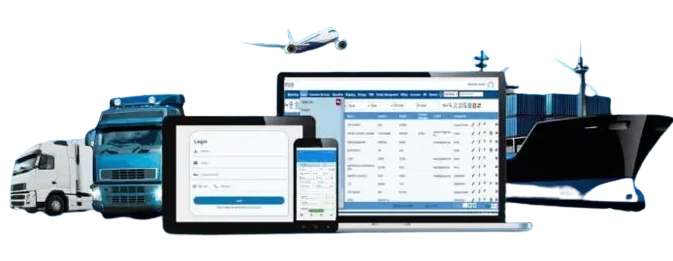
 Freight Forwarding Software
 Warehouse Management System
 Transport Management System
 Moving/Removal Software
 Customer Service Portal
 Move Survey Quote Pro
 Digital Logistics Inventory App
The UAE is one of the Middle East’s key logistics and distribution hubs, with warehouses handling increasingly complex inventory, customer and fulfilment requirements. The UAE Warehouse Management System (WMS) market is expected to reach $45 million by 2030. As operations grow, spreadsheets and manual processes can make it difficult to maintain inventory accuracy, manage storage space, track goods and calculate billing efficiently.
A modern Warehouse Management System (WMS) helps solve these challenges by bringing core warehouse activities into one connected platform. Here, we look at what businesses should expect from a WMS in the UAE and why QuickMove Technologies is a strong option for managing inventory, storage, picking, billing and other warehouse operations.
Why UAE Businesses Need a Modern WMS
The UAE’s logistics industry is not built around simple storage operations.
Many warehouses support international supply chains. Others handle goods for multiple customers. Some support e-commerce fulfilment, while others deal with household goods, commercial storage, transit inventory, retail products or industrial materials.
That means a warehouse may have to manage hundreds or thousands of SKUs while also keeping track of different customers, locations, storage rules and billing requirements.
1. Inventory volumes are increasing
As businesses expand, the number of products and inventory movements increases.
A company that started with 200 SKUs may eventually manage several thousand. Tracking that inventory manually becomes difficult.
A WMS provides a structured way to record every movement so warehouse teams have a clearer picture of available stock.
2. Customers expect accurate information
Customers no longer want to wait until the warehouse team manually checks a register.
They expect answers quickly.
- Where is my inventory?
- How many units are available?
- When did the goods arrive?
- When were they dispatched?
- Which warehouse is holding them?
A WMS can provide the information needed to answer these questions much faster.
3. Warehouses are handling multiple activities
Modern warehouses do more than store goods.
They receive inventory, inspect it, put it away, pick products, pack orders, prepare shipments, handle returns and sometimes provide additional value-added services.
When these activities are managed separately, information gaps appear.
A WMS connects them into a more consistent workflow.
4. Storage billing can become complicated
For 3PLs and storage businesses, billing is not always based on a simple monthly warehouse fee.
Charges can depend on pallets, bins, cartons, SKUs, jobs, storage duration or other warehouse services.
Manually calculating these charges creates room for errors.
Automated storage billing can help warehouse operators calculate charges more consistently.
5. UAE logistics operations are becoming more technology-driven
The UAE continues to invest heavily in logistics infrastructure and smart warehousing. Industry research points to increasing adoption of automation, robotics, sortation systems and automated storage technologies in the UAE.
Software is an important part of this transition.
A UAE WMS acts as the operational layer that helps businesses coordinate warehouse activities and maintain visibility as operations become more sophisticated.
What Makes a WMS the Best WMS for UAE Businesses?
There is no single WMS that is automatically the best for every company.
A large multinational manufacturer may need a completely different system from a regional 3PL provider.
Therefore, businesses should look beyond long feature lists.
A good WMS in UAE should solve actual warehouse problems.
Here are some of the areas UAE businesses should evaluate
Real-Time Inventory Visibility
One of the biggest reasons businesses implement WMS software is to know what they actually have in stock.
Without accurate inventory visibility, warehouse managers are often forced to depend on physical checks or spreadsheets.
A modern WMS should show inventory status and movement in a structured way.
QuickMove’s WMS in UAE provides real-time inventory and stock movement tracking, along with bin, rack and location-wise inventory mapping.
This can help warehouse teams answer basic but important questions without searching through multiple records.
- What inventory is currently available?
- Where is it stored?
- Which location contains a particular SKU?
- What has recently entered or left the warehouse?
- What stock is moving between locations?
Better visibility also creates a stronger foundation for inventory planning.
Smarter Put-Away Management
Receiving goods is only the beginning.
Once goods enter the warehouse, they need to be assigned to appropriate storage locations.
When put-away is handled manually, warehouse employees may spend unnecessary time deciding where products should go.
A WMS can help structure this process.
QuickMove supports warehouse workflows designed to improve put-away and inventory placement, helping businesses bring more consistency to the movement of goods from receiving areas to storage locations.
This becomes particularly useful when warehouses contain multiple zones, racks, bins or storage types.
Bin, Rack and Location Management
A warehouse may contain hundreds or thousands of storage locations.
Without proper location mapping, finding inventory becomes difficult.
QuickMove’s WMS maps inventory to bins, racks and locations, providing a digital representation of where inventory is stored.
This is especially useful for warehouses where several customers or product categories share the same facility.
Instead of relying on memory or handwritten notes, teams can work from a structured location system.
Barcode and QR-Based Warehouse Control
Human errors are difficult to eliminate completely.
One way to reduce them is to minimize unnecessary manual data entry.
Barcode and QR code scanning can help warehouse employees identify inventory more accurately during receiving, storage, picking and dispatch.
QuickMove includes barcode and QR-based item identification within its WMS.
For warehouse operators, this can provide a more reliable way to connect physical goods with digital inventory records.
The benefit is not simply faster scanning.
It is also traceability.
When every movement is recorded against an identifiable item, SKU or inventory unit, warehouse managers have a better understanding of what happened and when.
Efficient Picking and Order Fulfilment
Picking is one of the most important warehouse activities because mistakes at this stage can directly affect customers.
A wrong product, incorrect quantity or delayed picking process can lead to returns, complaints and additional delivery costs.
A WMS can help warehouse teams organize picking based on order requirements and warehouse locations.
More advanced systems can also support methods such as:
- FIFO
- FEFO
- LIFO
- Batch picking
- Wave picking
- Route-optimized picking
QuickMove has highlighted pick-path optimization as an important WMS capability because inefficient warehouse routes can cause employees to spend excessive time walking rather than picking.
For busy warehouses, even small improvements in picking efficiency can have a meaningful effect on daily productivity.
Storage Management for Different Types of Warehouses
Not every UAE warehouse operates in the same way.
Some businesses manage commercial inventory.
Others handle household goods.
Some provide temporary or transit storage.
Others operate warehouses for multiple 3PL customers.
QuickMove’s warehouse solution in UAE supports different storage use cases, including household goods storage, commercial storage and transit storage.
This flexibility is particularly relevant for logistics businesses that do not fit into a single warehouse model.
Multi-Client and 3PL Warehouse Management
3PL providers face a unique challenge.
One warehouse may hold inventory belonging to many customers.
Each customer may have different:
- SKUs
- Storage requirements
- Billing rules
- Service levels
- Picking requirements
- Reporting needs
A WMS must therefore separate customer inventory while still giving warehouse operators a single operational view.
QuickMove has a dedicated approach to 3PL warehouse management, focusing on helping warehouse operators manage inventory and activities for multiple clients within the same facility.
This can be especially useful for UAE logistics companies serving multiple businesses from one warehouse.
Automated Storage Billing
Storage is a business service.
For a 3PL or warehouse operator, accurately calculating storage charges is just as important as accurately tracking inventory.
Manually calculating storage fees can become difficult when customers have different storage requirements.
Charges may depend on:
- Pallets
- Bins
- Cartons
- SKUs
- Jobs
- Storage duration
- Handling activities
QuickMove’s warehouse management system in UAE includes automated storage billing capabilities, helping warehouse businesses manage storage-related charges more systematically. Its warehouse solution also positions automated billing as one of its core capabilities.
This can reduce the amount of manual calculation required by operations and finance teams.
It can also make customer billing easier to audit because charges can be connected to recorded warehouse activities.
Warehouse Partition and Space Management
Warehouse space is expensive.
Simply having more warehouse space does not necessarily mean the facility is being used efficiently.
Businesses need to understand how space is allocated and which customers or products are occupying it.
Partition management helps divide a warehouse into logical areas.
This can support:
- Customer-specific zones
- Product-specific zones
- Storage categories
- Racks
- Temperature-controlled areas
- Cold storage
- General storage
For businesses managing different types of goods or multiple customers, this type of structure can make warehouse operations easier to control.
Reverse Logistics and Returns Management
Returns are part of modern commerce.
Products can come back because of customer returns, delivery failures, damaged goods, incorrect shipments or other reasons.
If returned inventory is simply placed in a corner of the warehouse, the business can quickly lose track of its status.
A WMS can help create a defined reverse logistics process.
The returned product can be recorded, inspected, classified and moved to the appropriate location.
This creates a clearer connection between the return and the inventory record.
For businesses handling large numbers of returns, having this process inside the warehouse system can be far more efficient than maintaining separate records.
Why QuickMove Technologies Is a Top WMS Option in UAE
Choosing the best WMS in UAE is not about finding the software with the longest feature list.
It is about finding software that fits the way your warehouse actually operates.
This is where QuickMove Technologies takes a practical approach.
QuickMove provides a broader logistics software platform covering freight forwarding, warehouse management, transportation and moving operations. Its platform is designed to connect these functions rather than treating them as completely separate systems.
For a logistics company that operates across multiple areas, this can be useful.
For example, a business may receive cargo through freight forwarding operations, move it into warehouse storage, and later arrange transportation for delivery.
When these operations are connected, information does not have to be repeatedly entered into separate systems.
QuickMove WMS Features at a Glance
Here are some of the key capabilities businesses can consider when evaluating QuickMove’s WMS in UAE:
| WMS Capability | How It Helps |
| Real-time inventory tracking | Gives teams better visibility of stock and movements |
| Bin and rack mapping | Helps locate inventory faster |
| Barcode and QR identification | Reduces manual entry and improves traceability |
| Put-away management | Creates a more structured receiving-to-storage process |
| Intelligent picking | Helps organize picking based on warehouse requirements |
| Reverse logistics | Provides a structured approach to returned inventory |
| Storage billing | Helps automate warehouse-related charges |
| Partition management | Supports organized use of warehouse space |
| Multi-client operations | Helps 3PLs manage multiple customers |
| Warehouse reporting | Helps managers monitor warehouse performance |
QuickMove’s current WMS offering also emphasizes real-time inventory, barcode-enabled control, inward and outward workflows, cross-docking and warehouse performance analytics.
WMS for 3PL and Logistics Companies in the UAE
The UAE has a strong logistics and third-party warehousing ecosystem.
For a 3PL, warehouse software needs to do more than track products.
It needs to support customer-level visibility and operational control.
For example, imagine a 3PL warehouse storing products for five different companies.
If inventory is tracked through spreadsheets, it becomes easy to mix up quantities, storage locations or billing information.
A WMS provides a central system where customer inventory can be organized and warehouse activities can be recorded.
This helps the 3PL operate the facility more professionally while giving customers greater confidence in their inventory.
WMS for Household Goods and Moving Companies
Warehouse management is also important for moving and relocation companies.
Household goods often have to be stored temporarily between pickup and final delivery.
Unlike conventional commercial inventory, household goods may consist of individually packed items, cartons, furniture and other belongings associated with a particular move.
QuickMove’s broader platform connects warehouse management with moving/removal operations, while its warehouse solution supports HHG storage.
This can help relocation companies create a more connected process from inventory creation and packing through storage and eventual delivery.
The Business Benefits of Implementing a WMS
A WMS is an operational investment.
The goal is not simply to replace paper records with software.
The goal is to improve the way the warehouse performs.
Here are some of the most important benefits.
1. Better Inventory Accuracy:
When inventory movements are digitally recorded, businesses have a clearer view of stock.
2. Fewer Manual Errors:
Barcode scanning and automated workflows can reduce unnecessary data entry.
3. Faster Warehouse Operations:
Employees can spend less time searching for products or checking records.
4. Better Space Utilization:
Digital location and partition management can help businesses understand how warehouse space is being used.
5. Improved Customer Service:
Faster access to inventory information means customer queries can be answered more efficiently.
6. More Accurate Billing:
Automated storage billing can reduce manual calculations and billing discrepancies.
7. Better Management Decisions:
Warehouse reports and analytics provide managers with operational information that can support better decisions.
QuickMove’s UAE warehouse software emphasizes performance reporting and analytics alongside inventory and warehouse workflow management.
WMS Is Not Just About Automation
There is a tendency to talk about warehouse technology as if automation means removing people from the process.
That is not how most warehouses actually work.
People remain central to warehouse operations.
The purpose of a WMS is to give employees better information and better processes.
A warehouse employee should not have to remember where every SKU is located.
A warehouse manager should not have to manually calculate every customer’s storage charge.
An operations team should not have to search through five spreadsheets to understand inventory movement.
The system should handle the repetitive information work so people can focus on managing the operation.
QuickMove describes its broader logistics platform in a similar way: digitizing and automating processes while keeping operational teams in control.
The Future of WMS in the UAE
The UAE’s logistics industry is moving toward more connected and technology-driven operations.
Warehouse management is likely to become increasingly connected with:
- AI
- IoT
- Barcode and QR technologies
- Warehouse automation
- Robotics
- Cloud platforms
- Transportation systems
- E-commerce platforms
- Business intelligence
- Digital customer portals
Industry research already identifies automation and smart warehousing as important drivers of WMS adoption in the UAE.
However, businesses should not adopt technology simply because it is new.
The better approach is to identify the operational problem first.
If inventory visibility is the problem, solve inventory visibility.
If picking is inefficient, improve picking.
If storage billing takes too much time, automate billing.
If multiple warehouses are difficult to manage, centralize warehouse information.
The technology should serve the business—not the other way around.
Why QuickMove Fits the UAE Logistics Environment
The UAE has a unique logistics environment.
Businesses may operate across free zones, ports, airports, distribution centers, commercial warehouses and last-mile networks.
A logistics company may also need to manage freight forwarding, warehousing, transportation and customer communication as part of the same operation.
QuickMove’s broader platform is designed around these connected logistics activities, with dedicated solutions for freight forwarding, WMS, TMS and moving/removal operations.
Its WMS focuses specifically on inventory, warehouse storage, billing and operational visibility, while its wider platform can connect warehouse activity with other logistics functions.
That makes it worth considering for UAE businesses that want more than a standalone inventory tracker.
Is QuickMove One of the Best WMS Options in UAE?
Choosing the best WMS in UAE depends on your warehouse size, processes, customers and future growth plans. However, businesses looking for better inventory visibility, organized warehouse workflows, barcode-based tracking and automated storage billing can benefit from a modern WMS.
QuickMove Technologies brings these capabilities together while also connecting warehouse operations with broader logistics functions such as freight forwarding, transportation and moving operations. For UAE businesses looking to replace manual processes with a more connected and scalable warehouse management system, QuickMove is worth considering.