Email Us
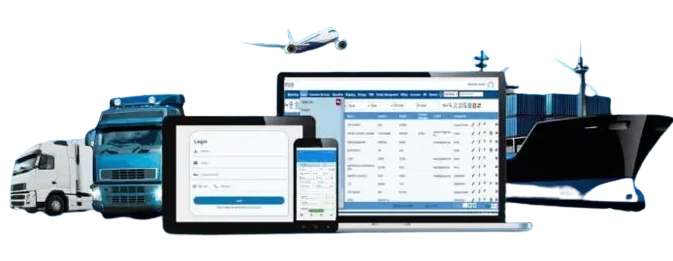
 Freight Forwarding Software
 Warehouse Management System
 Transport Management System
 Moving/Removal Software
 Customer Service Portal
 Move Survey Quote Pro
 Digital Logistics Inventory App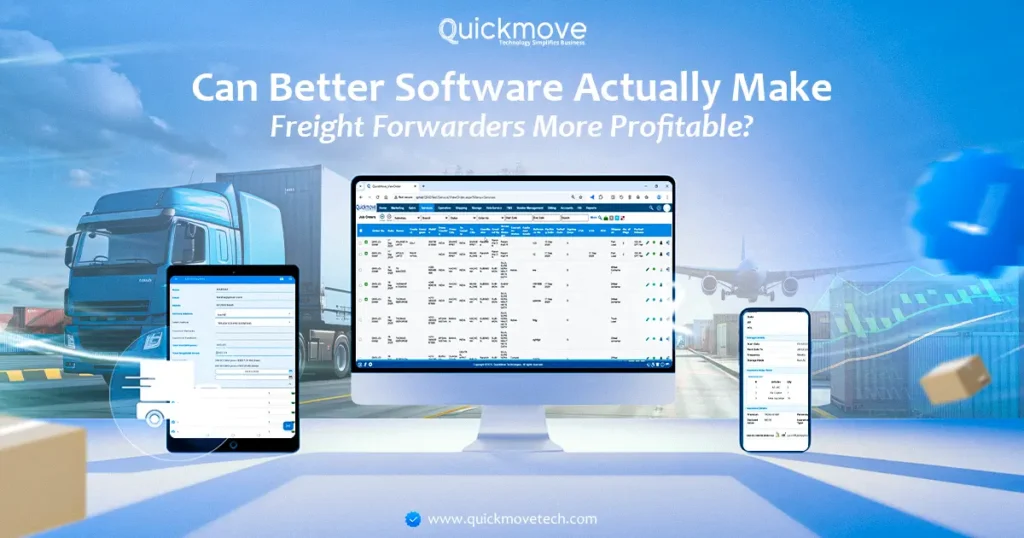
Freight forwarding is a margin-sensitive business where small inefficiencies can quickly affect profitability. Missed charges, inaccurate quotations, billing delays, and manual processes can all reduce margins.
As shipment volumes grow, freight forwarding software can help businesses automate operations, improve cost visibility, streamline billing, and manage shipments more efficiently.
But can better software actually improve profitability?
Yes when the right technology helps freight forwarders reduce costs, protect revenue, and make better business decisions.
Can better software actually make freight forwarders more profitable?
The answer is yes but the value of software is not simply in automating tasks. The right freight forwarding software can help companies improve costing, control margins, reduce manual work, accelerate billing, improve shipment visibility, and connect sales, operations, and finance.
QuickMove Technologies takes this approach by bringing freight forwarding, accounting, CRM, ERP, customer service, and other logistics functions together within an integrated platform.
1. Profitability Starts With Better Cost Control
One of the biggest challenges for freight forwarders is understanding the actual cost of every shipment.
Freight rates, vendor charges, handling expenses, transportation costs, documentation charges, and other operational expenses can affect the final margin.
When these costs are managed manually across spreadsheets and disconnected systems, it becomes difficult to maintain consistent costing.
We provides automatic costing and profitability control capabilities, helping logistics businesses gain greater visibility into costs and margins during their operational workflow.
This matters because profitability should not be evaluated only after a shipment is completed. Forwarders need visibility throughout the shipment lifecycle.
2. More Accurate Quotations Can Protect Margins
A quotation is more than a price offered to a customer. It is a financial decision.
If a freight forwarder underestimates costs while preparing a quotation, the company may win the business but lose margin.
This is why rate management and costing are critical components of modern freight forwarding software.
QuickMove includes capabilities such as similar rates, contract rates, estimation, automatic costing, and profitability insights to help teams create more structured and informed quotations.
The objective is not simply to create quotations faster. It is to help businesses make pricing decisions with better visibility into costs and expected profitability.
3. Reduce Revenue Leakage Through Better Billing
Revenue leakage can happen when billable charges are missed, incorrectly entered, or not transferred properly into the billing process.
For a freight forwarding company handling a large number of shipments, even small billing discrepancies can accumulate over time.
Integrated software can connect shipment operations with billing and accounting, helping businesses maintain better control over charges and invoices.
We provides automatic invoicing, billing and accounting workflows, and profitability visibility, allowing financial processes to remain connected with logistics operations.
This can help freight forwarders spend less time managing repetitive billing activities while improving financial control.
4. Faster Invoicing Can Improve Cash Flow
Operational efficiency is only one part of profitability. Cash flow also matters.
Delayed invoices can result in delayed collections. Manual invoice preparation can further increase administrative workload and create opportunities for errors.
An integrated platform can allow relevant shipment and financial information to move more efficiently from operations to billing.
QuickMove’s platform includes automated invoicing as well as accounting capabilities for invoices, payments, statements of account, and financial reporting.
For freight forwarders, faster and more accurate billing can support better financial visibility and cash-flow management.
5. Automation Frees Employees From Repetitive Work
Freight forwarding teams deal with a large amount of repetitive administrative work.
Employees may spend significant time:
- Entering shipment information
- Preparing documents
- Creating invoices
- Updating customers
- Checking rates
- Following up on routine tasks
- Moving information between different systems
These activities are necessary, but they do not always require extensive manual intervention.
QuickMove’s platform includes process and workflow automation, repeated-task automation, email and SMS automation, and AI-enabled features designed to reduce manual effort across logistics workflows.
The benefit is not simply saving time. Employees can redirect their attention toward customer relationships, exception management, business development, and other higher-value activities.
6. Better Shipment Visibility Means Better Operational Control
Freight forwarding involves multiple parties, transportation modes, documents, milestones, and operational activities.
Without centralized visibility, teams may have to search through emails, spreadsheets, and different systems to understand the current status of a shipment.
QuickMove’s Freight Suite supports air, sea, and road shipments, including FCL, LCL, and groupage, along with real-time tracking, automated documentation, and integrated billing.
Better visibility can help teams identify issues earlier, coordinate activities more effectively, and reduce unnecessary delays.
7. Connect Sales, Operations, and Finance
Profitability is not controlled by one department.
Sales influences pricing and customer acquisition. Operations controls shipment execution and associated costs. Finance manages invoicing, payments, and financial reporting.
When these departments operate through disconnected systems, information gaps can develop.
An integrated platform can create a more connected workflow:
Lead → Quotation → Booking → Shipment → Billing → Payment
QuickMove combines CRM, ERP, billing and accounting, customer service, freight operations, and other logistics functions within one platform.
This creates greater continuity between commercial, operational, and financial activities.
8. Understand Profitability Instead of Looking Only at Revenue
Revenue is an important business metric, but it does not tell the complete story.
A customer generating significant revenue may not necessarily be highly profitable. Similarly, a trade lane with high shipment volume may produce lower margins than expected.
Freight forwarding software with profitability reporting can help management look beyond revenue and understand the relationship between costs, sales, and margins.
Specifically highlights profitability control intelligence and profit-and-loss visibility as part of its platform capabilities.
This type of visibility can help management make more informed decisions around pricing, customers, services, and operational costs.
9. Improve Customer Experience Without Increasing Administrative Work
Customer service also has an operational cost.
When customers repeatedly contact teams for shipment updates, document requests, or status information, employees spend time responding to routine queries.
QuickMove provides a Customer Service Portal that allows customers to access shipment information, documents, and updates.
Providing customers with greater self-service visibility can reduce repetitive communication while improving transparency.
For freight forwarders, this creates a potential win on both sides: a better customer experience and a more efficient support process.
10. AI Can Further Reduce Manual Effort
Artificial intelligence is becoming increasingly relevant to logistics operations.
QuickMove currently highlights AI-enabled capabilities including automatic vendor invoice creation, smart auto costing, automated job order creation from uploaded BL, LR, or AWB documents, and intelligent enquiry management.
11. One Platform Can Reduce Operational Complexity
As a logistics company grows, it may start using separate tools for CRM, freight operations, accounting, HR, billing, customer communication, and reporting.
While individual systems may solve specific problems, managing information across multiple platforms can create additional complexity.
QuickMove positions itself as an all-in-one logistics platform, combining freight forwarding, warehouse management, transport management, moving operations, CRM, ERP, accounting, HR, payroll, and customer portal capabilities.
For companies looking to consolidate their technology environment, an integrated approach can provide a more connected view of business operations.
12. Can the Investment in Software Actually Deliver ROI?
The return on investment from freight forwarding software should not be measured simply by how many features a platform offers.
Businesses should look at measurable operational outcomes such as:
- Lower administrative workload
- Faster quotation preparation
- Better cost control
- Reduced billing errors
- Faster invoice generation
- Improved shipment visibility
- Better employee productivity
- Reduced revenue leakage
- Improved customer communication
- Greater visibility into profitability
The actual ROI will depend on the company’s shipment volume, existing processes, technology adoption, employee usage, and implementation quality.
Software is an enabler. The business processes built around it determine how much value the company ultimately receives.
Why QuickMove Is Relevant to the Profitability Conversation
The relationship between software and profitability becomes clearer when technology addresses multiple parts of the freight forwarding lifecycle.
QuickMove combines freight operations with capabilities such as automatic costing, automatic invoicing, profitability control, shipment tracking, documentation, workflow automation, customer portals, CRM, ERP, and accounting.
This approach moves beyond simply digitizing shipment records.
The goal is to create a connected environment where sales, operations, customers, and finance can work with consistent information.
For a freight forwarding company, that can mean better visibility into where money is being generated, where costs are increasing, and where operational inefficiencies are affecting margins.
Final Thoughts
Better freight forwarding software can help businesses reduce costs, improve efficiency, control margins, and make better decisions. With integrated capabilities for costing, billing, tracking, automation, and profitability, solutions like QuickMove can help freight forwarders build a more efficient, scalable, and profitable operation.