Email Us
 Freight Forwarding Software
 Warehouse Management System
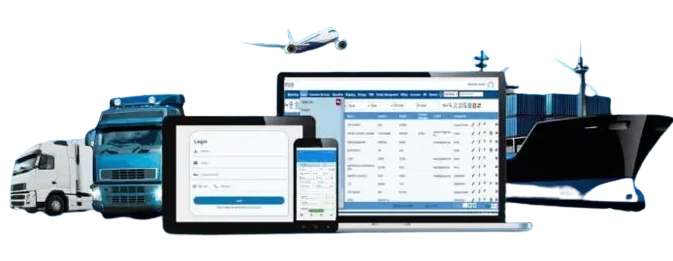
 Transport Management System
 Moving/Removal Software
 Service Portal
 Move Survey Quote Pro
 Digital Logistics Inventory App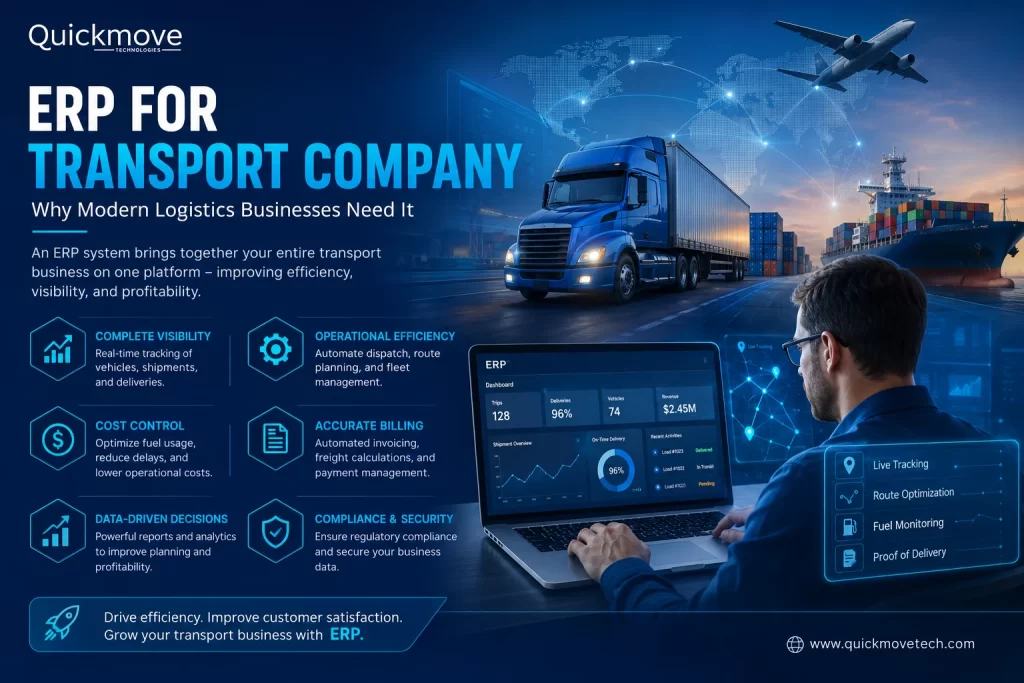
The transport and logistics industry has changed more in the last few years than it did in the previous decade. Customers expect faster deliveries. Fuel prices keep fluctuating. Drivers need better coordination. Clients want real-time updates. And transport businesses are expected to manage everything smoothly while keeping costs under control.
Many transport companies still rely on spreadsheets, manual records, phone calls, WhatsApp updates, and disconnected software tools. This may work for a small operation in the beginning, but as the business grows, managing everything manually becomes difficult.
That’s where ERP for transport company operations becomes important.
An ERP system helps transport businesses manage their entire workflow from one place. Instead of using separate systems for dispatch, billing, accounting, fleet tracking, HR, and customer management, an ERP brings all operations together into a single platform.
For transport companies, this is not just about convenience. It is about improving efficiency, reducing operational delays, minimizing errors, increasing profitability, and building better customer trust.
At QuickMove Technologies, transport and logistics software solutions are designed specifically for the real challenges faced by logistics companies, fleet operators, freight businesses, and transport service providers.
What Is ERP for a Transport Company?
ERP stands for Enterprise Resource Planning.
In simple words, ERP software helps a business manage all departments and operations from one centralized system.
For a transport company, ERP software can connect:
- Fleet management
- Trip planning
- Dispatch operations
- Freight management
- Driver management
- Fuel tracking
- Accounting and billing
- Warehouse operations
- Customer management
- GPS tracking
- Maintenance scheduling
- Reporting and analytics
Instead of different departments working separately, everyone works using the same data and system.
For example:
- The dispatch team can assign trips
- Finance can instantly generate invoices
- Customers can receive shipment updates
- Managers can monitor vehicle usage
- Maintenance teams can track servicing schedules
—all from one ERP platform.
This reduces communication gaps and helps businesses operate faster and more accurately.
Why Transport Companies Struggle Without ERP
Many transport companies begin operations using manual systems because they are affordable and easy to start with.
But over time, these systems create operational problems.
1. Data Is Scattered Everywhere
Some information is stored in Excel files. Some is in accounting software. Dispatch details are shared through calls or chats. Vehicle data is maintained separately.
As operations grow, this becomes difficult to manage.
Employees waste time searching for information instead of completing tasks.
2. Delays Become Common
Without centralized coordination:
- Drivers may receive incorrect instructions
- Dispatch schedules may overlap
- Invoices may get delayed
- Deliveries may miss timelines
Even small communication issues can affect customer satisfaction.
3. Lack of Real-Time Visibility
Transport companies often struggle to answer questions like:
- Where is the vehicle right now?
- Which trips are delayed?
- Which routes are profitable?
- How much fuel is being consumed?
- Which driver performance needs improvement?
Without real-time tracking and reporting, decision-making becomes reactive instead of proactive.
4. Manual Errors Increase
Manual billing, freight calculations, documentation, and trip updates often lead to mistakes.
Even small errors can result in:
- Revenue loss
- Compliance issues
- Customer disputes
- Delayed payments
ERP software helps automate many of these processes.
5. Scaling Operations Becomes Difficult
A transport business handling 20 deliveries daily can still manage manually. But what happens when operations expand to hundreds of shipments every day?
Manual systems cannot scale efficiently.
ERP software creates structured workflows that support long-term growth.
How ERP Software Helps Transport Companies
Transport ERP software is designed to simplify complex logistics operations.
Instead of managing separate activities manually, the ERP connects everything into a smooth workflow.
Let’s understand how.
Centralized Fleet Management
Fleet management is one of the most important parts of any transport company.
ERP software helps monitor:
- Vehicle availability
- Vehicle location
- Route assignments
- Fuel usage
- Maintenance schedules
- Driver assignments
- Trip history
Managers can quickly identify underutilized vehicles, delayed shipments, or maintenance requirements.
This improves overall fleet efficiency.
For example, if a vehicle requires servicing after a certain mileage, the ERP system for transporation company can automatically generate reminders before breakdowns happen.
This reduces downtime and improves operational reliability.
Real-Time Shipment Tracking
Customers today expect visibility.
They want to know:
- When goods are dispatched
- Current shipment location
- Expected delivery time
- Delivery confirmation
ERP systems integrated with GPS tracking provide real-time updates.
This improves transparency and reduces the need for constant follow-up calls.
For transport companies, this also helps customer service teams handle issues faster.
Instead of manually checking with drivers, staff can access shipment data directly from the ERP dashboard.
Automated Dispatch and Route Planning
Manual dispatch management often causes confusion.
ERP software helps automate:
- Vehicle assignment
- Driver allocation
- Route optimization
- Delivery scheduling
This reduces planning errors and improves operational speed.
Better route planning also helps reduce fuel consumption and delivery delays.
For businesses handling multiple deliveries daily, optimized routing can significantly reduce transportation costs.
Billing and Invoice Automation
Billing delays are common in logistics operations.
Manual invoicing takes time and increases the risk of errors.
ERP software automates:
- Freight billing
- GST calculations
- Invoice generation
- Payment tracking
- Outstanding reports
This helps businesses improve cash flow and reduce financial confusion.
Finance teams no longer need to collect data manually from different departments.
Everything is connected within the ERP system.
Fuel Management and Cost Control
Fuel is one of the largest expenses in transportation.
Without proper monitoring, fuel misuse and wastage can impact profitability.
ERP systems help businesses track:
- Fuel consumption per vehicle
- Route-wise fuel usage
- Driver fuel efficiency
- Fuel purchase records
Managers can identify unusual patterns and control unnecessary expenses.
Over time, even small fuel savings create major financial benefits.
Driver Management
Managing drivers manually becomes difficult as fleets grow.
ERP software helps maintain:
- Driver profiles
- License validity
- Attendance records
- Trip assignments
- Performance tracking
- Payroll integration
Businesses can monitor driver productivity and improve workforce management.
Automated alerts for license renewals or compliance documentation also reduce administrative burden.
Maintenance Management
Vehicle breakdowns can disrupt entire logistics operations.
ERP software supports preventive maintenance by tracking:
- Service schedules
- Repair history
- Spare parts usage
- Vehicle health records
Instead of waiting for vehicles to fail, businesses can plan maintenance proactively.
This increases fleet lifespan and reduces emergency repair costs.
Warehouse and Inventory Integration
Many transport companies also manage warehousing and inventory operations.
ERP systems integrate warehouse activities with transport operations, helping businesses manage:
- Inventory movement
- Stock visibility
- Order processing
- Goods dispatch
- Delivery coordination
This improves overall supply chain efficiency.
When transport and warehouse teams work using the same system, delays and miscommunication reduce significantly.
Financial Management and Accounting
Transport businesses handle large volumes of operational expenses.
ERP systems simplify accounting by integrating:
- Accounts payable
- Accounts receivable
- Tax management
- Payroll
- Expense tracking
- Profitability reports
Managers can access financial reports instantly instead of waiting for manual compilation.
This helps businesses make faster and smarter financial decisions.
Better Customer Relationship Management
Customer expectations in logistics are growing rapidly.
Clients want:
- Faster updates
- Accurate delivery timelines
- Transparent communication
- Reliable service
ERP systems improve customer experience by providing:
- Real-time shipment updates
- Faster issue resolution
- Accurate documentation
- Automated notifications
Satisfied customers are more likely to continue long-term business relationships.
This directly impacts company growth.
Benefits of ERP for Transport Companies
Now let’s look at the larger business benefits of implementing ERP transport software.
Improved Operational Efficiency
ERP software eliminates repetitive manual work.
Tasks that once took hours can now be completed automatically.
Teams spend less time on paperwork and more time improving operations.
This increases productivity across departments.
Better Decision-Making
ERP systems provide real-time reports and analytics.
Managers can quickly understand:
- Revenue trends
- Operational bottlenecks
- Delivery performance
- Fleet utilization
- Customer behavior
Instead of relying on assumptions, businesses can make data-driven decisions.
Reduced Operational Costs
ERP software helps reduce unnecessary expenses through:
- Better route planning
- Fuel monitoring
- Reduced paperwork
- Lower manual errors
- Preventive maintenance
Over time, these improvements significantly increase profit margins.
Increased Transparency
Every department works using the same system and data.
This creates transparency across operations.
Managers can track activities without depending on multiple reports or manual updates.
Customers also benefit from improved visibility.
Faster Business Growth
ERP systems support scalability.
As operations grow, businesses can manage larger shipment volumes without operational chaos.
Instead of hiring more people to manage manual work, automation helps businesses grow efficiently.
Improved Compliance Management
Transport and logistics businesses deal with multiple compliance requirements.
ERP systems help manage:
- Tax documentation
- Vehicle permits
- Driver compliance
- Invoice records
- Audit reports
Automated record management reduces compliance risks.
Better Coordination Between Teams
Transport operations involve multiple departments working together.
ERP systems improve coordination between:
- Dispatch teams
- Drivers
- Finance departments
- Warehouse staff
- Customer support teams
Everyone has access to the same information, reducing confusion and delays.
Why Cloud-Based ERP Is Becoming Popular
Earlier ERP systems were expensive and difficult to maintain.
Today, cloud-based ERP solutions are changing the industry.
Cloud ERP allows businesses to access operations from anywhere using internet connectivity.
Benefits include:
- Lower infrastructure costs
- Easy remote access
- Real-time updates
- Better scalability
- Automatic software updates
- Faster implementation
For transport businesses managing multiple locations, cloud ERP provides major operational flexibility.
Signs Your Transport Company Needs ERP Software
Many transport companies delay ERP adoption because they believe their current system is still manageable.
But certain warning signs clearly indicate the need for ERP software for transportation companies.
Frequent Delivery Delays
If deliveries regularly miss schedules due to poor coordination, manual systems may be the problem.
Lack of Operational Visibility
If managers struggle to get accurate data quickly, ERP can improve visibility.
Rising Operational Costs
When fuel expenses, maintenance costs, and manual inefficiencies keep increasing, automation becomes necessary.
Too Much Manual Work
If employees spend more time updating spreadsheets than managing operations, ERP can simplify workflows.
Customer Complaints Are Increasing
Poor communication and delayed updates often lead to customer dissatisfaction.
ERP systems improve customer transparency and service quality.
Business Growth Feels Difficult
If scaling operations creates operational confusion instead of growth opportunities, centralized systems are needed.
How ERP Improves Profitability in Transport Businesses
Many business owners initially see ERP as an expense.
But in reality, ERP is an investment that improves profitability over time.
Here’s how.
Reduced Fuel Wastage
Optimized routes and fuel monitoring help reduce unnecessary fuel consumption.
Even small efficiency improvements across large fleets create significant savings.
Lower Maintenance Costs
Preventive maintenance reduces major repair expenses and vehicle downtime.
Faster Billing Cycles
Automated invoicing improves payment collection speed and cash flow.
Higher Vehicle Utilization
ERP systems help businesses use fleets more efficiently instead of leaving vehicles idle.
Reduced Administrative Costs
Automation reduces dependency on manual paperwork and repetitive operational tasks.
Better Customer Retention
Improved service quality increases repeat business and long-term customer relationships.
The Role of ERP in Digital Transformation
Digital transformation is no longer optional in logistics.
Transport companies that continue depending entirely on manual processes often struggle to compete with technology-driven businesses.
ERP software becomes the foundation for digital logistics operations.
It connects different technologies such as:
- GPS tracking
- Mobile applications
- Automated billing
- Analytics dashboards
- Warehouse systems
- Customer portals
This creates a smarter, faster, and more connected logistics environment.
Businesses that adopt digital systems early usually gain long-term operational advantages.
Why Industry-Specific ERP Matters
Generic ERP systems may not fully support logistics operations.
Transport companies need software built specifically for transportation workflows.
Industry-specific ERP solutions understand operational challenges like:
- Trip management
- Freight billing
- Fleet maintenance
- Route optimization
- Driver scheduling
- Delivery tracking
This is why choosing a transport-focused ERP provider becomes important.
How QuickMove Technologies Helps Transport Companies
QuickMove Technologies provides logistics and transport software solutions designed for real-world transportation challenges.
The platform helps transport businesses manage operations more efficiently through intelligent automation and centralized control.
Solutions are designed to support:
- Fleet management
- Transport management
- Freight operations
- Warehouse coordination
- Billing automation
- Driver management
- Real-time tracking
- Reporting and analytics
Instead of using disconnected systems, businesses can manage operations from one integrated platform.
Key Features Offered by QuickMove Technologies ERP Solutions
Smart Fleet Monitoring
Businesses can monitor vehicles, trips, and operational performance from a centralized dashboard.
Real-Time Tracking
Live shipment visibility helps improve transparency and customer communication.
Automated Billing
Invoice generation and financial tracking become faster and more accurate.
Route Optimization
Improved route planning helps reduce fuel costs and delivery delays.
Driver and Workforce Management
Transport businesses can efficiently manage drivers, schedules, attendance, and compliance records.
Maintenance Scheduling
Preventive maintenance tools help reduce downtime and improve vehicle reliability.
Analytics and Reporting
Detailed reports help management teams make better operational decisions.
Choosing the Right ERP for Your Transport Company
Not every ERP system fits every business.
Before selecting ERP software, transport companies should evaluate:
Scalability
Can the software support future business growth?
Ease of Use
Complicated systems reduce employee adoption.
User-friendly software improves implementation success.
Industry Experience
Does the provider understand logistics and transportation operations?
Customization
Can the software adapt to your business workflows?
Integration Capabilities
Can the ERP integrate with GPS, accounting tools, warehouse systems, and other platforms?
Customer Support
Reliable technical support is important for smooth operations.
ERP Implementation Challenges and How to Overcome Them
ERP implementation requires planning.
Some businesses face challenges during the transition phase.
Employee Resistance
Teams used to manual processes may initially resist change.
Proper training helps improve adoption.
Data Migration Issues
Moving old operational data into new systems requires careful planning.
Lack of Process Standardization
Businesses with inconsistent workflows may struggle initially.
ERP implementation often helps standardize operations.
Choosing the Wrong Vendor
Selecting software without logistics expertise can create long-term operational issues.
Working with experienced providers reduces implementation risks.
Future of ERP in Transportation and Logistics
The future of transport ERP software is becoming smarter and more connected.
Emerging technologies are shaping the next generation of logistics systems.
These include:
- Artificial intelligence
- Predictive analytics
- IoT-enabled fleet monitoring
- Advanced automation
- Mobile-first logistics management
- Real-time supply chain intelligence
Transport businesses adopting modern ERP systems today will be better prepared for future industry demands.
Why Small and Mid-Sized Transport Companies Also Need ERP
Some small transport businesses assume ERP is only for large enterprises.
That is no longer true.
Today’s cloud-based ERP solutions are affordable and scalable.
Even smaller businesses benefit from:
- Better operational organization
- Reduced manual errors
- Improved customer service
- Faster invoicing
- Better fleet tracking
Starting early with digital systems also makes future expansion easier.
Real Business Impact of ERP in Transport Operations
When ERP systems are implemented properly, businesses often experience:
- Faster operational workflows
- Better delivery performance
- Improved customer satisfaction
- Reduced operational confusion
- Stronger financial control
- Higher team productivity
- Improved profitability
The impact is not limited to software alone.
ERP changes how transport businesses operate daily.
It creates structure, visibility, and operational discipline across the organization.
Final Thoughts
The transportation industry is becoming more competitive every year. Customers expect faster service, real-time visibility, accurate communication, and reliable delivery performance.
Managing modern logistics operations manually is becoming increasingly difficult.
ERP software helps transport companies simplify operations, reduce costs, improve efficiency, and support long-term business growth.
From fleet tracking and dispatch planning to billing automation and analytics, ERP systems provide centralized control over the entire logistics workflow.
Businesses that invest in the right ERP solution today position themselves for stronger operational performance tomorrow.
QuickMove Technologies helps transport and logistics companies modernize operations through smart, scalable, and industry-focused software solutions designed specifically for logistics businesses.
As transport operations continue evolving, companies using connected digital systems will be better equipped to handle growth, improve customer experience, and stay competitive in the logistics market.