Email Us
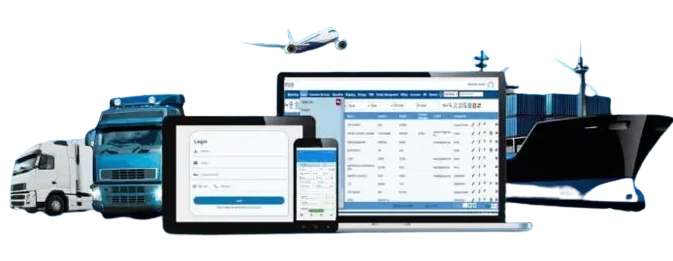
 Freight Forwarding Software
 Warehouse Management System
 Transport Management System
 Moving/Removal Software
 Customer Service Portal
 Move Survey Quote Pro
 Digital Logistics Inventory App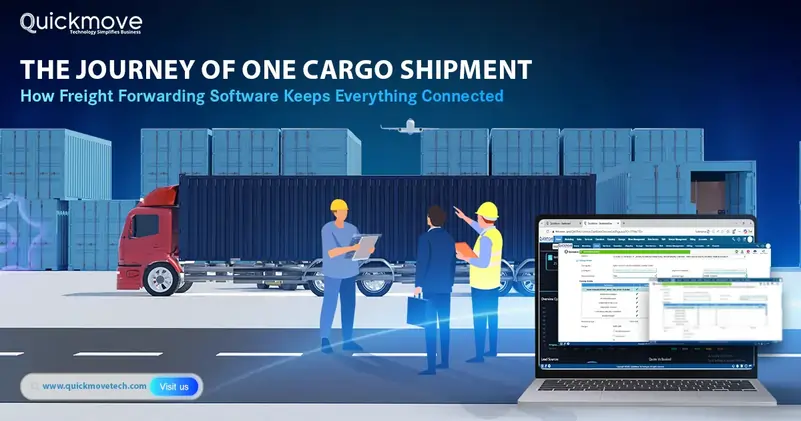
Every shipment of cargo has a trip. It starts when a client asks for an estimate and concludes when the products are delivered securely to their intended location. Numerous tasks, including quotes, reservations, paperwork, customs clearance, warehouse management, shipping, billing, and client correspondence, take place between these two places.
Managing this operation by hand is no longer feasible for contemporary freight forwarders. Delays, mistakes, and little visibility are frequently caused by spreadsheets, emails, paper documents, and disjointed systems.
For this reason, companies are spending money on freight forwarding software that uses a single platform to link all departments. Freight forwarders may automate processes, enhance teamwork, decrease manual labor, and provide consumers full shipment visibility with a contemporary freight software solution.
In this blog, we’ll track a single cargo shipment’s path and see how an integrated shipping software solution maintains connectivity from point of origin to point of destination.
Step 1: Customer Inquiry and Quotation
Every cargo shipment starts with a customer inquiry. A client requests a quotation for transporting goods internationally or domestically.
Without a centralized freight forwarding software, operations teams often spend valuable time searching through emails, carrier rate sheets, and spreadsheets to prepare quotations.
Modern freight software simplifies this process by allowing freight forwarders to:
- Generate professional quotations within minutes
- Compare multiple carrier rates
- Apply contract pricing automatically
- Calculate freight costs accurately
- Convert quotations into confirmed shipment bookings
By responding faster, freight forwarders improve customer satisfaction and increase their chances of winning new business.
Step 2: Booking the Cargo Shipment
Once the customer accepts the quotation, the booking process begins.
This stage involves:
- Customer confirmation
- Carrier booking
- Container allocation
- Route planning
- Shipment scheduling
- Transport instructions
With an integrated freight forwarding software solution, booking information automatically creates a centralized shipment record. Teams no longer need to enter the same information multiple times.
Sales, operations, finance, and customer service all work from the same system, improving collaboration and reducing costly mistakes.
Step 3: Documentation Without the Headache
Documentation is one of the most critical stages of every cargo shipment.
A shipment may require:
- Bill of Lading (BL)
- Air Waybill (AWB)
- Commercial Invoice
- Packing List
- Shipping Instructions
- Delivery Orders
- Customs Documentation
Preparing these documents manually consumes valuable time and increases the risk of errors.
Modern shipping software automatically generates documents using existing shipment information. This helps freight forwarders reduce paperwork, improve compliance, and ensure every cargo shipment moves without unnecessary delays.
Step 4: Customs Clearance Made Simple
International shipping requires accurate customs documentation and regulatory compliance.
Any missing information can delay a cargo shipment, increase storage charges, or result in penalties.
An advanced freight forwarding software platform keeps shipment records organized, making customs documentation easier to prepare and retrieve.
Instead of searching through multiple files and emails, operations teams can access everything they need from one centralized dashboard.
Step 5: Real-Time Cargo Shipment Tracking
Customers expect complete visibility throughout the shipping process.
Questions like:
- Where is my cargo shipment?
- Has the vessel departed?
- Is customs clearance complete?
- When will delivery take place?
can consume significant time if updates are handled manually.
Modern freight software includes powerful shipment tracking software that provides real-time visibility across every shipment milestone.
Customers receive timely updates while freight forwarders spend less time answering routine status inquiries, resulting in better customer service and stronger business relationships.
Step 6: Managing Air, Sea, Road, and Rail Shipments
Today’s logistics operations often involve multiple transportation modes.
A single cargo shipment may travel by:
- Road
- Sea Freight
- Air Freight
- Rail
Managing multimodal transportation manually can quickly become complicated.
A connected freight forwarding software platform links every transport stage together, allowing freight forwarders to manage multimodal logistics from one dashboard while maintaining complete shipment visibility.
Step 7: Warehouse Coordination
Many cargo shipments move through warehouses before final delivery.
Warehouse teams manage:
- Inventory
- Container unloading
- Storage
- Consolidation
- Dispatch planning
When warehouse operations are integrated with freight management software, every inventory movement is updated automatically.
This improves stock accuracy, reduces handling errors, and ensures smoother cargo movement throughout the supply chain.
Step 8: Billing and Financial Management
Once the cargo shipment reaches its destination, financial operations begin.
These include:
- Customer invoicing
- Vendor payments
- Freight charges
- Cost allocation
- Profitability analysis
Integrated freight management software connects finance with operations, automatically generating invoices, tracking expenses, and calculating shipment profitability.
Instead of managing multiple spreadsheets, finance teams gain complete visibility into every shipment’s revenue and costs.
Step 9: Customer Service Beyond Delivery
Delivery isn’t the end of the customer journey.
Customers often require:
- Shipment history
- Previous invoices
- Delivery confirmations
- Shipping documents
- Customer support
Modern shipping software includes customer portals where clients can securely access shipment information at any time.
This improves transparency while reducing the workload on customer support teams.
Why Every Freight Forwarder Needs Connected Freight Software
As customer expectations continue to increase, freight forwarders need more than spreadsheets and disconnected systems.
A modern freight forwarding software solution connects every department from sales and operations to documentation, finance, warehousing, and customer service.
The result is a fully connected logistics operation with:
- Faster shipment processing
- Automated workflows
- Reduced manual data entry
- Better communication
- Real-time shipment visibility
- Improved customer satisfaction
- Accurate documentation
- Simplified accounting
- Better decision-making
- Increased profitability
For growing logistics businesses, connected freight software isn’t just a convenience—it’s a competitive advantage.
How QuickMove Freight Forwarding Software Keeps Everything Connected
QuickMove’s Freight Forwarding Software is a complete shipping software and freight management software solution designed for modern freight forwarders.
The platform connects every stage of the shipment lifecycle, including:
- Customer Quotations
- Booking Management
- Air, Sea, and Road Freight Operations
- Import & Export Management
- Automated Documentation
- Customs Support
- Warehouse Management
- Warehouse Management
- Customer Portal
- Freight Accounting
- CRM & ERP Integration
- Workflow Automation
By bringing every function together on one intelligent platform, QuickMove helps logistics companies reduce manual work, improve operational efficiency, and deliver every cargo shipment with greater speed, accuracy, and visibility.
Whether your business handles FCL, LCL, consolidation, groupage, or multimodal logistics, QuickMove provides the technology needed to streamline operations and support long-term growth.
Final Thoughts
Every successful cargo shipment depends on seamless coordination between people, processes, and technology.
As shipment volumes grow and customer expectations continue to evolve, manual processes simply cannot keep up.
Modern freight forwarding software keeps every stage of the shipment journey connected—from quotation and booking to documentation, customs, tracking, billing, and final delivery.
For freight forwarders, investing in reliable freight software and shipping software means fewer errors, faster operations, greater visibility, and happier customers.