Email Us
 Freight Forwarding Software
 Warehouse Management System
 Transport Management System
 Moving/Removal Software
 Customer Service Portal
 Move Survey Quote Pro
 Digital Logistics Inventory App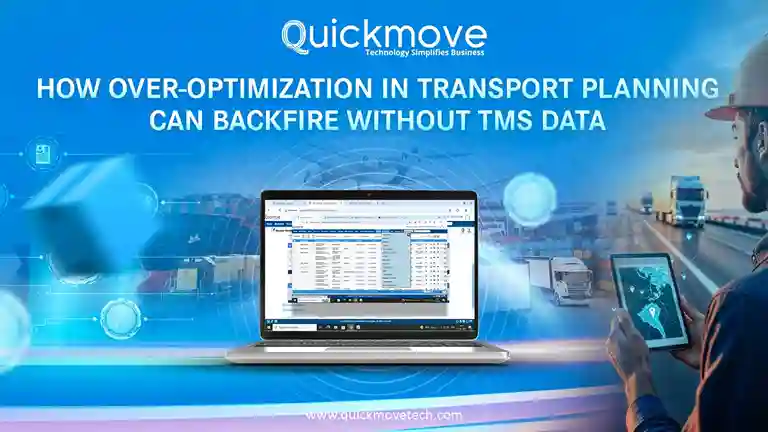
In the world of transportation and logistics, optimization has become a buzzword. Everyone wants shorter routes, lower fuel costs, faster delivery times, and perfectly balanced loads. On paper, the more you optimize, the better your performance should be. But in reality, over-optimization — especially when done without the right data — can create more problems than it solves.
Many transport managers spend hours adjusting routes, squeezing extra stops into a trip, and calculating the fastest possible paths using spreadsheets or basic tools. It may seem smart in the moment. But without accurate, real-time data from a Transport Management System (TMS), this level of fine-tuning can quietly damage efficiency, increase risk, and even hurt customer relationships.
Let’s take a closer look at how over-optimization can backfire and why reliable TMS data makes all the difference.
What Is Over-Optimization in Transport Planning?
Over-optimization happens when transportation plans are pushed too far in the search for maximum efficiency. This could mean:
- Creating extremely tight delivery schedules with no buffer time
- Designing routes that look fastest in theory but ignore real-world conditions
- Loading vehicles to the absolute limit with no flexibility
- Expecting drivers to meet unrealistic timelines
While all this might look great on a report, it often ignores key factors like traffic congestion, weather changes, loading delays, driver behavior, vehicle breakdowns, or sudden customer requests. Without real data feeding into your planning, you are optimizing based on assumptions, not reality.
This is where many companies struggle — and where QuickMove Technologies’ transport management system plays a critical role. With access to accurate operational data, you can optimize in a way that is both smart and realistic.
The Hidden Risks of Guess-Based Planning
When planning is based mainly on experience or historical averages, over-optimization becomes risky. A route that once took four hours might now take six due to road work or new traffic patterns. A customer who usually accepts flexible delivery times may suddenly need a fixed window. If your plan is too tightly designed, even a small disruption can break the entire chain.
Common consequences include:
- Missed deliveries
- Driver stress and burnout
- Higher fuel consumption due to re-routing
- Late penalties and unhappy customers
- Increased administrative work to fix errors
These issues don’t always show up immediately. They build over time, creating long-term inefficiencies. Using a system like QuickMove Technologies’ transport management system allows businesses to plan to use live and historical data, reducing dependence on guesswork.
Why Real Data Maters More Than Perfect Plans
An ideal plan looks flawless on a screen, but transport operations happen on the road — not in a spreadsheet. Data from a TMS gives your insight into what actually happens during each trip, such as:
- Actual transit times vs planned times
- Delay patterns on specific routes
- Vehicle usage and idle time
- Delivery success rates
This information helps create strong, adaptable plans, not overly tight or unrealistic ones. Over time, your planning becomes naturally more accurate, as it is based on fact rather than hope.
QuickMove Technologies’ transport management system helps collect and organize this essential data in one place, helping transport managers make better decisions without overcomplicating the process.
Over-Optimized Routes Can Increase Costs
It sounds strange, but trying too hard to cut costs can end up increasing them. When a route is over-optimized, drivers might be forced to take smaller roads to save a few kilometers, leading to:
- More wear and tear on vehicles
- Slower driving speeds
- Increased fuel usage due to frequent braking and acceleration
- Higher chances of delays
What looked like a money-saving plan becomes more expensive in reality. A balanced route, chosen with the support of past data and practical insights, is often cheaper in the long run.
With QuickMove Technologies’ transportation management system, planners can build routes that are not just short, but also efficient, practical, and cost-effective.
No Buffer = No Flexibility
Over-optimization removes breathing room. With no buffer time built in, even a ten-minute delay can affect multiple deliveries. Traffic lights, loading delays, customer unavailability, or vehicle checks are normal parts of daily operations. A good plan includes time to handle these without panic.
TMS data helps planners understand realistic time frames based on real conditions. Instead of building “perfect” schedules, they build reliable ones. This small change in approach can significantly improve on-time delivery performance.
QuickMove Technologies’ transport management system supports this smarter planning approach by providing visibility into past performance and current transport activity.
Impact on Drivers and Staff
Another major effect of over-optimization is on your drivers and operations team. Constant pressure to meet near-impossible targets can reduce morale and increase turnover. Drivers know when a plan is unrealistic. Over time, this leads to dissatisfaction, mistakes, and safety risks.
When planning is backed by real data, routes become fairer and more achievable. Drivers feel more in control, and managers spend less time dealing with complaints and emergencies.
This is an often-overlooked benefit of using a dependable platform like QuickMove Technologies’ transport management system — it creates clarity not just for managers, but also for the people on the road.
Customers Feel the Difference
Customers may not see your internal planning system, but they feel its results. Late deliveries, lack of communication, and inconsistent service often stem from poor planning decisions made at the beginning of the process.
By using data-driven planning through QuickMove Technologies’ transport management system, companies can maintain consistent delivery promises and keep customers informed. This builds trust, strengthens relationships, and improves long-term business value.
The Right Amount of Optimization
Optimization itself is not the enemy. In fact, it is essential for growth in today’s competitive transport industry. The real problem is over-optimization without the right data. When companies try to force perfection without full visibility, they end up creating fragile systems that break under pressure.
The goal should not be “perfect on paper.” It should be reliable on the road.
This is exactly why businesses are choosing QuickMove Technologies’ TMS— because it offers a smarter, data-backed way to plan, execute, and improve transport operations without unnecessary risk.
Final Thoughts
Over-optimization is a silent problem. It often looks like efficiency but behaves like chaos in real operations. Without the foundation of real data, advanced transport planning becomes a dangerous guessing game.
By using QuickMove Technologies’ transport management system, transport businesses can move from unrealistic perfection to practical efficiency. With clear visibility, structured data, and real-world insight, planning becomes balanced, flexible, and actually achievable.
In the end, the best transport plans are not the tightest — they are the smartest.