Email Us
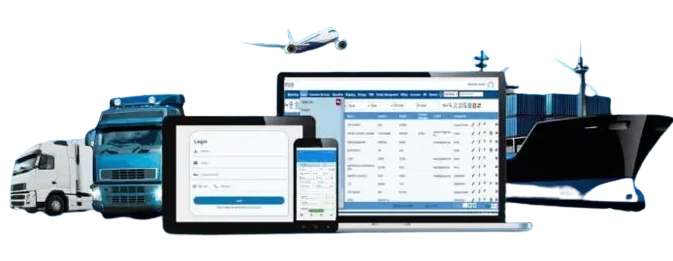
 Freight Forwarding Software
 Warehouse Management System
 Transport Management System
 Moving/Removal Software
 Customer Service Portal
 Move Survey Quote Pro
 Digital Logistics Inventory App
The logistics industry is changing faster than ever. What once relied heavily on manual coordination, phone calls, spreadsheets, and fragmented systems is now moving toward intelligent, connected, and data-driven operations.
At the center of this transformation is a powerful tool that many logistics companies are still underutilizing — a next-generation Logistics CRM.
If you are running or scaling a logistics business, this is not just another software category. It’s the backbone that connects your sales, operations, customer communication, and growth strategy into one streamlined system.
In this blog, we’ll break down exactly how a modern logistics CRM empowers businesses, solves real-world challenges, and helps companies scale efficiently — without the chaos.
What is a Logistics CRM?
A Logistics CRM (Customer Relationship Management system) is a specialized software designed for logistics, transportation, freight, and supply chain companies. Unlike generic CRMs, it understands the unique workflows of logistics businesses.
It doesn’t just store customer data. It helps you:
- Manage leads and sales pipelines
- Track shipments and customer interactions
- Automate communication
- Improve customer experience
- Align sales and operations teams
- Analyze performance and growth opportunities
Think of it as the command center of your logistics business.
Why Traditional Systems Are No Longer Enough
Many logistics businesses still rely on:
- Excel sheets
- Emails and WhatsApp for communication
- Disconnected tools for operations and sales
- Manual follow-ups
While these may work in the early stages, they create serious problems as the business grows.
Common Challenges Without a Logistics CRM
- Lost or missed leads
- Poor follow-ups
- Lack of visibility into sales pipeline
- Miscommunication between teams
- Delayed responses to customers
- No data for decision-making
- Difficulty in scaling operations
The result? Slower growth, frustrated customers, and lost revenue.
This is where next-generation logistics CRM systems step in.
What Makes a “Next-Generation” Logistics CRM Different?
Not all CRMs are built the same. A next-generation logistics CRM goes beyond basic contact management.
It is:
1. Industry-Specific
Built specifically for logistics workflows — including freight forwarding, transportation, warehousing, and moving services.
2. Fully Integrated
Connects with TMS, WMS, freight systems, and accounting tools.
3. Automation-Driven
Reduces manual work through smart workflows and triggers.
4. Data-Centric
Provides real-time insights and analytics for better decision-making.
5. Customer-Focused
Improves communication, transparency, and customer experience.
Solutions like QuickMove’s logistics CRM are designed with these principles, helping logistics businesses operate smarter, not harder.
Key Features of a Next-Generation Logistics CRM
Let’s break down the core features that truly make a difference.
1. Lead and Inquiry Management
Every logistics business depends on leads — whether it’s from website inquiries, referrals, or outbound sales.
A modern CRM helps you:
- Capture leads automatically from multiple channels
- Assign leads to the right sales team
- Track every interaction
- Set reminders for follow-ups
No more lost leads. No more missed opportunities.
2. Smart Sales Pipeline
Instead of guessing where your deals stand, a logistics CRM gives you a clear pipeline view.
You can:
- Track deals from inquiry to closure
- Identify bottlenecks
- Forecast revenue
- Prioritize high-value opportunities
This clarity is critical for scaling your sales operations.
3. Automated Follow-Ups
In logistics, timing matters. A delayed response can cost you a deal.
With automation, you can:
- Send instant responses to inquiries
- Schedule follow-up emails or calls
- Trigger reminders for sales teams
- Maintain consistent communication
QuickMove’s logistics CRM ensures that no lead goes cold due to lack of follow-up.
4. Centralized Customer Data
All customer information is stored in one place:
- Contact details
- Shipment history
- Communication records
- Pricing and contracts
This gives your team a 360-degree view of every customer.
No more searching through emails or spreadsheets.
5. Real-Time Communication Tracking
Every interaction matters.
A modern CRM tracks:
- Emails
- Calls
- Messages
- Meeting notes
This helps teams stay aligned and ensures customers never have to repeat themselves.
6. Integration with Logistics Systems
A next-gen CRM doesn’t work in isolation.
It integrates with:
- Transport Management Systems (TMS)
- Warehouse Management Systems (WMS)
- Freight forwarding software
- Moving company software
This creates a seamless flow of information across your business.
7. Task and Workflow Automation
Manual work slows down growth.
Automation helps you:
- Assign tasks automatically
- Trigger workflows based on actions
- Reduce repetitive work
- Improve team productivity
This is one of the biggest reasons companies adopt QuickMove’s logistics CRM.
8. Reporting and Analytics
Data is the new fuel for growth.
A logistics CRM provides insights like:
- Lead conversion rates
- Sales performance
- Customer acquisition cost
- Revenue trends
With this data, you can make smarter business decisions.
How a Logistics CRM Empowers Your Business
Now let’s move beyond features and focus on real impact.
1. Improves Lead Conversion
When leads are tracked properly and followed up on time, conversion rates increase.
A CRM ensures:
- Faster response times
- Consistent follow-ups
- Better communication
Result: More deals closed.
2. Enhances Customer Experience
Customers today expect:
- Quick responses
- Transparency
- Personalized communication
A logistics CRM helps deliver all of this.
When your team has complete customer data and communication history, they can provide better service.
Happy customers = repeat business + referrals.
3. Aligns Sales and Operations
One of the biggest challenges in logistics is the gap between sales and operations.
A CRM bridges this gap by:
- Sharing real-time data
- Keeping everyone on the same page
- Reducing miscommunication
This leads to smoother execution and better customer satisfaction.
4. Reduces Operational Chaos
Without a CRM, businesses rely on scattered tools and manual processes.
A centralized system:
- Eliminates confusion
- Standardizes workflows
- Improves efficiency
This is especially important as your business grows.
5. Enables Data-Driven Decisions
Instead of guessing, you can rely on data.
You can answer questions like:
- Which channels generate the most leads?
- Which sales reps perform best?
- Where are deals getting stuck?
This helps you optimize your strategy.
6. Scales Your Business Without Increasing Complexity
Growth often brings complexity.
A logistics CRM ensures that your processes remain structured and manageable.
You can:
- Handle more leads
- Manage more customers
- Expand operations
— without losing control.
How QuickMove’s Logistics CRM Helps You Scale
When it comes to logistics-specific CRM solutions, QuickMove stands out because it is designed specifically for the industry.
Here’s how it supports scaling:
1. Built for Logistics Workflows
QuickMove understands:
- Packers and movers operations
- Freight forwarding processes
- Transportation challenges
This means you don’t need heavy customization.
2. End-to-End Visibility
From lead generation to final delivery, everything is connected.
You get complete visibility into:
- Sales pipeline
- Customer interactions
- Operational status
3. Automation That Saves Time
QuickMove’s logistics CRM reduces manual effort through:
- Automated lead capture
- Smart follow-ups
- Task automation
This allows your team to focus on growth, not admin work.
4. Improved Team Collaboration
With centralized data and communication tracking, teams work better together.
No more silos.
5. Scalable Architecture
Whether you’re a small logistics company or a growing enterprise, the system adapts to your needs.
Real-Life Use Case: Scaling a Logistics Company with CRM
Let’s consider a typical scenario.
Before CRM
- Leads coming from multiple sources
- Sales team missing follow-ups
- No visibility into deal status
- Customers complaining about slow responses
- Revenue growth stagnating
After Implementing a Logistics CRM
- All leads captured automatically
- Follow-ups automated
- Sales pipeline clearly visible
- Faster response times
- Better customer satisfaction
- Increased conversions
Result: Sustainable and scalable growth.
Key Industries That Benefit from Logistics CRM
A next-generation logistics CRM is useful across various sectors:
1. Freight Forwarding Companies
Manage complex shipments and customer communication.
2. Packers and Movers
Handle inquiries, quotes, and customer coordination efficiently.
3. Transportation Companies
Track clients, contracts, and service performance.
4. Warehousing Providers
Manage B2B relationships and service agreements.
5. Third-Party Logistics (3PL) Providers
Coordinate multiple clients and services seamlessly.
Common Mistakes to Avoid When Choosing a CRM
Not all CRM implementations succeed.
Here are some common mistakes:
1. Choosing a Generic CRM
It may not fit logistics workflows.
2. Lack of Training
Teams must know how to use the system effectively.
3. Overcomplicating Processes
Keep workflows simple and practical.
4. Ignoring Integration
Ensure it connects with your existing systems.
How to Successfully Implement a Logistics CRM
Step 1: Define Your Goals
What do you want to achieve? (Better sales, improved communication, etc.)
Step 2: Choose the Right CRM
Select a logistics-specific solution like QuickMove.
Step 3: Train Your Team
Ensure everyone understands how to use it.
Step 4: Start Small
Implement in phases.
Step 5: Monitor and Improve
Continuously optimize processes.
The Future of Logistics CRM
The next wave of innovation is already here.
1. AI-Powered Insights
Predict customer behavior and sales trends.
2. Advanced Automation
Reduce manual work even further.
3. Real-Time Data Integration
Connect every part of the supply chain.
4. Enhanced Customer Experience
Personalized and proactive communication.
Logistics businesses that adopt these technologies early will have a strong competitive advantage.
Final Thoughts
Scaling a logistics business is not just about getting more customers. It’s about managing growth efficiently.
A next-generation logistics CRM gives you the structure, visibility, and automation needed to grow without chaos.
It helps you:
- Capture and convert more leads
- Improve customer relationships
- Streamline operations
- Make better decisions
- Scale with confidence
If you’re serious about growing your logistics business, investing in a powerful solution like QuickMove’s logistics CRM is not optional anymore — it’s essential.