Email Us
 Freight Forwarding Software
 Warehouse Management System
 Transport Management System
 Moving/Removal Software
 Customer Service Portal
 Move Survey Quote Pro
 Digital Logistics Inventory App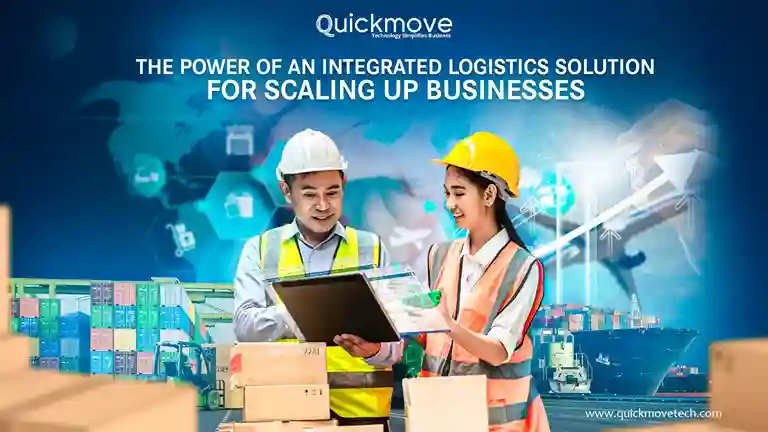
Scaling a business sounds exciting—and it is. More orders, more customers, more markets. But behind that growth, there’s a silent pressure building up: logistics.
What worked when you handled 50 orders a day starts breaking when you handle 500. Spreadsheets become messy. Delays increase. Costs quietly rise. Customers begin to notice.
This is exactly where an integrated logistics solution changes everything.
In this blog, we’ll break down what an integrated logistics system really means, why it matters for growing businesses, and how it can help you scale without chaos. We’ll keep things simple, practical, and real—no buzzwords, just clarity.
What Is an Integrated Logistics Solution?
Let’s start with the basics.
An integrated logistics solution is a system that connects all your logistics operations into one unified platform. Instead of using separate tools for warehouse, transportation, order management, and tracking, everything works together in sync.
Think of it like this:
- Orders come in → automatically updated in the system
- Inventory adjusts in real-time
- Warehouse teams get picking instructions
- Transport is scheduled
- Customers receive updates
All without switching between multiple tools or manually updating data.
It’s not just software—it’s a way of running logistics with visibility, automation, and control.
Why Traditional Logistics Systems Fail as You Grow
Many businesses don’t start with integrated systems. And that’s okay.
Early on, people manage logistics using:
- Excel sheets
- WhatsApp communication
- Basic accounting tools
- Manual coordination
It works—until it doesn’t.
Common Problems Businesses Face While Scaling
1. Data Is Scattered Everywhere
Your inventory is in one sheet, orders in another, and transport details somewhere else. There’s no single source of truth.
2. No Real-Time Visibility
You don’t know:
- Where your shipments are
- What inventory is available
- Which orders are delayed
Everything is reactive instead of proactive.
3. Operational Delays
Manual processes slow things down:
- Order processing takes time
- Warehouse picking errors increase
- Dispatch gets delayed
4. Rising Costs
Without optimization:
- Routes are inefficient
- Warehouses are underutilized
- Fuel and labor costs increase
5. Poor Customer Experience
Customers expect:
- Fast delivery
- Accurate tracking
- Zero errors
Without proper systems, meeting these expectations becomes difficult.
The Role of Integrated Logistics in Business Growth
Scaling a business isn’t just about selling more—it’s about handling more without losing efficiency.
An integrated logistics solution helps you do exactly that.
1. One System, Complete Visibility
When everything is connected, you can see your entire operation in one place:
- Inventory levels across warehouses
- Order status in real time
- Shipment tracking
- Delivery performance
This visibility helps you make faster and better decisions.
2. Faster Order Fulfillment
Speed matters.
With integrated systems:
- Orders are automatically processed
- Picking and packing are optimized
- Dispatch happens faster
What used to take hours can now take minutes.
3. Smarter Inventory Management
Overstocking wastes money. Understocking loses sales.
An integrated system helps you:
- Track inventory in real time
- Predict demand
- Avoid stockouts and overstocking
This balance is critical for scaling businesses.
4. Efficient Transportation Management
Transport is one of the biggest costs in logistics.
With integration:
- Routes are optimized
- Loads are planned better
- Deliveries are tracked in real time
Solutions like QuickMove’s logistics software provide transport management features that reduce costs while improving delivery speed.
5. Reduced Manual Work
Manual work leads to:
- Errors
- Delays
- Frustration
Automation removes repetitive tasks like:
- Order entry
- Inventory updates
- Dispatch scheduling
Your team can focus on more important work.
6. Better Customer Experience
Customers today expect transparency.
With an integrated system:
- They get real-time tracking
- Accurate delivery timelines
- Fewer errors
Happy customers lead to repeat business.
Key Components of an Integrated Logistics Solution
To truly understand its power, let’s break down what makes a logistics system “integrated.”
1. Warehouse Management System (WMS)
Handles:
- Inventory tracking
- Picking and packing
- Storage optimization
A good WMS ensures your warehouse runs smoothly, even when order volumes increase significantly.
2. Transport Management System (TMS)
Manages:
- Route planning
- Vehicle tracking
- Delivery scheduling
With integrated transport management, businesses can reduce fuel costs, improve delivery timelines, and gain real-time control over shipments.
3. Freight Forwarding Software
This is especially important for businesses dealing with international logistics.
It helps manage:
- Shipment documentation (like invoices, bills of lading)
- Customs clearance processes
- Multi-modal transportation (air, sea, road)
- Carrier coordination
An integrated freight forwarding module ensures smoother cross-border operations, better compliance, and fewer delays in global shipping.
4. Moving Software (Relocation Management)
For businesses involved in relocation, packers & movers, or project logistics, moving software plays a key role.
It helps with:
- Survey and quotation management
- Job scheduling and resource allocation
- Packing, loading, and delivery tracking
- Customer communication and updates
When integrated into the logistics system, it ensures end-to-end visibility and control over relocation operations, which are often complex and time-sensitive.
5. Real-Time Tracking & Analytics
Gives you:
- Live shipment updates
- Performance reports
- Data-driven insights
This is where businesses gain a competitive edge by making faster and smarter decisions.
6. Integration with Other Systems
An integrated solution connects with:
- ERP systems
- E-commerce platforms
- Accounting tools
This ensures smooth data flow across the entire business, eliminating silos and manual work.
How Integrated Logistics Helps Different Types of Businesses
1. E-commerce Businesses
E-commerce runs on speed and accuracy.
Integrated logistics helps:
- Process high order volumes
- Manage returns efficiently
- Deliver faster
2. Manufacturing Companies
Manufacturers need smooth movement of raw materials and finished goods.
Integration ensures:
- Timely supply
- Efficient production flow
- Reduced downtime
3. Logistics & 3PL Companies
For logistics providers, efficiency is everything.
With systems like QuickMove:
- Operations become scalable
- Clients get better service
- Costs are optimized
4. Retail & Distribution Businesses
Retailers need the right product at the right place.
Integrated systems help:
- Maintain stock across locations
- Reduce stockouts
- Improve delivery timelines
Real Challenges Solved by Integrated Logistics
Let’s look at real-world problems and how integration solves them.
Problem 1: Orders Getting Delayed
Solution: Automated order processing and real-time updates ensure faster fulfillment.
Problem 2: Inventory Mismatch
Solution: Live inventory tracking eliminates discrepancies.
Problem 3: High Transportation Costs
Solution: Route optimization and load planning reduce expenses.
Problem 4: Lack of Coordination
Solution: All teams work on the same system, improving communication.
Problem 5: Scaling Issues
Solution: Integrated systems handle increased volume without breaking operations.
The Competitive Advantage of Integration
In today’s market, logistics is no longer just an operational function—it’s a competitive advantage.
Businesses with integrated logistics systems can:
- Deliver faster
- Operate more efficiently
- Scale without chaos
- Provide better customer experience
While others struggle with manual processes, you stay ahead.
Why Businesses Choose QuickMove’s Logistics Software
When it comes to integrated logistics solutions, choosing the right platform matters.
QuickMove’s logistics software is designed to bring everything together in one place.
What Makes It Stand Out?
1. End-to-End Integration
From warehouse to transport, everything is connected.
2. User-Friendly Interface
Simple and easy to use—even for non-technical teams.
3. Real-Time Visibility
Track orders, inventory, and shipments instantly.
4. Scalable Architecture
Whether you’re handling 100 orders or 10,000, the system grows with you.
5. Cost Optimization
Better planning leads to lower operational costs.
The ROI of an Integrated Logistics Solution
Investing in logistics software may seem like a big step—but the returns are significant.
1. Reduced Operational Costs
Automation and optimization lower expenses.
2. Increased Efficiency
Faster processes mean more work done in less time.
3. Higher Customer Satisfaction
Better service leads to repeat business.
4. Improved Decision-Making
Data helps you make smarter choices.
5. Business Growth
With strong logistics, scaling becomes easier.
Common Myths About Integrated Logistics Solutions
Let’s clear some misconceptions.
Myth 1: “It’s Only for Large Enterprises”
Reality: Even small businesses benefit from integration.
Myth 2: “It’s Too Expensive”
Reality: The cost of inefficiency is higher.
Myth 3: “It’s Hard to Implement”
Reality: Modern solutions like QuickMove are designed for easy adoption.
Myth 4: “We Can Manage with Excel”
Reality: Excel doesn’t scale with business growth.
Steps to Implement an Integrated Logistics Solution
If you’re considering making the shift, here’s a simple roadmap:
Step 1: Identify Pain Points
Understand where your current system is failing.
Step 2: Define Your Requirements
List what you need:
- Inventory tracking
- Transport management
- Automation
Step 3: Choose the Right Solution
Look for a platform like QuickMove that offers end-to-end integration.
Step 4: Train Your Team
Ensure your team knows how to use the system.
Step 5: Monitor and Improve
Use data insights to continuously optimize operations.
Future of Logistics: Integration Is the Standard
Logistics is evolving rapidly.
With technologies like:
- AI
- IoT
- Real-time analytics
Integration will become even more powerful.
Businesses that adopt integrated systems today will be better prepared for tomorrow.
Final Thoughts
Scaling a business is not just about increasing sales—it’s about building systems that can handle growth.
An integrated logistics solution gives you:
- Control
- Visibility
- Efficiency
Without it, growth can quickly turn into chaos.
With it, growth becomes sustainable.
If you’re serious about scaling your business, investing in a solution like QuickMove’s logistics software is not just a good idea—it’s a necessary step.